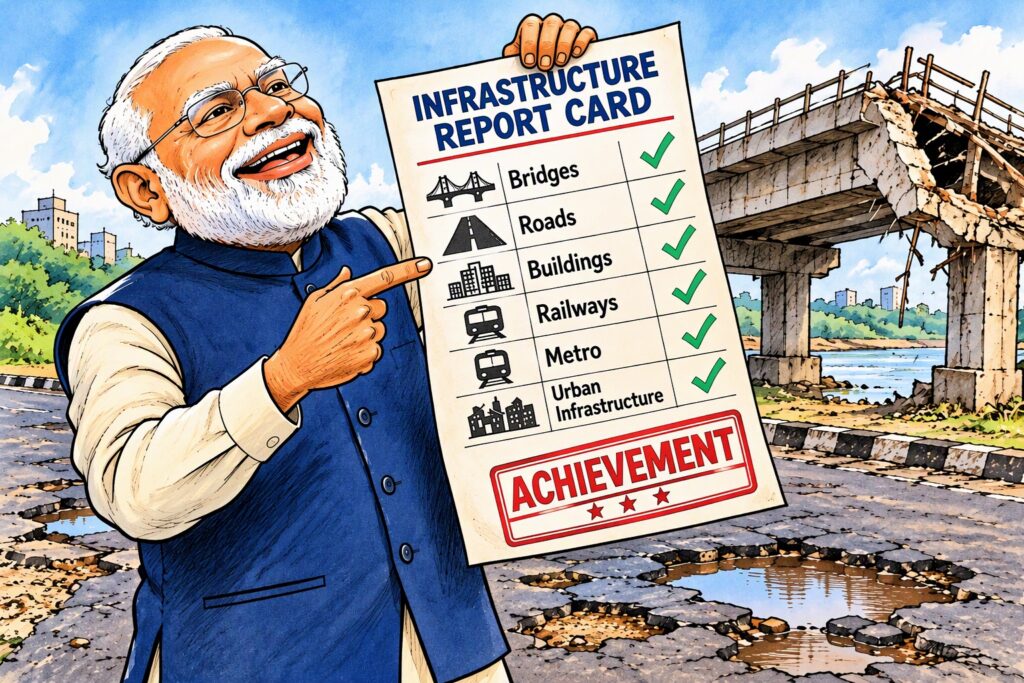
It is worth looking at the background paper that the government of India has put forth on the achievements of the present government.
You can find them at pib.gov.in ↗. It was put up by the government’s press information bureau and talks about India’s Infrastructure Transformation: From Connectivity to Capacity on 12 AUG 2026. It talks glowingly about what India has achieved in the infrastructure space. Of course there is a bit of hype as well. For instance, there is the proud declaration that the past 10 years saw India introduce the “first indigenously developed Hydrogen Fuel Cell Trainset has been launched in July 2026”.
Fact and fiction
The truth is admitted by the Railways Gazette International (railwaygazette.com ↗). It states that “The hydrogen propulsion and fuel-cell systems have been supplied by Ballard Power Systems. BFG India has supplied various glass fibre reinforced plastic components, including the streamlined aerodynamic front ends and components for the train interiors”.
Moreover, even the entire making of the train needed Germany partners. Says a TUV release “TÜV SÜD collaborates with MEDHA and INDIAN RAILWAYS on Hydrogen-powered Rail Vehicles”
That a government agency should make such false claims is unfortunate.
The second website which talks glowingly about the achievements of this government can be found at indiareforms.csis.org ↗ .
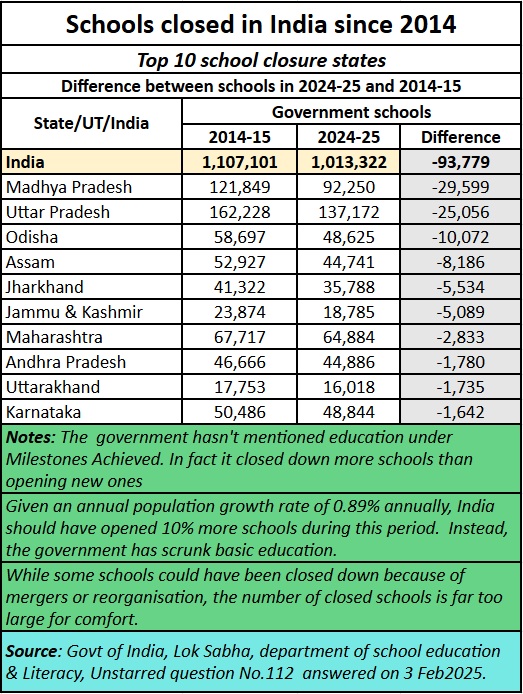
However, neither source says anything about education or health services – two key inputs classified as soft infrastructure by the world. They are the most crucial inputs that India needs to exploit the much-touted demographic dividend. When it comes to hospitals, the report card does talk about creating new hospitals, though not to the extent needed. But when it comes to schools, there is a deafening silence.
Fail marks in the report card
The reason is not hard to find. The government has closed more schools than at any time in India’s history. Effectively, India’s future is being undermined, if not sabotaged. One can understand a few schools being closed because they are being amalgamated or rationalised. But if you take the top 10 states which have experienced such closures, there is an eerie rorrelationship between those states that were champions of lynchings for one reason or another – gau rakshaks, bulldozer justice, release of those accused for rapes and murders.
But there are other states where too schools were closed – in Assam, Jammu & Kashmir, Odisha, and Andhra Pradesh. A closer examination of the causes that caused these closures is certainly called for. Instead of wasting parliamentary time on ideological issues like the Uniform Civil Code (which is neither civil, nor uniform in many ways), the government needs to put up a white paper for serious discussion on what this closure of schools means for India’s future.
Undoubtedly, the achievements of this government are impressive. A good snapshot has been provided by Jacob Shapiro from Mauldin Economics (mauldineconomics.com ↗). The piece titled ‘Don’t Count India Out’ was posted on 12 November 2026.
Impressive achievements, but . . .
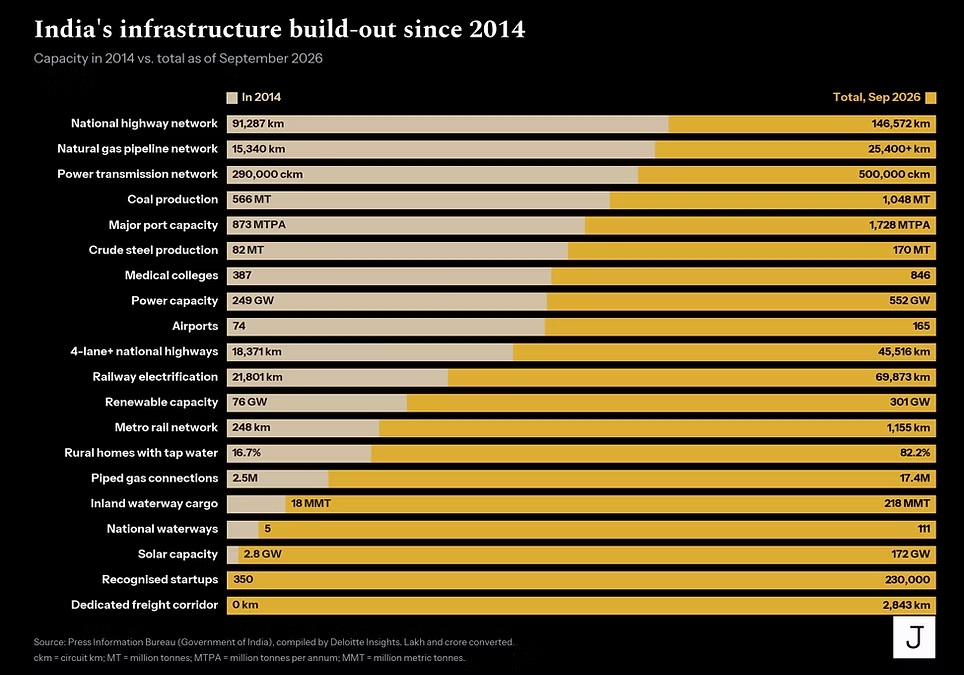
The numbers comparing achievements by the previous government and this government look impressive. Except that some entries could be considered unfair. Take for instance the reference to the DFC. The previous government did all the spadework, and even created the entire format and plans. But the present government postponed the project and chose to promote another DFC instead (bhaskarr.substack.com ↗). The DFC is now supposed to be operational. But traffic has not picked up. And the 24 cities that were supposed to create employment, new production and business for the DFC have been conveniently forgotten.
As Shapiro points out, the achievements look impressive —
- public capital expenditure has increased 6X;
- national highway length is up over 60%
- the number of airports has more than doubled; and
- major ports’ cargo-handling capacity has almost doubled while vessel turnaround time has halved.
But private investment has dried up. Much of these projects have been funded by the government. Unfortunately, the government has not been able to implement these projects well.
The road’s done, but gaps remain
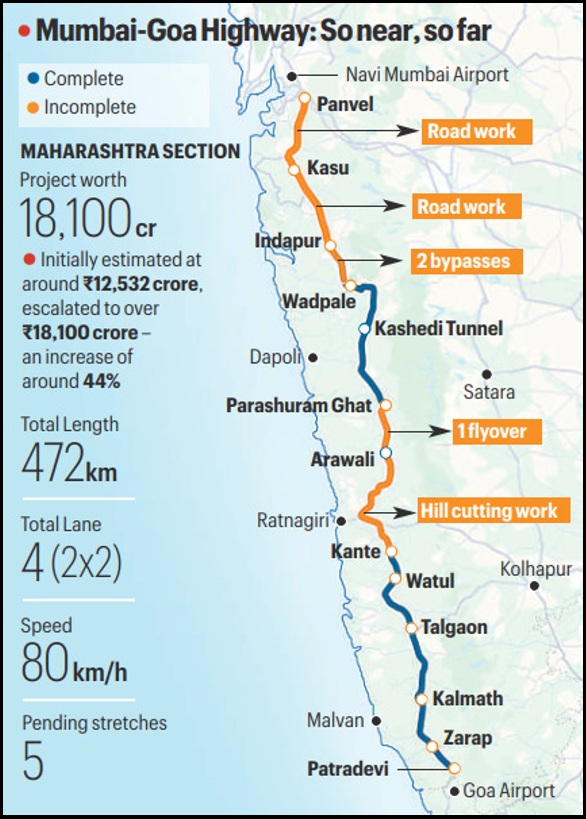
There are projects where the work done is patchwork. Consider, for instance, the Mumbai-Goa highway. There are at least five patches where the highway remains incomplete. That results in traffic snarl-ups and customer ire. The project thus has 8 km of highway missing, and has suffered a Rs. 2,000 crore cost overrun (indianexpress.com ↗).
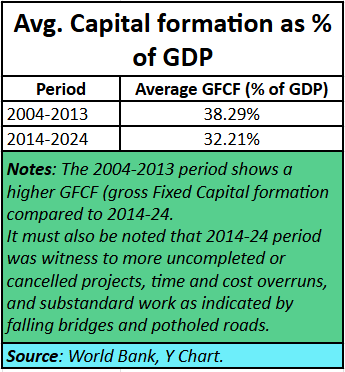
In many ways, instances like the Mumbai-Goa highway make one suspect the government’s claims about its capital expenditure (gross-fixed-capital-expenditure or GFCF).
First, the current government has spent less money on fixed capital than the earlier government as a percentage of GDP.
Second, much of the GFCF has got inflated because of time and cost overruns. If one discounts for the inflation, the GFCF figure for the current government would have turned out to be smaller.
There is a third consequence. Since private investment was by-and-large missing, much of this expenditure has been financed through government debt. Debt does two things. It makes the GDP look bigger than it ought to be. Second, it becomes a huge burden for taxpayers, especially if the amounts spent have been wasteful. Cost overruns are indicative of wasteful expenditure which could have been avoided had there been proper implementation.
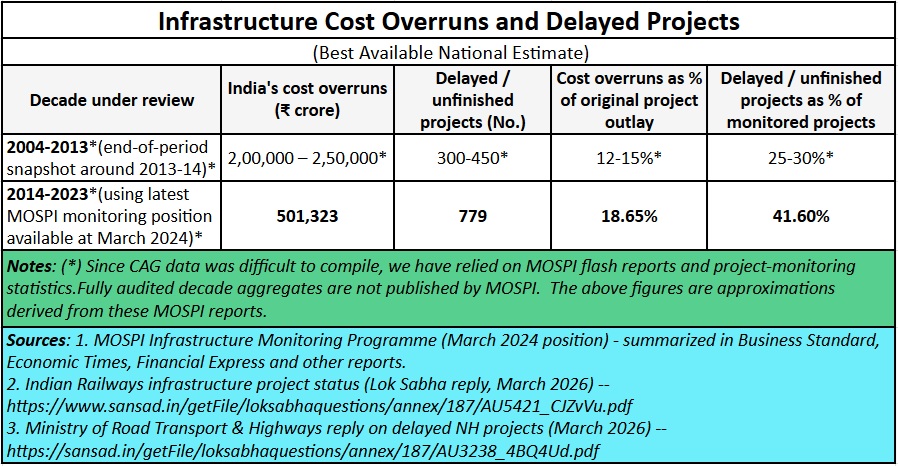
The consequences of poor project implementation have been staggering. Just look at the government’s infrastructure spending. The cost overruns account for 18% of expenditure. The delayed or unfinished work accounts for an escalation of 41% of costs.
These are the government’s own figures
- MOSPI Infrastructure Monitoring Programme (March 2024 position) – summarized in Business Standard, Economic Times, Financial Express and other reports.
- Indian Railways infrastructure project status (Lok Sabha reply, March 2026) –sansad.in ↗
- Ministry of Road Transport & Highways reply on delayed NH projects (March 2026)- sansad.in ↗
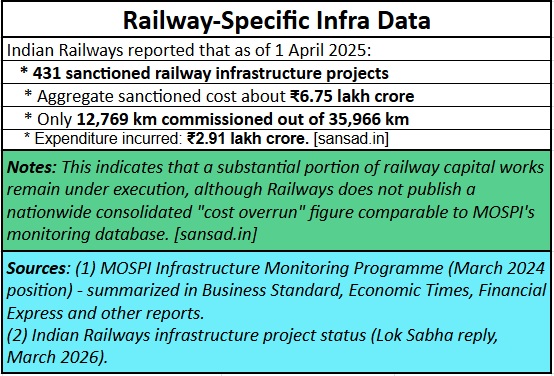
Just consider the unfinished work with the Railways. As the government’s own records show, only 12,769 km were commissioned out of 35,966 km.
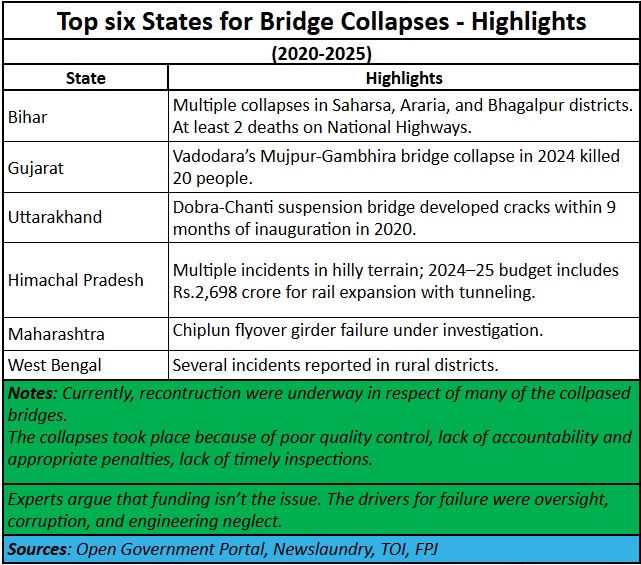
Broken promises, collapsing bridges
The picture is not funny. You have bridges which have been misaligned – which even first year civil engineers are capable of noticing when the work is commenced upon.
There are anecdotes of over 12 bridges collapsing within 13 days – one after another. It is as if someone were playing dominoes.
Sadly. Few people get dismissed. The collapses are treated as collateral damage. Nobody is hauled up. Hardly anyone is held accountable.
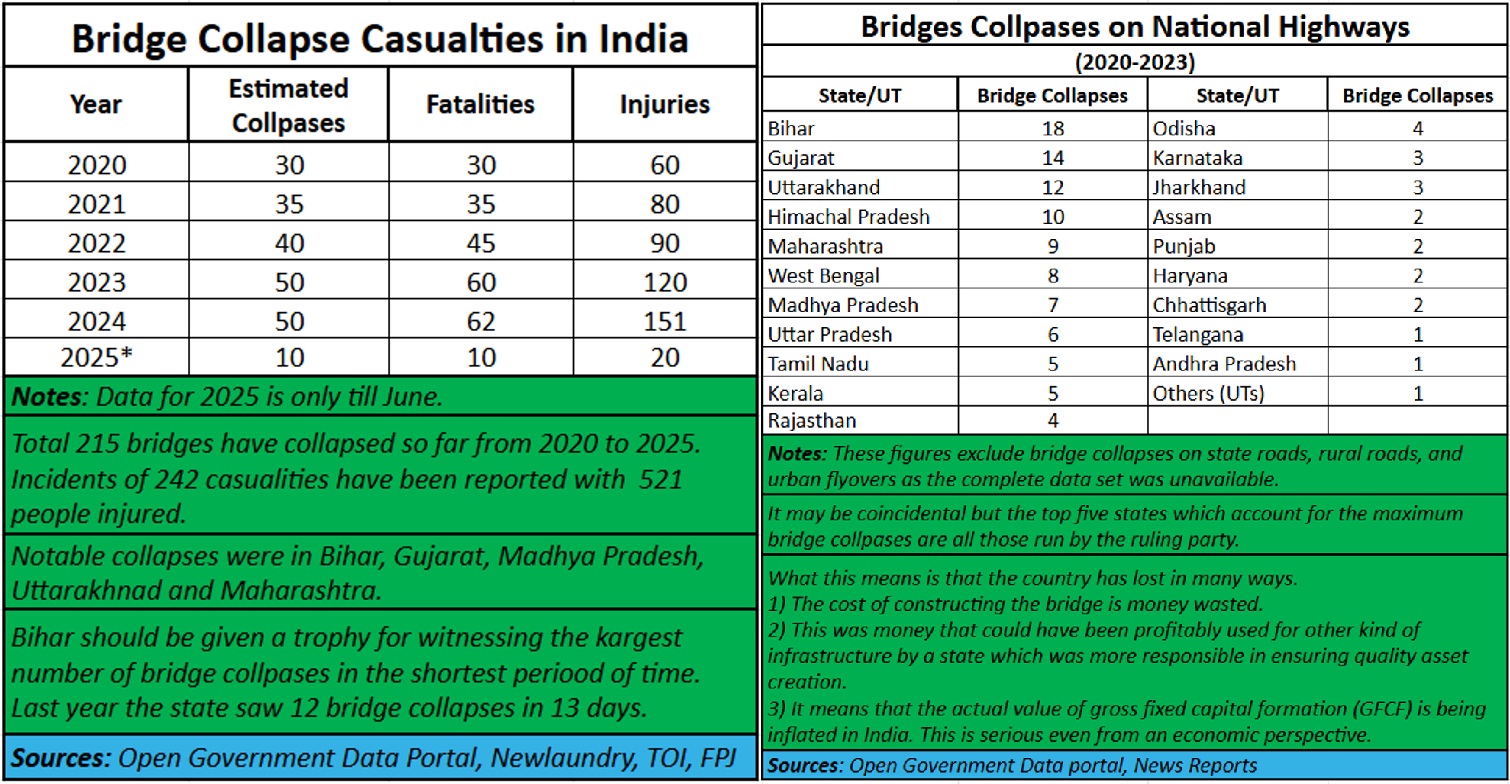
The pictures that one sees in mainstream media are both depressing and saddening.
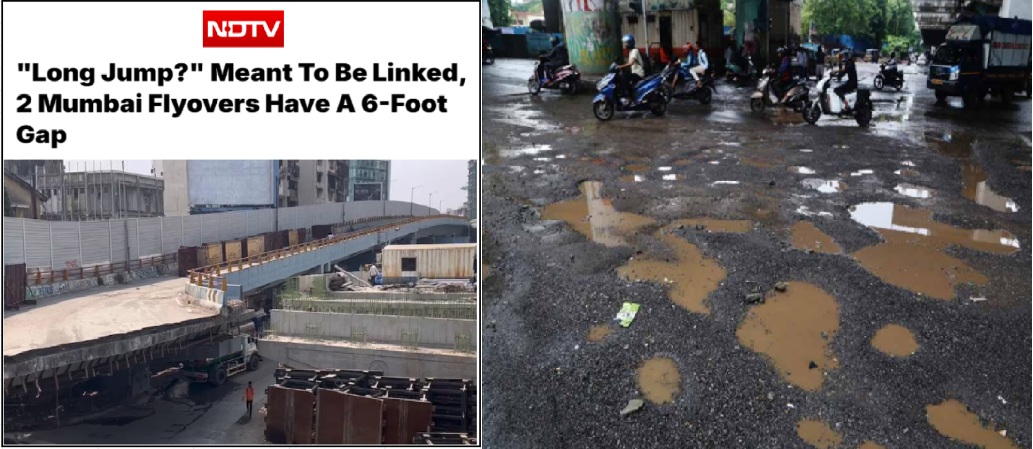
Little of this (obviously) figures in the documents which list out milestones achieved by the government. Until there is accountability, expect such sad pictures to depress national sentiment.
It is worthwhile looking at the achievement of another prime minister – Atal Bihari Vajpayee. He ensured the construction of the 5,846 km Golden Quadilateral. This was without any time or cost overrun. That is what is called achievement. Atal-ji (as he was popularly called) was also from the BJP, but he did not allow ideology to interfere with national development. That is why ideologues do not like him very much.
All governments need to emulate the governance principles of such a prime minister.
Conclusion
This is where the report card of the government leaves a sour taste in the mouth. It ought to have been more honest about infrastructure that has crumbled, about cost overruns, and compare them with such costs during the tenure of other governments. And it should have talked about education – about what is being done to remedy the situation. If India has to become a great country, it is just not possible without good education. It cannot be possible when schools are closed down.
India needs to seriously re-examine its opetions with greater rigour than the government’s own report card.
Watch our two podcasts during this week.
The first is about how India has underperformed its neighbours. Both Bangladesh and Sri Lanka have higher per capita incomes than India. India’s higher GDP is only because of its large population. You can watch it at youtu.be ↗
The second is a conversation with Mohit Talreja on the issues that keep India backward. You can find it at youtube.com ↗
No account needed. Or write to the editor: RNB@asiaconverge.com