



















Was Indigo collusive on scheming or was it being exploited?
By RN Bhaskar and Sakeena Bari Sayyed
Image source: BBC
The clock began ticking on 2 December 2025. Some Indigo flights were being cancelled. But the number of cancellations grew daily. By December 5 more than 1000 flights were cancelled with multiples of thousands of passengers stranded and distort.
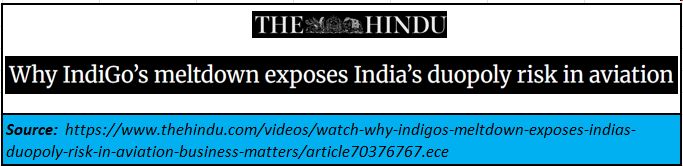 By this time almost all the publications and television channels began talking about the crisis being a fallout of the monopoly (actually duopoly) status Indigo enjoyed in India with a 65% share of the Indian market. It was only a day later that people began talking about the FDTL (Flight Duty Time Limitation) as being the main cause (https://www.newslaundry.com/2025/12/13/the-2019-rule-change-that-fastened-indian-aviations-growth-journey-helped-fuel-indigos-supremacy). This was an order introduced by DGCA (Directorate General of Civil Aviation) in January 2024 and enforced with effect from November 2025. It revised the norms for flight duty schedules for pilots, mandating rest hours to prevent pilot fatigue.
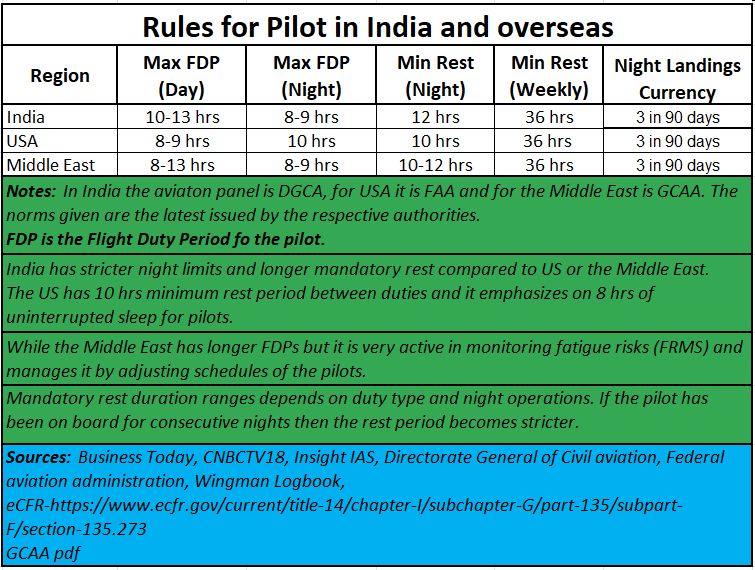 Many airlines grumbled, but none dared say anything against the DGCA. This is because almost all powers (including licensing) relating to aircraft in India are vested with this organisation. DGCA controls everything — right from passenger comfort to pilot training to pilot duty hours to air worthiness of aircraft and even granting slots to airlines for landing and take-off. The muted response of all airlines was understandable. The chart above shows that the new DGCA rules were more favourable to pilots in India than to pilots of other airlines.
There was an anomaly within India as well. While other airlines went about hiring additional pilots, Indigo did nothing of that sort. It is only when the crisis began that DGCA chose to officially exempt Indigo from observing the new duty rules till February 10, 2026. However, on 16 December, the Pilots Guild chose to challenge such discriminatory relaxation by approaching the courts (https://indianexpress.com/article/legal-news/pilot-bodies-move-delhi-hc-against-govts-relaxation-of-flight-duty-norms-centre-says-it-has-authority-10423674/).
Media reports also talked about Indigo misusing its dominant position to browbeat the regulator. But the more one looks at developments, one wonders if it could be the other way round.
 The ‘Core’ of the matter
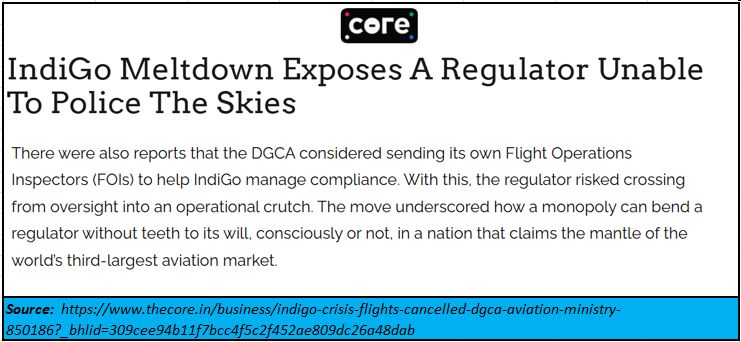
The Core was the first media outlet that talked about DGCA officials flying gratis on Indigo aircrafts much before the crisis began. Did the DGCA have a pact with Indigo to provide its own pilots (normally assigned as flight inspectors) to fill in for the additional pilots required under the FDTL rules? Were DGCA official paid for this service? Nobody is talking about it.
We sent e-mails to DGCA asking it to clarify. We didn’t receive any clarification till the time this report went public.
If this was the case, it would mean that DGCA had entered into an unholy alliance with Indigo allowing the airline to save money by not recruiting additional pilots. It would then be normal for Indigo to reward the regulator. One flaw in this argument – Indigo would not have jeopardised its reputation merely for saving a little money. Another explanation is required.
That DGCA was clearly partial towards Indigo. This is evident from the manner in which it rewarded the airline with favourable slots (Indigo was the sole flight operator from several destinations). Many other airlines were denied such slots as can be seen from this podcast (https://www.youtube.com/watch?v=O3DdY7nqKZ0). The waters get muddier at this stage.
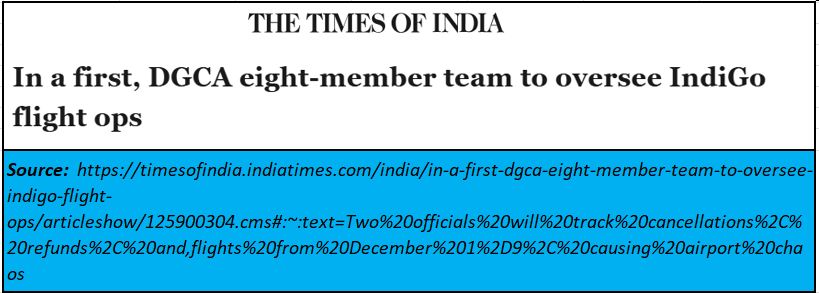 Regularising the irregular?
If DGCA pilots were indeed helping Indigo bridge the gap in pilot requirements, the new DGCA order of December 5 could be seen as a cover up.
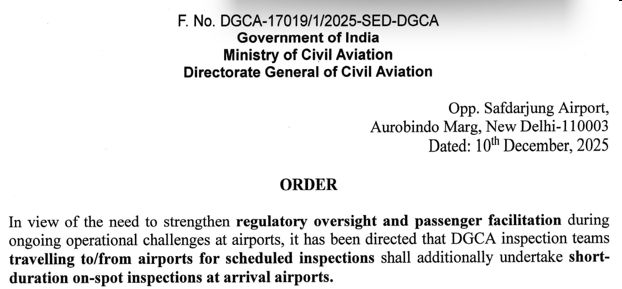 On 10th May 2025, the DGCA issued the required order authorising its personnel to station themselves with Indigo at its offices.
There are many reasons to believe that this could indeed be the case:
- Indigo is a seasoned and successful player. It would not have disregarded the FDTL rules had it not been for some other compelling reason. It would not scrimp on savings from pilot costs alone and risk the entire airline.
- It was singled out for an exemption that was extended to no other airline. The exemption could have been extended to all airlines. In any case, on 16 December 2025, the pilots’ representative bodies approached the courts to challenge the decision of the government/DGCA to exempt Indigo from these rules.
- There is no explanation still why slots were denied to other airlines but not to Indigo. Remember, Indigo already enjoyed a huge market presence. A regulator would be required to promote other airlines as well to allow for more competition.
- How else could one explain the number of times Indian Airlines was hauled up by the DGCA for the slightest of infractions. Could it be that the Tatas (the group which controls Indian Airlines) were unwilling to genuflect before the DGCA beyond what was strictly required?
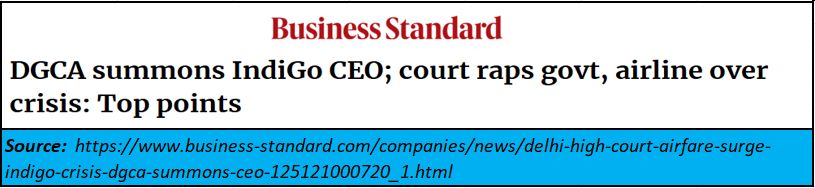 It was possibly these issues that must have riled the courts which pulled up not just Indigo but also the DGCA and the government.
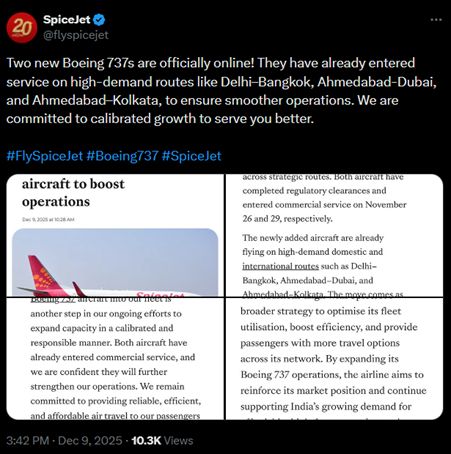
Coincidental?
It is also quite coincidental that just when the crisis took place, SpiceJet announced that it has acquired two additional aircraft.
 It was also coincidental that the government announced a 10% cuts for Indigo flights. How this is to be effected is not yet clear. Moreover, if the intention was to reduce Indigo’s market share, a better way would be to offer more additional slots to other airlines and not to Indigo. By increasing the share of other airlines, Indigo’s share would automatically reduce. But, if the order for reducing Indigo’s flights by 10% is implemented, the first automatic beneficiary is likely to be SpiceJet (which is known to be close to the BJP, the political party in power).
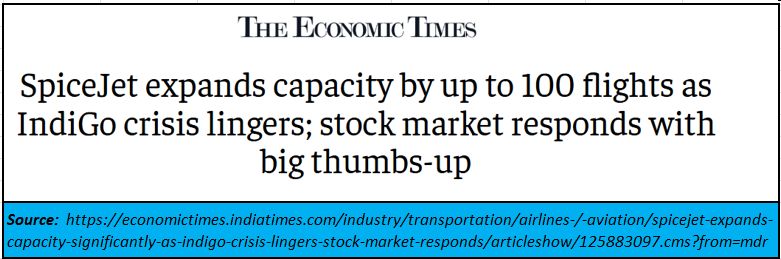 Naturally enough, the stock markets responded favourably to SpiceJet’s announcements. Curiously, all other airlines have been circumspect about the entire issue. There are no comments about the FDTL, or the exemption granted selectively to Indigo, or the 10% flight cut announced or even their plans to pick up a share of the 10%. Obviously, nobody wants to antagonise the DGCA.
 Culprits or scapegoats?
So why did the crisis take place? Why was the sudden absence of pilots felt? Why did previous arrangements not work? There are no clear answers.
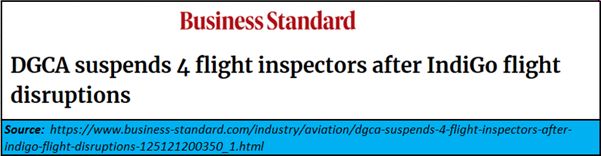
But four DGCA inspectors were suspended (not dismissed) for flawed oversight at the time of the crisis.
The big questions that remain unarticulated are:
- Was the crisis allowed to happen to favour someone, till it went entirely out of control?
- Were the four suspended officials present on Indigo’s flights before the crisis?
- Will the courts prise open some of the answers that are not forth coming so far?
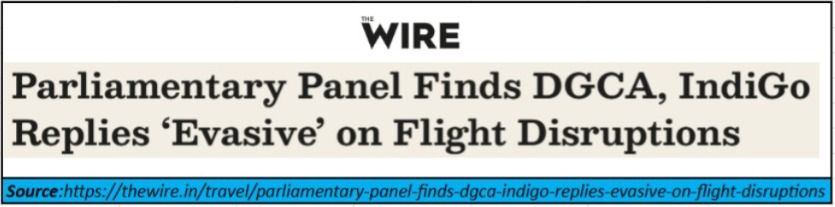
 Unfortunately, even the Parliamentary Panel — which tried to elicit some answers from Indigo, DGCA and the government — found their replies evasive.
 Conclusion
The Indigo crisis has left a very bad taste in people’s mouths. It has inconvenienced tens of thousands of people. It has given Indian aviation a bad name. It has adversely affected tourism and it has raised issues relating to regulatory capture or exploitation / extortion. Akk these are isues that need to be looked into.
Indigo is a great airline, it has grown remarkably well. But suddenly the stench that emanates from this crisis is overpowering. It drowns out all the good that has been done. The foul air must be cleared up.
======================
Do view my latest podcast on how India has still not been able to craft a comprehensive vehicle policy. Each policy isny way of an ad hoc decision — not properly thought through. You can find the video at https://youtu.be/spryRk8toAE
============================
And do watch our weekly “News Behind the News” podcasts, streamed ‘live’ every Saturday morning, at 8:15 am IST. The latest can be found at https://www.youtube.com/live/_R0QyWD8oWg?si=LL6_9-UxDsPbWwWv
===============







COMMENTS