





















MARKET PERSPECTIVE
By J Mulraj
Dec 20-26, 2025
A Financial transition, A Geopolitical transition and A Technology transition
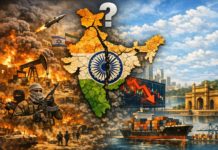
Image created using Canva
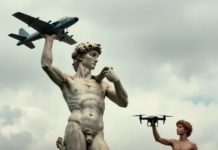
Everyone knows the fairy tale about the transition of a frog to a prince, after being kissed by a princess. The world is now in the midst of three simultaneous transitions, which will have different impacts on the economy and on stock markets. Will they transit to handsome princes and not to ugly monsters.
A Financial Transition: For the past 80 years, after Bretton Woods, the financial world has dominated by the US dollar. At Bretton Woods, other countries linked their currencies to the USD, which, in turn, was linked to gold, on the assurance that holders of USD could, at any time, be able to concert them into gold at a fixed price of $35/ounce.
In Aug 1971 US President gave a Nixon shock, ‘temporarily’ reneging on the conversion commitment. In reality it was permanent. Unshackled from gold, the USD became a fiat currency, which the Government could print without restraint. Then, in 1974, Henry Kissinger made a deal with Saudi Arabia, the world’s largest oil producer, to price its sale of crude oil in USD. All other oil producers followed. This created a demand for USD. These $s were kept by other countries outside American borders, hence didn’t contribute to US inflation.
The petrodollar system gave America an extraordinary privelege by creating a demand for the greenback, allowing it to run huge deficits without raising interest rates. Combined with its control over the SWIFT messaging system used for global trade, it also provided America with the ability to sanction (seize/threaten to seize assets) those who defied it.
America’s use of sanctions against Russian sovereign assets, when it seized and froze $300 b. of funds belonging to the Russian Central bank triggered the financial transition. Other countries feared a seizure of their assets and coordinated efforts towards de-dollarisation. Around 44% to 50% of global trade is now conducted in other currencies outside the USD, thus reducing its demand. However, the USD is still used in 88% of financial transactions. Reducing that hold will take a lot of time and effort,
BRICS is working on an alternate payment and settlement infrastructure to bypass SWIFT and so avoid seizure of USD assets. It’s in an experimental stage and will take time to set up.
If and when the financial transition happens, it will also imply that the US would cease guaranteeing freedom of navigation. Naval piracy would rise, and, as in the days of yore, trade ships may need to a military escort.
A Geopolitical Transition: Thanks to the folly of NATO, egged on by America, of insisting on NATO membership for Ukraine, (against strong objections of Russia, for which it was an existential threat), a geopolitical realignment was set in motion. Russia, the supplier of cheap energy to Europe, especially to Germany, invaded Ukraine, consequently America froze Russian sovereign funds and Germany banned imports of Russian energy. Later someone, suspected to be USA, blew up the two Nordstream pipeline which supplied Russian gas to Germany, assuring a complete disentanglement.
Shorn of the EU market, Russia was compelled, by economic necessity, to fall into a geopolitical embrace with China. That reveals the folly of the NATO/American action of expanding NATO eastwards by proposing taking Ukraine as a member. It pushed their two largest adversaries, Russia, a military gorilla, and China, an economic one, into a marriage of convenience. Such was the NATO myopia.
Without cheap energy (the switch from cheap Russian gas to costly LNG pushed up cost 4-5 times) Germany’s largest firms relocated to other countries. These included storied names like BASF and VW.
The geopolitical currents spread elsewhere. China became a force to reckon with in the oil producing Middle East region. It brought about a pact between two regional hegemons, Iran and Saudi Arabia. USA had not been able to achieve this.
Today, when USA is attacking Venezuela, ostensibly to prevent ‘narco terrorism’ but actually with an evil eye on oil reserves, the largest in the world, it is Russia and China that are aligning themselves with Venezuela. Russia has supplied it with deadly missiles, perhaps the Oreshnik, and China has stepped up its purchases of Venezuelan crude oil. This brouhaha, no laughing matter, can potentially escalate. Remember how the Cuban crisis nearly turned into a nuclear conflict?
The shifting of geopolitical sands also impacts the flow of trade. Russian energy diversion from EU to China and India, China’s imports of soya bean diverted from America to Argentina/Brazil, Canadian lumber from USA to EU are a few examples.
A Technology Transition: A lot of disruptive technologies are converging. At the forefront is Artificial Intelligence, AI, propelled by the Magnificent 7 companies who are spending billions ratcheting up the needed infrastructure. The goals are to achieve artificial general intelligence, in the first phase, followed by artificial super intelligence, in the next. This promises to solve several of society’s problems, like energy, health, and others, and will also help create new materials. A UK lab has made a breakthrough in nuclear fusion. However grid scale commercialisation may occur only in the 40s.
The advent of AI would initially lead to a lot of job disruptions, until its benefits start kicking in. AI is expected to result in large gains in productivity, enough to provide everyone with a universal basic income, at the beginning, going on to universal high income.
India is the most populous country in the world. The loss of jobs due to AI will cause public protest and lead to governance issues. Huge efforts need to be made by Governments, educational institutions and companies, to prepare for, and implement, re-skilling of the workforce, allowing it to use the AI tools effectively.
Investors will also be hugely impacted by Technological changes. Whenever nuclear fusion becomes commercially viable, they will disrupt existing power producers like NTPC, and suppliers like Coal India, as well as the renewable power producers. Likewise, new drug discoveries, using AI, can disrupt existing pharmaceutical companies. Even today, EVs are causing upheavals in the auto sector, with ICE (internal combustion engine) manufacturers finding it tough to compete with EVs. Tesla has successfully launched autonomous vehicles, which will upend the business model for private ownership. From being a cost centre an autonomous EV, together with an UBER like transport as a service, can become a profit centre. It can earn money for the owner. This will further strain the ICE manufacturers.
All three transitions will impact existing companies, and will completely disrupt a few.
Last week the BSE Sensex closed flat, at 84979. Over the calendar year, the Sensex has risen around 9%. However, as per this news report, 3 out of 4 stocks ended in the red (. Just a quarter of active stocks pulled up the market. This skewness is true of other markets too; the Magnificent 7 stocks rule the S&P 500 index.
One of the reasons is that individual investors do not feel protected. This, irrespective of a high ranking for ‘protection of minority shareholders’ in Ease of Doing Business Rankings. This is likely because the rankings criteria focus more on substance rather than on results.
Nothing illustrates this better than the sad state of investor victims of Ponzi schemes. Such as NSEL, a commodity exchange authorised by the Government, which then omitted to appoint a regulator to oversee it. This allowed the investors to become victimised. Instead of admitting its mistakes and making efforts to recover the scammed money, the Indian authorities was nonchalant and ineffective. It’s now 12 years since the scam, affecting 13000 investors, broke, with hardly any restitution. In America, the Government managed to recompense investors 92% of their lost funds speedily.
Without Government protection, minority individual investors took it upon themselves to enter into a One Time Settlement (OTS) with NSEL. Apparently even a settlement between two sides to a dispute requires Government approval (pray, why???). Can the Government of PM Modi not see the need to protect individual investors instead of scamsters? Can it not see how this erases the sheen of the India story?
The three transitions make the task of navigating investments tougher for individual investors. They would, especially, need to learn more about the coming disruptive technologies.
———————————-
Comments may be sent to: jmulraj@asiaconverge.com









COMMENTS