






















MARKET PERSPECTIVE
By J Mulraj
Mar 14-20, 2026
Or will he seek an off-ramp?
Source: Raphael AI
The ongoing war between USA/Israel and Iran started Feb 28 after talks broke. The combine wanted Iran to relinquish its desire to possess nuclear weapons and its stockpile of enriched uranium, which was supposedly weeks away from becoming weapons grade.
Since then, a militarily far superior USA has taken out a lot of Iran’s top leadership, its airforce (which wasn’t really a challenge) and its navy (even less). Iran used, naturally, its short and medium range missiles, of which it had built up a sizeable inventory, and its domestically produced and inexpensive drones, to wage an asymmetrical fight, imposing far higher cost for the other side using more expensive interceptor missiles.
The missiles were stored deep underground, and in hillside tunnels, large enough to have a rail track to ferry them to launch sites and back and secured with concrete reinforcement which the Iranians felt were incapable of being destroyed. They weren’t . America used B1, B2 and B52 bombers, large enough to carry several, very heavy, bunker busting bombs, to hit the tunnels and to destroy a significant stockpile of the missiles. And of drones, which, being far cheaper than the missile interceptors to destroy them, wage an asymmetrical cost on USA/Israel, and on the Gulf States that Iran attacks. It has also depleted, it claims, Iran’s ability to launch missiles, by destroying the launch pads, as also the manufacturing bases for replenishing both missiles and drones.
The US has technologies to negate, even reverse the asymmetry of drone warfare. These include:
Locust, a high energy laser on vehicles, which cost a few dollars worth of electricity per kill
Enduring -High Energy Laser (E- HEL) to kill multiple unmanned vehicles at a low cost
Leonidas, a high powered microwave system, a directed EMP (Electro Magnetic Pulse) system that kills a drone swarm by disrupting their capacity, at a low cost. It is developed by California based Epirus Inc., formed to develop systems to counter asymmetric warfare
Coyote Block 3, developed by Raytheon, which is a non kinetic interceptor which can loiter over a target, and destroy a drone swarm with an EMP burst, and is recovered for reuse, making it very low cost.
All of these reverse the asymmetry; it costs less tho destroy a drone than to make it.
Ukraine, under constant attack by Iranian Shahed drones supplied to Russia, found a way to create an anti drone UAV at a low cost, which it is now marketing to Gulf nations.
In this conflict, Iran has directed its missiles and drones not only at USA/Israel, but also at Gulf countries that had US military assets used by them. It attacked 12 other countries including 6 GCC (Gulf Cooperation Council) States, Iraq and Azerbaijan (majority Shia), Jordan, Syria, Turkey and Cyprus. GCC countries include Qatar, it’s largest LNG facility has been substantially damaged by a missile attack. This was after Israel destroyed Iran’s LNG gas field at South Paw.
It has been stated that Iran is an ancient civilization, going back over 5000 years. An ancient civilization should have the accumulated wisdom of past experience stored in collective memory, enough to realise the folly of attacking it’s neighbours and sacrificing any goodwill. Wars get over, as will this one, and rebuilding Iran will require the goodwill it has demolished. The civilization is ancient, the governing regime is not. The 12 countries attack should be grateful that Iran had not the capacity to add nuclear capability to the launch missiles.
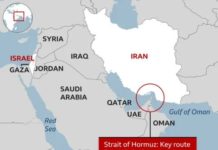
Bereft of its asymmetrical warfare edge, Iran has now resorted to using the choke-point of the Strait of Hormuz, to disrupt global crude oil trade. This body of water, through which 20% of international crude oil trade passes, is between 21-30 miles at its narrowest. Iran is permitting other countries, barring those that initiated the war against it, USA/Israel, to traverse the Strait and lift crude oil, after diplomatic talks. India managed to get two ships, without military escorts, to pass through. Pakistan has taken one vessel out, too.
The price of Brent crude has shot up from $ 70/barrel to $ 111. It would have been higher if the 32 countries in the IEA, International Energy Agency, had not released 400 m. barrels to stabilise prices. Pipelines built, with foresight, by Saudi Arabia (1200 kms from East to West) and UAE, to Fujerah, help evacuate oil bypassing the Strait of Hormuz. This supply plus around 1 mbpd from Venezuela, is easing pressure a bit, but not if the closure of the Strait continues for long.
In order to prevent a prolonged closure, the US may need to put boots on the ground on Kharg Island, which has most of Iran’s oil reserves. Control of Kharg would give leverage. The US has summoned ships, based in Japan, which are capable of amphibious marine landing operations, including the USS Tripoli. It would be a tough operation, assuredly resulting in body bags. Iran has announced it has developed new missiles, stored in its underground missile cities.
European countries have sent warships to the Mediterranean Sea, off Syria’s coast including France (aircraft carrier), UK, Spain, Italy, Greece.
Current Brent crude oil prices have reached the 2011 high, when Arab Spring uprisings hit several countries, but less than the $ 145 price hit post the 2008 GFC.
The spike is not benefitting the oil producing Gulf States who are unable to evacuate their oil through the Strait of Hormuz. Russia and USA, which don’t need to use the Strait, are the main beneficiaries of high prices.
India’s CSIR-National Chemical Laboratory has proposed the use of DME (di methyl ether) technology to replace LNG. CSIR, the Council for Scientific Research, established in 1942, is India’s premier research organisation. Use of LNG, a clean fuel, has spread to rural India, where, by replacing the use of firewood for cooking, has addressed the health issues of those cooking with wood, and the effort of collecting it. With Qatar’s main facility badly damaged, the quest for alternatives assumes urgency.
Last week the BSE Sensex closed at 74596 , up 33 points over the week.
In the Iran war it’s a race of patience. US mid term elections are due in November, President Trump needs a victory. For him a US victory would be if Iran capitulates and declares it would not seek to make a nuclear bomb and would bring it’s nuclear efforts under international supervision. That’s difficult to foresee. The US must place boots on the ground in the Kharg island, from where most of Iranian oil is evacuated, and to control it.
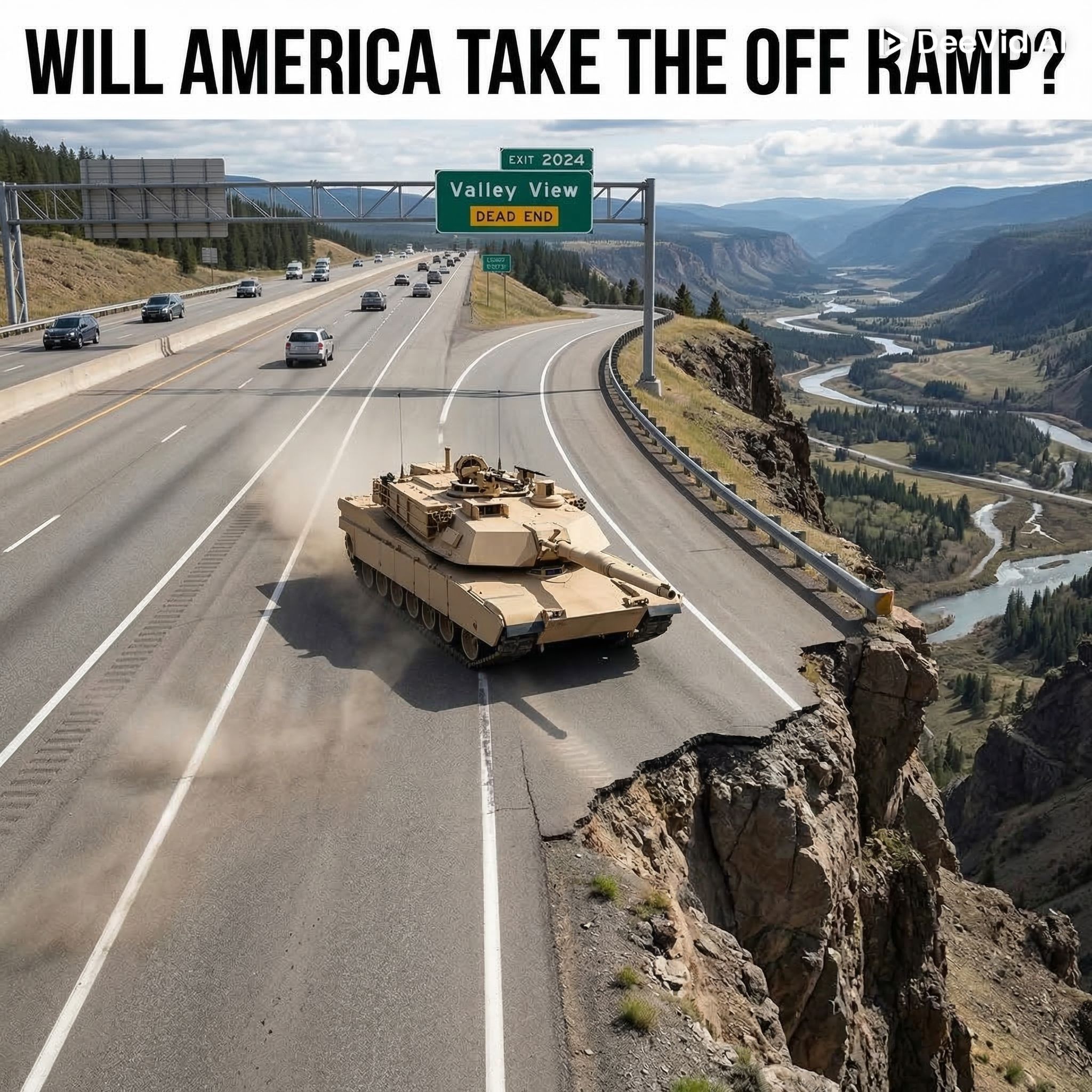
The war is causing serious financial damage to a nation already $38 trillion in debt. Trump would be under pressure to take the off-ramp by unilaterally declaring victory and announcing a ceasefire. He may say that, having decapitated a chunk of Iran’s leadership, pulverised it’s airforce, sunk it’s navy, destroyed its missiles/drone stockpiles by 90%, and it’s ability to replenish them, he has achieved the objectives of the war. His partner, Israel, seeks a regime change and would not accept a ceasefire.
The depiction of an off-ramp is as imagined below, a poor alternative because of political implications for the Republican Party in the coming mid term elections in November, should there be many casualties, or a defeat.
A tough dilemma is often described as a choice between ‘Scylla and Charybdis’, the two sea monsters that made navigation impossible. This may now be replaced as a choice between ‘Ayatollah and Netanyahu’. That’s how tough is the dilemma Trump faces.
The war has already taken a toll on stock markets. The BSE Sensex is down 14% off its all time high of just under 86000. The DJIA is just 8% below its all time high. So is the NASDAQ Composite. Should the conflict, and the choke on Strait of Hormuz continue, resulting in crude oil prices rising a further $ 25-35/b, the global economy would enter a recession. India will face a higher current account deficit, an LPG shortage, a fertiliser shortage threatening agricultural output, and higher cost of inputs like steel, impacting the real estate sector.
A long recession would trigger a bear market, one that could knock off 30% off stock market peaks.
Tough times ahead.
———————————-
Comments may be sent to: jmulraj@asiaconverge.com












COMMENTS