























6 April 2026
Will UAE survive?
By RN Bhaskar and Sakeena Bari Sayyed
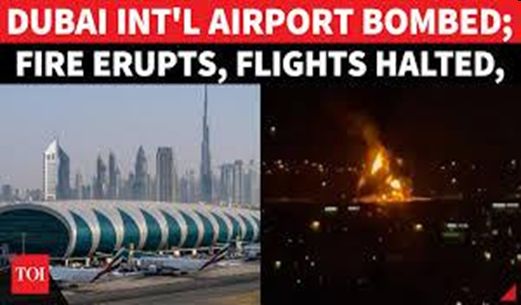
Image: Times of India
Two months ago, Dubai was the place to go to if you had the money and an appetite for fun. There were playgrounds for kids. If you were an adult, there were playgrounds for them as well, with suitable escort services. There were casinos too. Dubai tried to follow the old US philosophy at Las Vegas. The modified ground rule was “What happens in Dubai’s casinos stays in the casinos”. Property prices were soaring, and the spillover effect of the real estate boom could be seen all over the UAE. All this became past tense after 28 February 2016. Is the Dubai dream about to crumble?
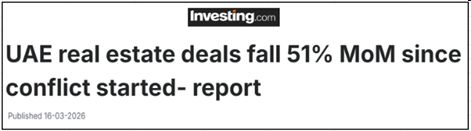 Property prices have crashed 51% since the attack on Iran began on 28 March 2026 (https://in.investing.com/news/economy-news/goldman-sees-two-ecb-hikes-as-energy-shock-lifts-inflation-outlook-5302224).
The first buildings to be bombed were said to be the CIA headquarters in the UAE and buildings suspected to be owned by people close to President Trump. Some sources repudiate this (https://bangladesh.newschecker.co/en/fact-check/news/cia-headquarters-hit-in-dubai-false). But even if untrue, the fact is that several prominent buildings were bombed as part of the retaliatory attacks by Iran.
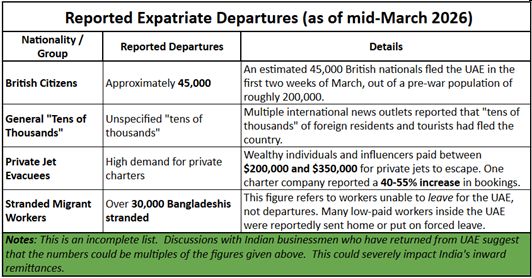
All US financial institutions and banks have shut shop. The wealthy have begun to flee UAE – the first to run were the richest leaving the territory by any transport or connection available. The exodus has been staggering (see table).
 The rich are trying to jettison their gold holdings – opting instead for cash. That has caused the price of gold (for large transactions) slip to a discount of $30 per ounce (https://economictimes.indiatimes.com/nri/invest/gold-stuck-in-dubai-is-being-sold-at-a-discount-as-war-widens/articleshow/129144724.cms).
Says Larry Johnson, “I seriously believe that the United Arab Emirates is not going to survive intact as a country, as a nation, whatever it is. It no longer has an economic foundation right now” (Timeline 7:42 to 8:06 — Larry Johnson on Dialogue Works — https://www.youtube.com/watch?v=EpnEi-bLyRQ ). Adds Reuters, “U.S.-Israeli strikes on Iran and Tehran’s retaliation across the Gulf are destabilizing the region, threatening the United Arab Emirates city of Dubai’s reputation as a safe business hub.” (https://www.reuters.com/video/watch/idRW037703032026RP1/ ).
Background
Dubai – like all the other Emirates in the UAE – was a beneficiary of the oil boom. Watching the potential windfall from oil revenues, seven emirates got together and formed the UAE. Thus, while the Emirs had administrative control of their respective provinces, all revenues and expenses were the collective decision of the UAE. That was a visionary move. It gave the seven Emirs the heft and clout that bigger Gulf nations like Saudi Arabia, Iraq and Iran enjoyed.
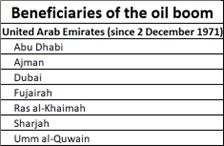 As the largest emirate, Abu Dhabi holds much of the UAE’s oil and gas reserves. Its economy is the most diversified among the oil-rich Gulf states. It also has a growing advanced manufacturing sector. It harbours plans to become a vibrant free-trade-zone named Kizad, or the Khalifa Economic Zones, Abu Dhabi).
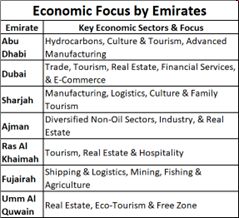 Money money money
Dubai diversified away from its modest oil reserves. It has emerged as a global trading gateway, a top-tier tourism destination, a centre for real estate development, and a growing financial services sector. It has focussed on creating the right environment for tourism, shopping, and entertainment (for children and for adults). It is also positioning itself as a leader in the region’s rapidly expanding e-commerce market, projected to reach $50 billion. It is in charge of the largest FTZ in the UAE – the Jebel Ali FTZ.
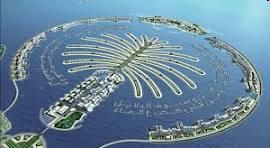 Real estate remained a key activity for almost all the Emirates. Not surprisingly, every rich person tried to own some property in the UAE. The priciest ones were in Dubai, which built the Palm Tree Island – a globally recognised landmark for Dubai from the sky, even as planes descend. Almost every Indian millionaire owns properties in Dubai; so do politicians, often in names that cannot be identified by prying journalists.
UAE had no protection of its own – and its defence forces were minuscule. Hence, it was only too glad when the US offered to protect them and set up its bases there. The UAE obviously forgot the Kissinger adage – to be an enemy of the US is dangerous; to be a friend is fatal. The UAE is experiencing the full impact of that adage.
A business hub
Over the past 50 years, UAE has become a vibrant business hub. Just look at its mix of exports.
It has diversified away from oil which accounts for 13% to 30% of total exports at different periods of time (https://www.trade.gov/country-commercial-guides/united-arab-emirates-oil-and-gas).
Non-oil exports accounted for $1 trillion in 2025 (https://athgadlang.com/uae-non-oil-trade-reaches-1-trillion-opportunities-and-risks/). This was an increase of 27% compared to the previous year. Sheikh Mohammed bin Rashid, Prime Minister, UAE, unveiled these figures in January this year. This figure represents 95% of the non-oil trade target for the end of the decade. (Dollar equivalents are based on the UAE dirham’s fixed peg of AED 3.6725 = US$1.)
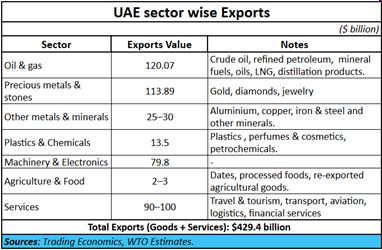 Oil exports too have been large. They accounted for US$30.99 billion. Much of the oil got exported by Abu Dhabi National Oil Company (ADNOC) (https://tradeint.com/insights/middle-east-top-exports/#trigger1)
The UAE has become the largest player in the market for gold and jewellery (https://tradeint.com/insights/middle-east-top-exports/#trigger1). In the first half of 2025, gold and jewellery exports accounted for $14.06 billion (approx. AED 51.6 billion).
Other growth areas are aluminium, refined petroleum, ethylene polymers, copper wire, precious-metal compounds, and polypropylene.
However, UAE’s metal production centres have been hit hard (https://www.bbc.com/news/articles/cp86yrq5jy7o). When Israel attacked Iran’s steel plants, it launched retaliatory strikes against metal production centres in the Middle East. Significant damage was reported by Emirates Global Aluminium.
The overreach
The lure of money made it get closer to the US and to Israel. It became one of the key players in promoting the Abraham Accords (https://www.britannica.com/topic/Abraham-Accords). These were a series of landmark 2020 joint peace declarations, brokered by the US, normalizing diplomatic, economic, and security relations between Israel and several Arab nations—the UAE, Bahrain, Sudan, and Morocco. They were aimed at creating a new “Middle East” paradigm.
Another move that the UAE sought to promote was the India-Middle East-Europe Economic Corridor (IMEC), announced in September 2023, which was designed to connect India to the Mediterranean and Europe via the Middle East (https://www.jois.eu/files/11_1470_Krzymowski.pdf). This infrastructure project combines shipping, rail, and energy pipelines to create a faster, cheaper alternative to existing trade routes, bypassing the congested Suez Canal. It involved India, USA, UAE, Saudi Arabia, European Union, France, Germany, Italy, and Israel.
Then sand got thrown in the wheels when Israel decided to annex the region of Gaza by attempting to ethnically cleanse the region through genocide. That got Saudi Arabia to declare that it would not support either the Abraham Accord or the IMEC till Palestine was granted statehood. That dampened some of the revenue generation plans of the UAE.
Proximity to the US and Israel made it play a key role in financing the revolts in Sudan and Yemen (https://www.youtube.com/watch?v=wFAuZg1w_Gk). That destabilised the region, infuriating Saudi Arabia. It ordered the UAE to back off. With funds cut off, the revolts melted away. Financing Yemen’s revolts was a key method of weakening the Houthis who had become a threat to Israel. UAE also became the most compliant base for the US military. Assured of US protection, UAE was confident that nobody could touch it.
That is where UAE miscalculated. Moreover, the UAE had got many other priorities mixed up. It had not even focussed on developing a proper sewage system (https://www.youtube.com/watch?v=C5cr7JwN8xs timeline 20:17 to 20:36). It was reviled by many Islamic countries as a den of vice – encouraging both prostitution and gambling. Thus, when Iran wanted UAE to push the US out of its territory, the Emirs of the UAE refused to comply.
That is why the maximum missile hits have been directed at the UAE after Israel.
Second thoughts
The battering it has received is so great that it has little business left. Businessmen – even hookers – are fleeing. This will hit India very hard as well, because during 2024-25, India–UAE merchandise trade crossed US$100 billion, growing 19.6% annually. Non-oil trade reached US$38 billion in the first half of 2025, up 34% (https://athgadlang.com/uae-non-oil-trade-reaches-1-trillion-opportunities-and-risks/).
However, according to John Mearsheimer, noted geopolitical expert, UAE may be having second thoughts about supporting either US or Israel (https://www.youtube.com/watch?v=NyvFSpZ7yYs — Timeline 26:56 to 27:48). Having lost its financial centre in Dubai, Abu Dhabi and other oil producing emirates want to protect the little wealth generation centres that have survived till now. They want peace. And the US has failed to ensure that.
If peace is restored, the UAE may survive. But the story of Dubai may be over.
If UAE does not push the US out, it may cease to exist as a wealth generator or even as a country that always stood out to be counted.
Maybe, it is already too late. If the US decides to attack Iran with ground troops, or touches its power plants, Iran has vowed that it would set the entire Middle East ablaze. By now, the world has come to learn that Iran does not bluff – it carries out its threats and has the capability of doing this.
 What will the US do?
But it is quite possible that the US too is rethinking its options (https://www.youtube.com/watch?v=NyvFSpZ7yYs). Maybe, the US has realised that any escalation would lead to nuclear attacks and the loss of all oil business that it has in the Middle East. Moreover, there is a risk of the Islamic NATO comprising Saudi Arabia, Turkey, Pakistan (and maybe Egypt) intervening (https://www.firstpost.com/explainers/islamic-nato-turkey-pakistan-saudi-arabia-defence-alliance-13968489.html).
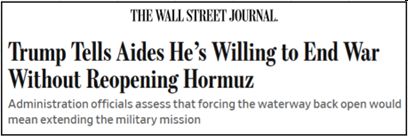
The possibility of Trump not letting the war escalate is also borne out by a statement he made on 30 March, 2026 that “And we will uh probably I think we’ll make a deal with them. Pretty sure. But it’s possible we won’t. But we’ve had regime change if you look already because uh the one regime was decimated, destroyed. They’re all dead. The next regime is mostly dead. And the third regime, we’re dealing with different people than anybody’s dealt with before. It’s a whole different group of people. So I would consider that regime change. And frankly, they’ve been very reasonable. So I think we’ve had regime change. I mean, can’t do much better than that. The regime that was really bad, really evil was the first one that was done. The second was appointed and they’re gone. They’re all dead, other than one who may have a little life in him. And then uh there really are the third group and the third group of people that seem to be much more reasonable. It truly is regime change and regime change isn’t imperative but I think we have it automatically.” (Timeline 5:49 to 6:54–https://www.youtube.com/watch?v=T8KaqGjLOyc).
That could give the Middle East the nuclear deterrent (Pakistan is a nuclear power) to control both the US and Israel. Moreover, Turkey is a formidable player in the defence sector, accounting for almost 60% market share for military drones. Even without the nuclear deterrent, the losses the US will suffer from the loss of oil businesses (the US is an equity partner in almost all oil assets in the Middle East – except for Iran. Even Saudi Arabia has BlackRock as a major investor.
Moreover, the US could lose its battleships and at least a few thousand of its ground troops. It is a sure-fire way to ensure that Trump gets impeached.
Israeli migraine
A big headache for the US will be dealing with Israel. This is the mad dog that is determined to wipe out Iran. It has been the biggest destabiliser in the Middle East. It has been guilty of war crimes; it assassinates people without the blink of an eye (https://asiaconverge.com/2026/03/has-the-un-become-irrelevant-part-i/). It has killed children, using snipers. To ensure that the children are dead, they have been shot in the head twice. There is enough documentation on this. It is a state where, even today, over 70% of its people support destroying Iran.
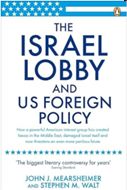 Worse, the Israel lobby through AIPAC (free subscription — https://bhaskarr.substack.com/p/america-weeps-trump-leaves-it-isolated), has huge financial clout. It is reported to be financing almost every Congressman who supports Israel’s cause. To understand more about the clout that AIPAC wields, it is instructive to read John Mearsheimer’s book on The Israel Lobby (https://www.amazon.in/Israel-Lobby-US-Foreign-Policy/dp/0141031239)
But even Congressmen have begun reeling from the aftereffects of the Iran war. People have begun asking whether Trump is for “America First” or Israel First”. There are reports that soldiers may mutiny if America goes to war because of Israel.
If the US does not go to war, the Middle East, including the UAE, may survive. Bahrain may not be the same again. It has been badly battered. Moreover, there are reports of public uprisings against the King there. But analysts point out that there is no credible indication that Bahrain’s King Hamad bin Isa Al Khalifa will be replaced in the near future. While there have been reports of public protests and, in some cases, unfounded rumours surrounding the stability of the regime, King Hamad remains in power.
But the story of Dubai may be over. Money is extremely skittish. Once it perceives that a place is unsafe, it seldom returns. If Dubai can still bring that money back, it will truly be a miracle.
==================
My latest podcast is on how Iran once used to be an ugly duckling. Few understood the depth and patience that Iran has nurtured over 5,000 years. You can find it at https://youtu.be/BWbs_Tnh2bU
======================
You may also like to watch the podcast we made on this very article, because of its immense relevance. You can watch it at https://www.youtube.com/live/dAJ7eeaiqVU?si=SfxYVLpKYB0-JhaC
======================
And do watch our weekly “News Behind the News” podcasts, streamed ‘live’ every Saturday morning, at 8:15 am IST. The latest can be found at https://www.youtube.com/live/PxwQn0hfDoA?si=rvZgAucSABYdAHkV
===================








COMMENTS