






















MARKET PERSPECTIVE
By J Mulraj
Feb 28- Mar 6, 2026
Lead to forever wars and destruction, not growth
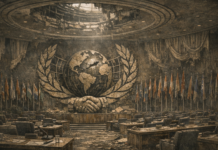
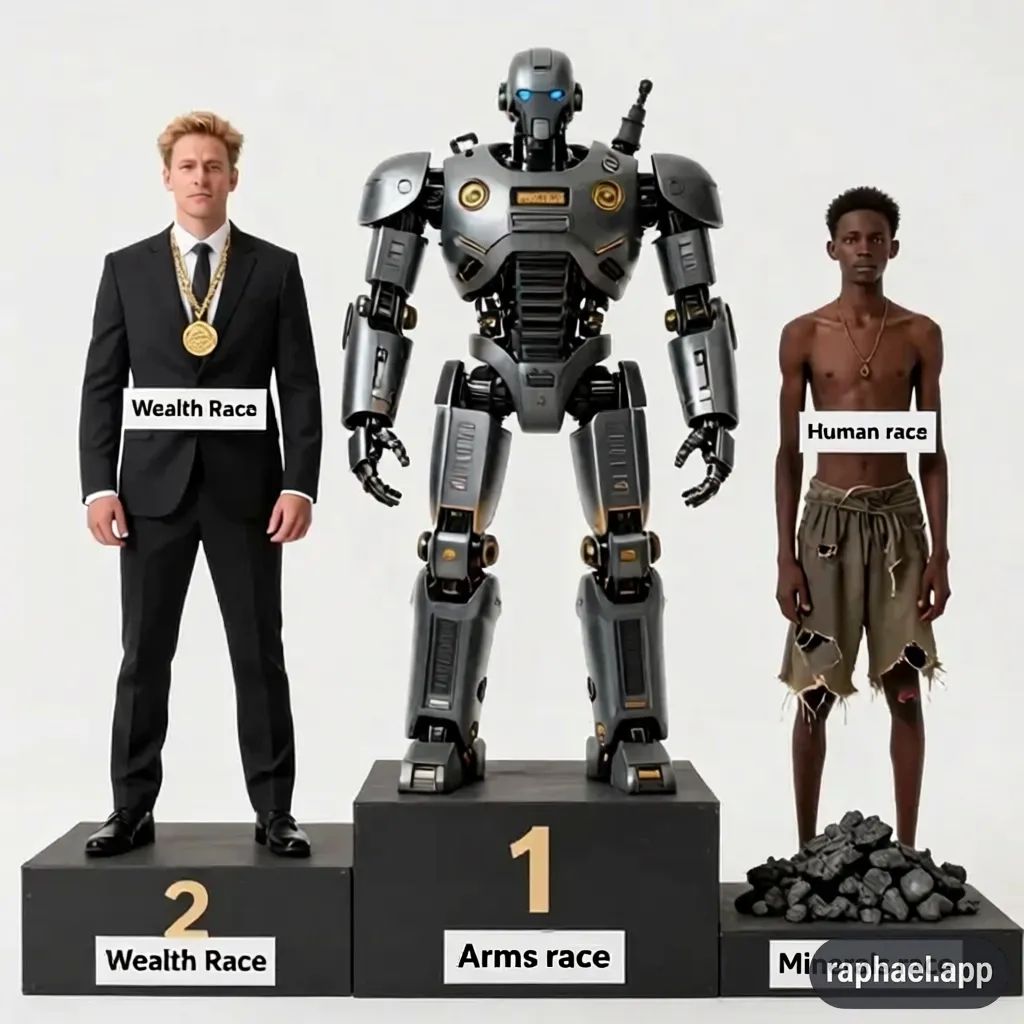
Created using Raphael
It is a crying shame that the global polity has inverted priorities. At # 1 is the arms race, at # 2 is the race for wealth, at #3 the race to acquire resources (eg the attempt to grab Greenland) and, low on their scale, the human race.
George Harrison realised this, way back in 1970, when he poignantly sang
‘ isn’t it a pity, isn’t it a shame,
How we break each others hearts,
And cause each other pain’
Right now, besides the US + Israel versus Iran war, the major ongoing conflicts are Russia v/s Ukraine, Pakistan v/s Afghanistan, the Sudan civil war, and the internecine wars amongst Haiti’s gangs.
The wars are forever wars, because the MIC, or Military Industrial Complex, builds more technologically advanced weapons so as to gain the edge. At till others catch up, but the so called ‘progress’ ends in an upward spiral that wastes resources diverted from development.
Iran is fighting the ongoing war using asymmetrical warfare against two nations which have military superiority over it. Iran doesn’t have much of an airforce or navy, where both USA and Israel dominate. So it has built stockpiles of medium range missiles and of drones. Drones, costing $ 20-50000, which can be used as a swarm to attack, lead to asymmetry if taken down by missiles costing over $ 1 million each. The financial asymmetry makes a prolonged conflict unsustainable.
But here’s where the rising spiral of technology ‘progress’ comes in. US arms supplier Raytheon has developed a weapon, the Coyote Block 3 NK, which, on approaching a drone swamp, emits an EMP, or Electro Magnetic Pulse, that renders the drones ineffective (https://www.rtx.com/news/
As of now, USA has embarked on the third phase of it’s war on Iran. In the first phase it decapitated top leadership by removing the Supreme Leader and several top IRGC generals. In the second phase it took out Iran’s radar systems, sunk several of its ships, and its airforce, which was outdated. Now, in the third phase, it is using its B1 and B2 bombers for attacking the stockpiles, plus the manufacturing capabilities, of Iranian missiles and its drones.
The race for wealth is, sadly, linked to the arms race. The MIC encourages the forever wars. Wars are big business; the winner gets access to the resources of the loser. The reported costs of developing weapons systems are hugely inflated to make superlative returns on the cost plus Government contracts.
In all these races the priorities of the global polity is inverted. The human race, as depicted in the image, is almost out of the picture.
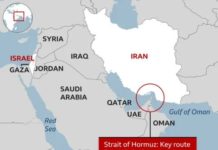
Because of the Iran war, the Strait of Hormuz is, effectively, shut for global trade. Through this narrow passage of water passes some 20% of global oil trade. Vessels, unable to get insurance in a war zone, refuse to ply through it. The price of crude oil will rise with each prolongation of the conflict. The price of a barrel of Brent crude has risen from $69/barrel to $82.
India, which imports 90% of it’s crude oil requirement, and China, which import 70%, will be most hit. Their combined population is 35% of global population. Qatar has announced inability to supply contractually obligated natural gas, under force majeure (circumstances beyond it’s control).
The fate of the human race is inconsequential, on the inverted priority structure of the global polity.
India would also be hit, were the Iran war to prolong, because of lack of fertilisers. A third of urea trade passes through the Straits of Hormuz. Fertiliser prices, hence cost of food, would go up. The human race has a low priority.
Hopefully, in the third wave, the US will be able to eliminate the missile threat, and be able to open up the Strait of Hormuz to restore normalcy to trade in oil, gas and fertiliser.
Ridham Desai, MD, and Head of Equity Research at Morgan Stanley India, explains brilliantly. In this video the fundamental shift that has taken place in the Indian economy. The economy is now over $4 trillion. Even if oil prices rise to an earlier peak of $140/ b, the oil import bill would be like 6% of GDP. Moreover, the advent of COVID made work-from-home acceptable, leading to the rise of GCCs (global capability centres). GCCs provided revenues to the tune of $70 b. last year, set to grow steadily. As a result of both trends, Ridham feels that India’s current account deficit has fallen, perhaps under 1% of GDP. Which, in turn, will stanch the fall of the ₹.
Last week the BSE Sensex dropped 2369 points to close at 78918, due to the war, the closing of the Strait, and the fear of rise in price of oil and gas and shortage of fertiliser.
The hope is that a solution would emerge soon, if the threat of missiles is removed, and the threat of asymmetrical drone warfare is negated by technology (EMP and laser) and by the third wave removing stockpiles.
It’s time for the global polity to re-prioritise and place human betterment and happiness above the MIC led forever wars.
———————————-
Comments may be sent to: jmulraj@asiaconverge.com












COMMENTS