

























26 Oct 2026
Musk and his plans in India
By RN Bhaskar and Sakeena Bari Sayyed
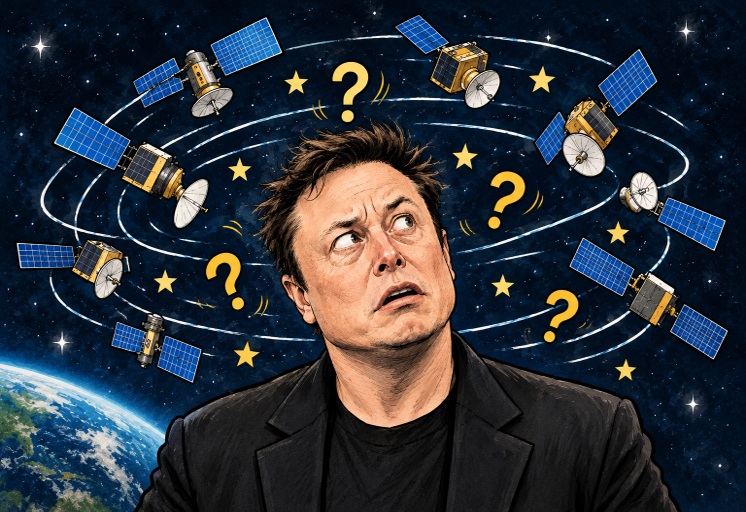
Image: Chatgp
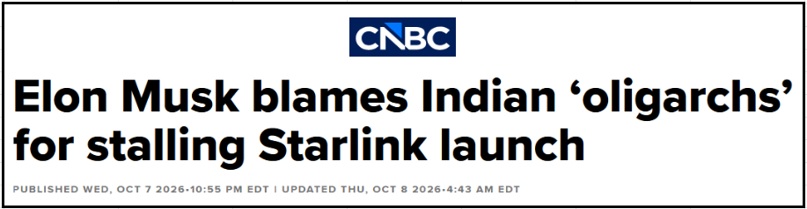
On 7 October, 2026, Elon Musk suddenly began hitting the Indian media circuits. They heard him complaining that some Indian “oligarchs” were blocking his Starlink proposal (https://www.cnbc.com/2026/10/08/elon-musk-starlink-spacex-jio-airtel-india.html).
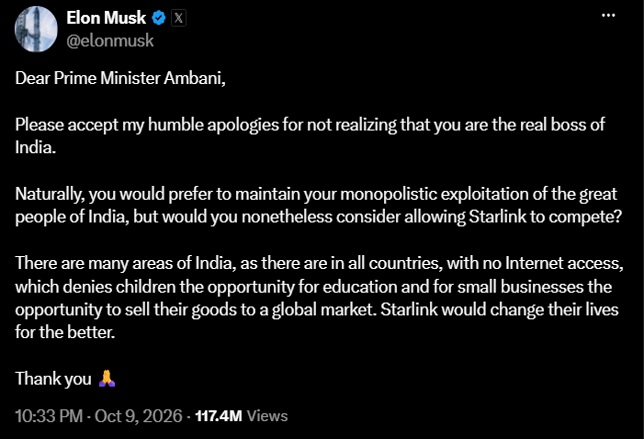
 A few days later, Musk sent out a tongue-in-cheek tweet addressed to “Prime Minister Ambani” (https://x.com/elonmusk/status/2108604227643719745?s=20). In that message he stated, “Please accept my humble apologies for not realizing that you are the real boss of India. Naturally, you would prefer to maintain your monopolistic exploitation of the great people of India, but would you nonetheless consider allowing Starlink to compete? There are many areas of India, as there are in all countries, with no Internet access, which denies children the opportunity for education and for small businesses the opportunity to sell their goods to a global market. Starlink would change their lives for the better.”
 The Ambanis did not respond initially. Then, 10 days later, in a signed statement, the group said (https://x.com/RIL_Updates/status/2110917400145330203?s=20) that “At Reliance, we have never feared competition. We see it as the truest test of who serves the customer best. . . . . We welcome competition in satellite communications, including Starlink. Every player, Jio included, must serve the people of India and abide by the laws and policies of the land.”
However, in order to understand the reason for such explosive messages, one needs to go into the sequence of events leading up to this outburst.
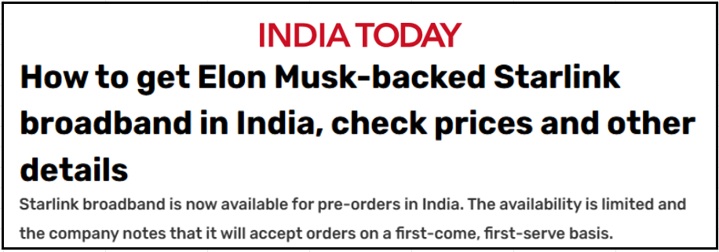 Contrary to his claims that he has been waiting five years for starting his Starlink services in India, it is clear that Musk is lying. The first mention about his Starlink project in India came in March 2021 (https://www.indiatoday.in/technology/news/story/how-to-get-elon-musk-backed-starlink-broadband-in-india-check-prices-and-other-details-1775035-2021-03-03 ) when Musk did something brash. He inserted advertisements in Indian newspapers inviting pre-bookings for his Starlink services. Those interested would be required to pay a deposit fee of $99, or about Rs 7,300. That money would be for the Starlink equipment that the users would have to install to get the internet connection.
At the moment, clarified the Starlink website at that time, the services were “under beta and therefore, connections are limited and would be provided on a first-come-first-served basis. Once the user has made the payment, their priority access in their location gets reserved. The amount paid is fully refundable, allowing users to also backtrack on their decision at a later stage. Debit and credit cards can be used to make this payment.”
The time frame for activating these services was not shared. But a claim was made that the service would cover cities like Delhi, Bengaluru, Mumbai, Chennai, Kolkata and Hyderabad.
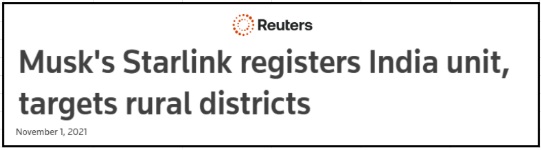 It was only in November 2021 (https://www.reuters.com/business/media-telecom/musks-starlink-registers-india-unit-targets-rural-districts-2021-11-01/) that Starlink actually registered its office in India. It claimed that an official presence in India would now permit it to provide services. The company said that in the first phase, it would give 100 devices for free to schools in Delhi and nearby rural districts. It would then cover 12 rural districts across India (https://www.aljazeera.com/economy/2021/11/1/starlink-in-india-musk-gears-up-to-launch-internet-services)
Starlink was not welcome in India by everyone, despite its seductive offers. The first visible protest was visible within a month, Protests begin by November 28 .
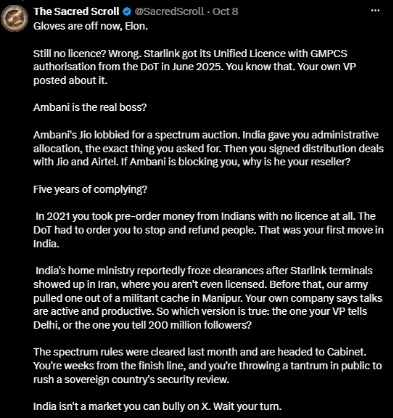
There were other protestors as well who emerged later (https://x.com/SacredScroll)
 The authors too were perplexed. Musk’s first moves were quite contrary to what entrepreneurs are expected to do in India, especially where telecom-related services are concerned. They are supposed to apply first to the telecom authorities and then approach the general public. Instead, Musk inserted advertisements in Indian media, inviting applications from people desirous of getting a Starlink connection.
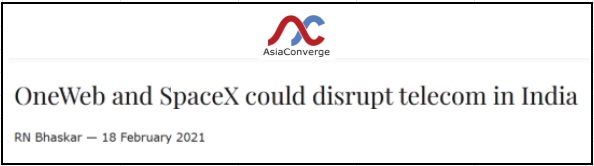 I was familiar with the telecom rules – one of the most highly guarded turfs in India. I contacted a few people in the telecom department, and discovered that they too were equally flabbergasted with this development. But they did not say anything openly. We were aware that OneWeb of the Airtel group. SpaceX was promoted by Elon Musk and gradually transitioned in Starlink (with the rocket launcher business going to SpaceX).
So, what prompted Elon Musk to make this brash ‘unauthorised’ entry? One explanation is that Elon Musk had just emerged as the richest man in the world, displacing Jeff Bezos as the #1(https://www.aljazeera.com/economy/2021/1/7/bbelon-musk-overtakes-bezos-to-become-worlds-richest-person). Had his wealth made him assume that nobody would stop him?
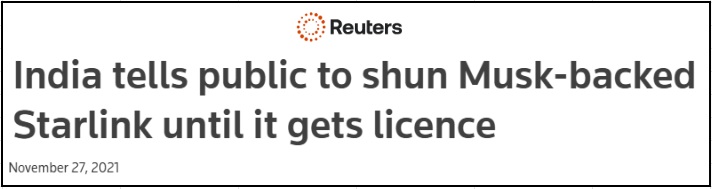 The government of India finally woke up to this brazen move by Elon Musk. In November 2021 (https://www.reuters.com/technology/india-tells-public-shun-musk-backed-starlink-until-it-gets-licence-2021-11-27/) it formally told Musk not to promote Starlink, and advised Indians not to subscribe to this service. In India, trying to seek an unauthorized communication connection can invite severe penalties.
In order to apply for permissions, Musk was compelled to set up a registered office in India for which he got permission on 31 July 2025 (https://www.freepressjournal.in/tech/elon-musks-starlink-receives-licence-to-launch-satellite-service-in-india) The announcement coincided with the 30th anniversary of the first cellular call made in the country in 1995.
 “Starlink has been granted a Unified License to launch satellite internet services in India. Frameworks for spectrum allocation and gateway establishment are ready, ensuring smooth rollout,” said Union Minister Scindia. But the licence was not to start business. To do that, you also need spectrum clearances and other clearances as well. That is bound to be expensive. Will Starlink or any of the other players be able to afford low-cost bandwidth for villages?
It was for getting spectrum that Reliance had asked the government to allocate bandwidth and not auction it. Musk was at an advantage if the spectrum had to be purchased through an auction. That would push both Airtel and Reliance out of the game to set up their own satellite services. But Reliance could not have its way. After the scams that came to light with the previous government, the Supreme Court had made it a law that all public resources must be auctioned.
 In any case, on June 10, 2026, Lauren Dreyer, Vice President of Starlink Business Operations, said in a post on social media platform X “Starlink remains in active and productive discussions with the Government of India contrary to misleading stories based upon unsubstantiated claims from anonymous sources. We have worked with the Government through all of the required regulatory and compliance processes in a transparent and responsible manner” (https://www.business-standard.com/industry/news/in-active-talks-with-indian-govt-receivd-encouraging-feedback-starlink-126061000183_1.html)
But the Digital Communications Commission would not be rushed. It approved the spectrum framework on 3 September, 2026 (https://www.thehindubusinessline.com/info-tech/dot-readies-cabinet-note-on-satcom-spectrum-charges-approval-may-come-in-coming-days/article71571020.ece). The Department of Telecommunications (DoT) was to take pricing and allocation to the Indian Cabinet. So what could have prompted Musk to rail against Mukesh Amabni?
One can think of three possible causes.
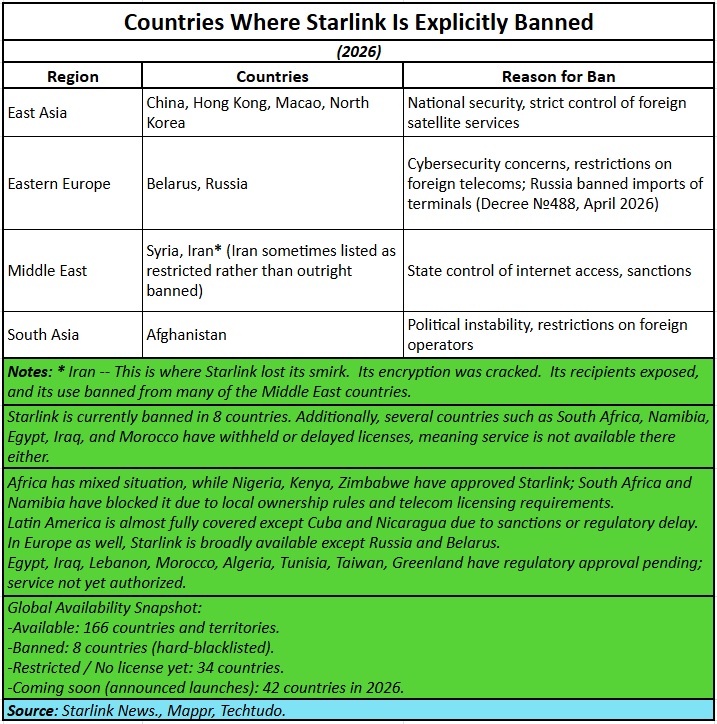 #1. Musk knows that the security clearance is one of the prerequisites. Trump’s own record for abetting insurrection in at least three countries is well documented. The biggest was in Iran (https://bhaskarr.substack.com/p/iran-was-once-an-ugly-duckling). Musk’s company had, in collusion with the CIA and the Mossad, smuggled in around 400 Starlinks. Iran discovered this. Then the impossible happened. Starlink’s communication channels that were supposed to be impregnable were cracked by the Chinese and the Russians. Iran came to know of the contents, and traced the recipients of all the Starlinks. All of them got arrested. Some have been executed. That shattered the myth about Starlinks being totally secure.
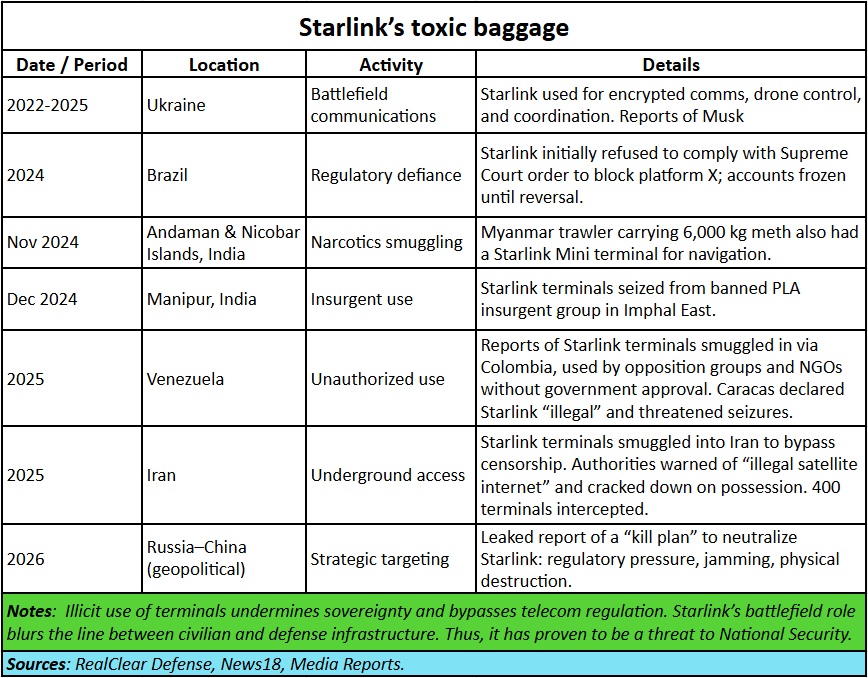 It also confirmed Musk’s loyalty was more to Massad and the CIA than to other countries. The result: nobody in Central Asia, Russia, China and possibly even the Middle East will touch Starlink. It remains largely a European and US network. The other countries that have faced this security threat are Venezuela (https://asiaconverge.com/2026/01/is-venezuela-the-path-to-trumps-third-term/) and even India in Mizoram (https://bhaskarr.substack.com/p/india-ensnared-ready-for-breakup). India has tried to paper over this crisis – one does not know why. But the ghost of Elon Musk haunts the Indian security establishment – even though Musk may deny it.
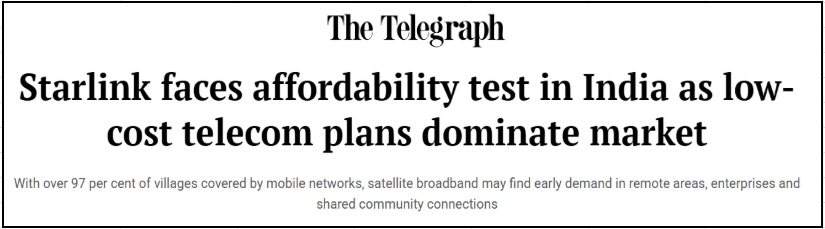
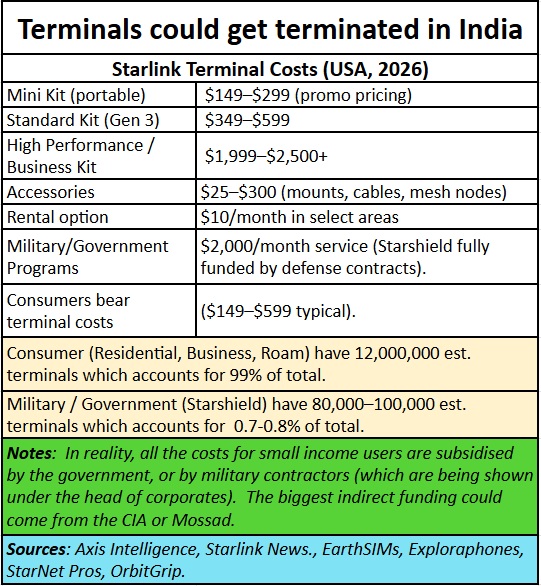
#2 Satellite based communications are not cheap. Someone has to pay the price. In the US and Europe, corporates and the government bear the cost to subsidise connections for the poor. The corporations include defence contractors like Raytheon, Halliburton and Boeing.
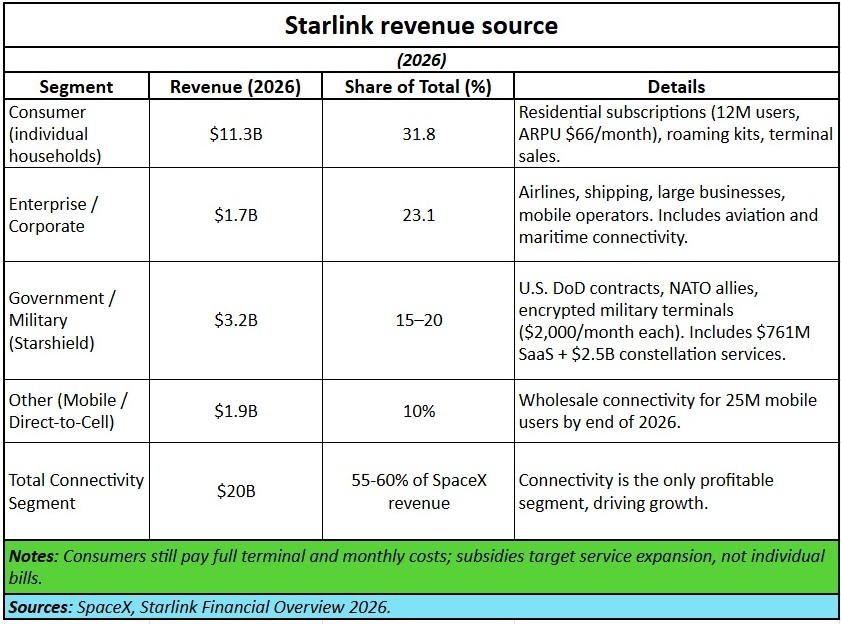 Will India’s security agencies agree to use Starlink? It could lead to insurrection among the Indian armed forces.
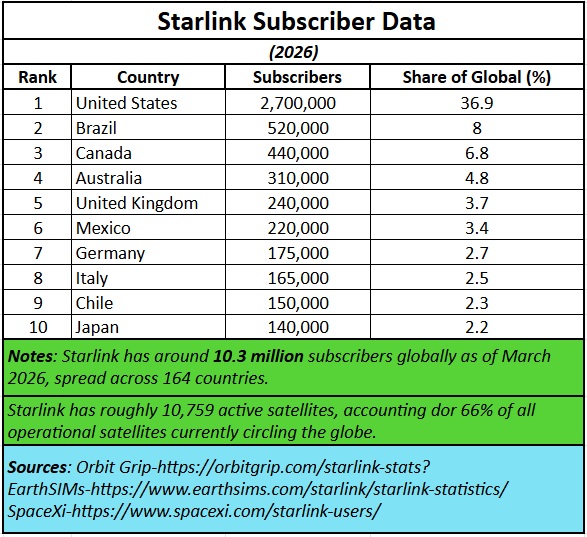 #3. Musk knows how the two wars – in the Middle East and in Europe – are bleeding the US. He knows that this has made many people disenchanted with Trump. There is a general feeling that Trump may not get the victory it wants. Moreover, Iran appears to be growing stronger with each passing day (https://bhaskarr.substack.com/p/blockading-iran-a-chimera). The anchor state in the Middle East – Saudi Arabia – is also at the brink of collapse (https://bhaskarr.substack.com/p/will-saudi-arabia-soon-become-plain). With the Middle East itself on the brink of disintegration, Musk desperately wants India to be his customer. The big question is – will Reliance and Oneweb who together have their own plans allow India to cross subsidise Starlink with the toxic baggage it brings? Will India’s security be brought to heel?
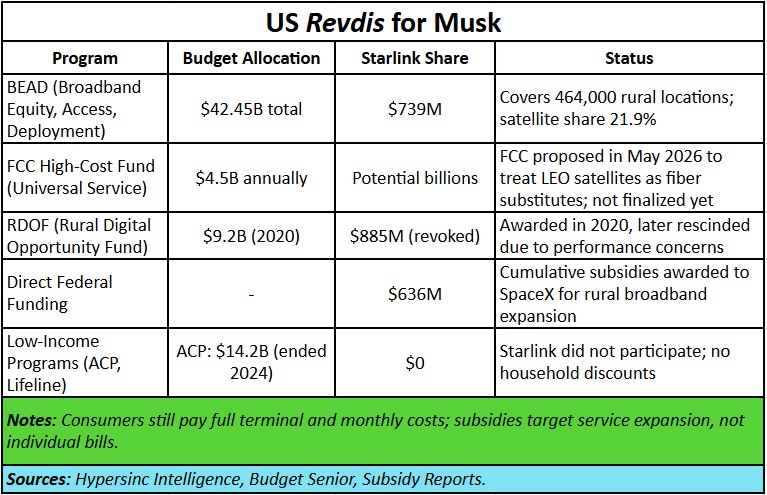 Musk may have sensed this. Hence his desire to up the ante.
Meanwhile, there is a huge controversy brewing about Musk. A documentary which has just been released raises some alarming questions — https://zoomer.com/the-z-list/2026/10/15/elon-musk-the-great-pretender . Oscar-winning director Alex Gibney reveals what he learned after years of researching and reporting on the world’s richest person (https://www.levernews.com/the-elon-musk-film-you-need-to-see-before-the-midterms/).
Unfortunately, all this is happening at the worst of times. India’s relations with the US are souring. India cannot afford to pay for arms or agricultural produce from the US. Will it allow itself to be bled by Starlink?
Will Musk be capable of raising the decibel level?
It will now depend on whether India will buckle.
================
Do watch our latest podcast. About Maharashtra’s FDA. It tries to show it has consumer interests at heart. But scratch the surface and many contradictions emerge. It does not allow cheaper goods to come into the market. It attacks large restaurants, without even speaking against one of the biggest promoters of disease. Tukaram Mundhe, its commissioner, is no knight in shining armour. You can find it at https://youtu.be/fiRj8locq4c
================
Finally, do not forget our News behind the News
- The bear grows stronger
- India should brace for power shutdowns
- Gold: Promise and peril
- Billionaires face rough weather globally
You will find it at https://www.youtube.com/live/y7YLfpOKl0Y?si=DFlC3SqVPGwdShZ9
——————-








COMMENTS