


























India New Zealand FTA – Will this destroy the Indian dairy sector?
By RN Bhaskar and Sakeena Bari Sayyed
Image: Business Standard
Monday, December 22, 2025, almost every Indian newspaper highlighted the India New Zealand FTA deal. The font used was unusually large. To the practised eye this looked odd. Was the news release orchestrated? This is because even the previous FTA deals – with Australia, UK and with UAE — did not enjoy this prominence
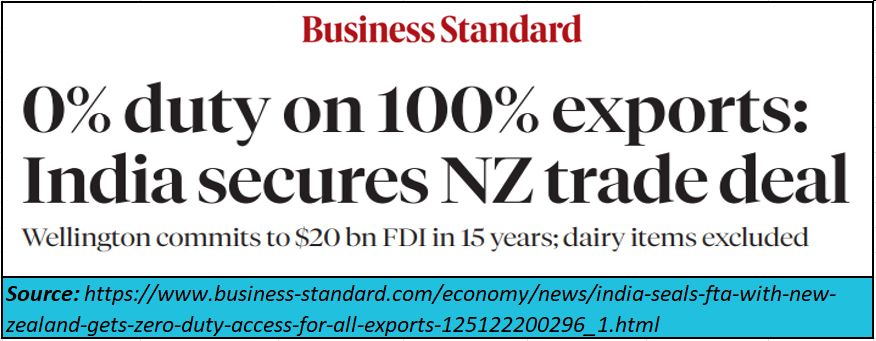 The news reports were not exactly truthful. First because India did not “secure” the deal; it was New Zealand’s coup. It has been trying to get a toehold in India’s massive dairy segment. There were other problems as well. We shall deal with some of them below.
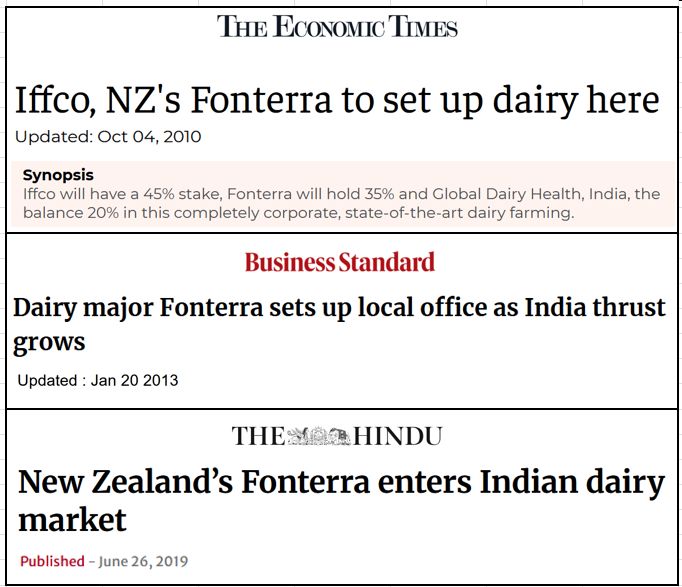 Desperate for India
New Zealand tried to ‘secure’ India several times. It initially tried doing this through Fonterra several times. The target was India’s dairy sector. India was the world’s largest player. That made NZ’s dairy industry a bit nervous.
The first time in recent memory was in 2009-10 (https://economictimes.indiatimes.com/iffco-nzs-fonterra-to-set-up-dairy-here/articleshow/6681036.cms?from=mdr). It was as a joint venture with IFFCO, but it involved several irregularities and the project was dropped. The IFFCO chief mysteriously died in a gun accident (https://timesofindia.indiatimes.com/india/iffco-chief-jakhar-dies-in-freak-gunfire/articleshow/7308195.cms). Fonterra then tied up with a unit in Baramati, Maharashtra, but is still groping around in the marketplace. Competing with Amul and other players has been difficult. It could not match the prices that Indian producers offered. Could imports and ‘subsidised’ prices work?
In 2019, New Zealand persuaded the team working directly under Piyush Goyal, the minister in charge of RCEP discussions (RCEP is the acronym for Regional Comprehensive Economic Partnership). It persuaded the team to allow it to export to India only 5% of its annual global exports. The deal was almost signed (https://www.moneycontrol.com/news/business/economy/how-bureaucrats-got-conned-into-short-selling-indian-interests-to-new-zealands-milk-industry-4334911.html). Then stepped in RS Sodhi, managing director of GCMMF (the dairy co-operative federation headquartered in Anand, Gujarat, in charge of marketing dairy products under the Amul brand).
 Sodhi made a detailed presentation to minister Goyal explaining to him how the “5%” would be disastrous for the entire dairy sector in India. Sodhi also wrote to the government, explaining to its key officials that, as a custodian of the interests of 10 crore milk producers (most farmers have just one or two cattle heads), he was against the deal. The farmers too joined in. The ground swell alarmed the government. It backtracked from this deal and even walked out of all RCEP negotiations.
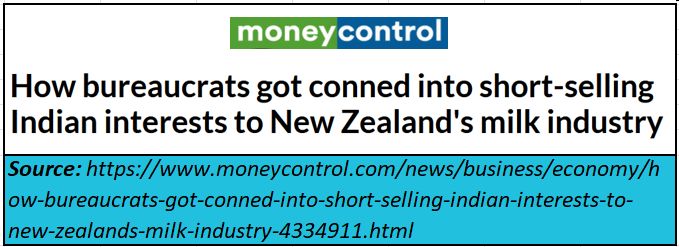 Since then, minister Goyal has continued promoting New Zealand in India.
The latest NZ-India FTA deal is a culmination of hectic discussion that began just last year.
 Did the govt seek to mislead India?
Just look at the press statement from the government. It says the following:
‘India- New Zealand FTA eliminates duty on 100% of Indian Exports
USD 20 billion investment commitment over 15 years, strengthening long-term economic and strategic cooperation.
India protects its key interests in dairy and agriculture.’ (https://www.pib.gov.in/PressNoteDetails.aspx?id=156654&NoteId=156654&ModuleId=3®=3&lang=1).
Do note the words, India protects its interest in dairy and agriculture. Should we believe the government?
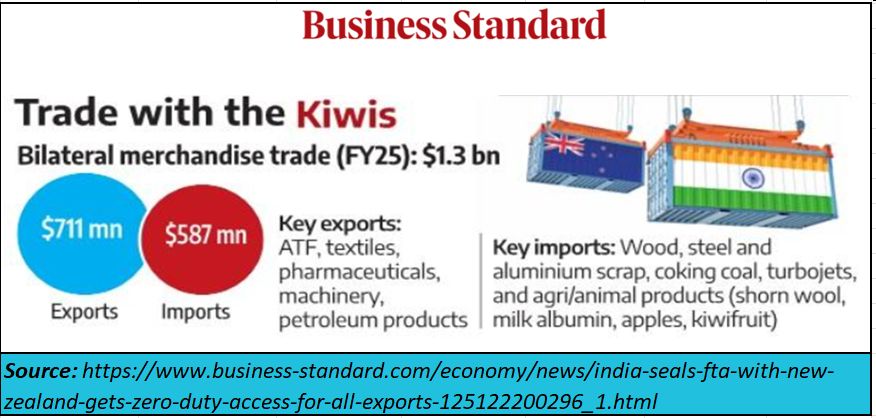 Undoubtedly, there are aspects of the FTA which may benefit India. Both countries have promised that they will promote bilateral trade and that India’s exports will increase.
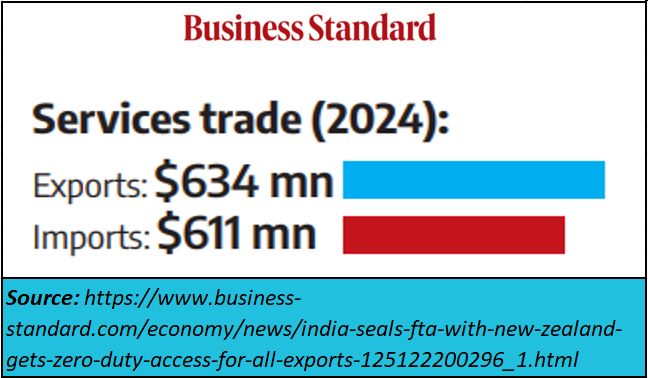 There is also the trade and services which could benefit India immensely.
That is all very fine. But the fly in the ointment is the dairy sector. India has not protected its own interests.
This is crucially important for India because what holds the rural sector together is the milk and dairy industry. It accounts for a higher share in India’s GDP than both rice and wheat put together. It ensures cash to at least 10 crore families which translates into 50 crore people — almost one third of India’s population. It is the only agricultural produce that can give farmers a regular cash flow every day (sometimes once a week). And, it is one sector in which India is an undisputed global leader. Much of this was the result of the strategies pursued by the late Dr. Verghese Kurien.
This predominant role for India in the global dairy sector riles milk producers like New Zealand and the EU (and even the US) which harbour a desire to wreck India’s dairy sector. Their inability to ease their surplus stock of dairy products in the global market – because of their inability to sell in India – has caused global dairy prices to crash. If imports are allowed now, India will suffer dumping prices, and farmers will be grievously hurt.
This is what Kurien had repeatedly warned India about (free subscription — – https://bhaskarr.substack.com/p/the-shameful-attempted-marginalisation). It was a message that former prime minister of India, Lal Bahadur Shastri, understood properly. It’s a message that minister Goyal’s team has yet to appreciate or comprehend.
 Different strokes
So, while the government claims that it will protect India’s interests in the dairy sector, here is what the New Zealand government release states.
Moreover, there are other issues which may creep up — a good analysis can be found at https://dairynews7x7.com/category/blogs/india-nz-dairy-fta-safeguards-or-silent-slippages. For instance, India has permitted New Zealand to bring in its apples here. This may anger or discomfiture the US whose ‘Washington Apples’ are available in India.
As Bloomberg states, ” Washington apples cost 89 rupees (about $1) apiece in Mumbai on quick commerce sites. New Zealand apples are already cheaper at 66 rupees. That gap will widen if US President Trump and Modi don’t make up quick”. Moreover, at such low prices one doesn’t know if it will affect the fortunes of apple growers in Himachal Pradesh and Jammu and Kashmir.
 NZ spills the beans
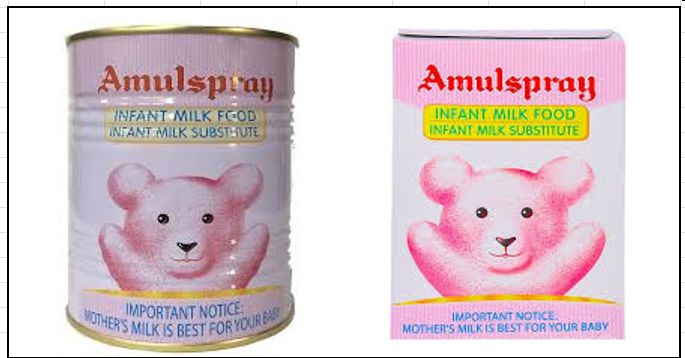
Look at the statement given out by the New Zealand government (https://www.beehive.govt.nz/sites/default/files/2025-12/NZ-India%20FTA%20Key%20Tariff%20Outcomes%20%285%29.pdf). It clearly states that India has agreed to let New Zealand export instant ‘bulk infant formula and other dairy based preparations. The same is reiterated in another NZ release (https://www.beehive.govt.nz/sites/default/files/2025-12/NZ-India%20FTA%20Infographic%20%281%29.pdf).
The ‘bulk infant food’ sounds innocuous. Except that this item would be pitted directly against Amulspray, one of the most popular and profitable product lines under the Amul brand. One does not know if the current GCMMF chief has protested to the government, the same way as Sodhi did when he headed this organisation created by Varghese Kurien. But, clearly, the FTA deal could spell trouble for India’s largest dairy player. If a profitable segment of the Amul product range is threatened by a wily market player, expect the worst for Amul in particular and for the Indian dairy sector in general.
Consequences
The rural sector accounts for more than 50% of India’s population. As study after study has shown, income from cultivation has been meagre for small and medium farmers (https://asiaconverge.com/wp-content/uploads/2022/12/2022-12-29_farmer-distress-earnings.jpg). They desperately need the cash flow from milk production.
Moreover, the dairy sector in India also supports the leather industry – this is crucial for both exports and employment (free subscription — https://bhaskarr.substack.com/p/dairy-ruminations-that-make-little). Leather is labour intensive. The dairy sector also contributes to beef exports. If the dairy sector crumbles, expect the rural sector to become even more financially distressed than it is today.
A weakened rural sector will affect purchasing power and hence consumption. That in turn will destroy India’s core strength of being a consumption economy.
Cumulatively, this will weaken India and jeopardise even its independence. Unfortunately, the willingness to let ideology trump economic sense, and allow Indian producers to be jettisoned in favour of foreign interests are factors that have plagued India. Just listed the two videos on ideology and national pride (the links can be found at – free subscription — Two speeches in India’s Parliament in December 2025)
Similarly, do consider the way the government has let down farmers who produce oilseeds (https://asiaconverge.com/2022/01/the-government-lets-down-indias-edible-oil-industry/) and pulses (https://bhaskarr.substack.com/p/government-penchant-for-pulses-import). India has short-sold its agricultural interests before as well. Let’s hope it won’t happen with the diary sector this time.
Conclusion
India will have to take a relook at the provisions of this new FTA proposal. Allowing New Zealand to wreck India’s dairy sector will end up destroying India. Instead of having a Viksit (powerful and developed) Bharat, India could be reduced to penury. It could end up becoming a cheerleader of colonialism all over again.
======================
Do view my latest podcast on the questions behind the Indigo flight cancellations and passenger inconvenience that the government, DGCA and the airlines do not want to answer. You can find it at https://youtu.be/NzksovReIVA
============================
And do watch our weekly “News Behind the News” podcasts, streamed ‘live’ every Saturday morning, at 8:15 am IST. The latest can be found at https://www.youtube.com/live/mNCxJY79NAs?si=TsjlzVWd20jB-BNP
======================











COMMENTS