























30 March 2026
The Middle east war will scar India badly
By RN Bhaskar and Sakeena Bari Sayyed
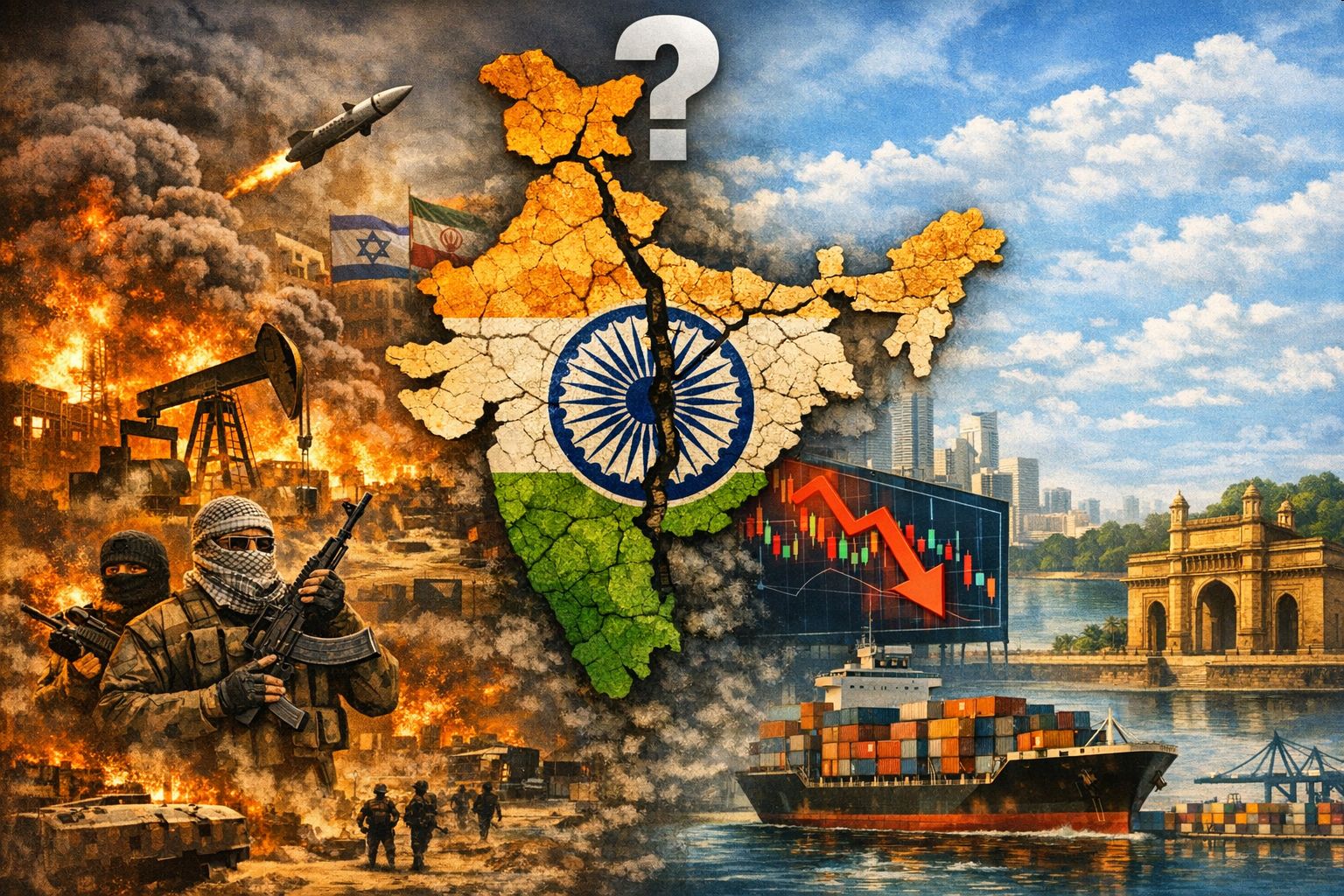
Image: Copilot
The war in the Middle East continues. It could escalate further. The recklessness on the part of the US and Israel in starting and stoking war is condemnable. The danger is that it could end in all oil installations in the Middle East being put to flames. That would create a near collapse in the availability of fertilisers, plastics, and other items, in addition to oil and gas.
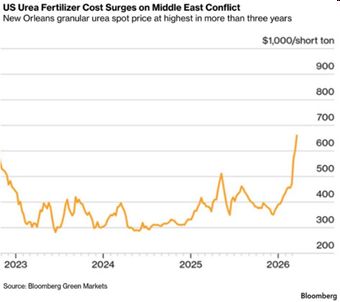 The coming crisis
The war is already causing havoc with logistics as a Mauldin Economics newsletter shows.
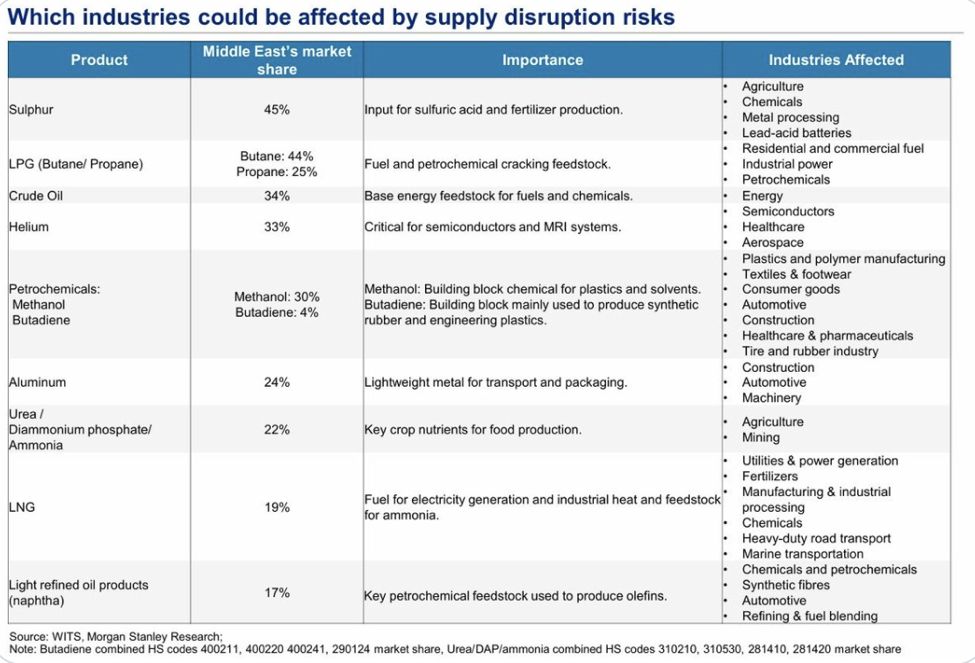 This will hit the world hard. And, maybe, unless the world is hit hard, there is little chance for the war to end, as John Mearsheimer points out (Timeline 12:01 to 13:04 – https://www.youtube.com/watch?v=1jstl3GhAYg ). Only a global crisis that will hit the US will push it towards ending the war.
Obviously, the US will be the biggest loser. First because it has huge equity stakes in each and every gas and oilfield in the Middle East (through its companies), except for Iran. That is another reason why the US is willing to join Israel in the war against Iran. The US has limited oil reserves, even though it is currently the world’s largest producer of oil. It is going hell-for-broke. That is why it wants Venezuela’s oil and now Iran’s oil and gas. If the Middle East burns, the biggest loser will be the US.
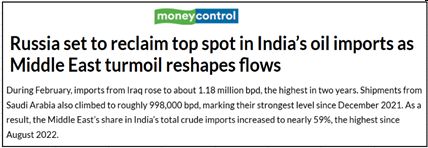 Russia will be sitting pretty and will become the world’s largest producer of oil and gas and will begin producing more to meet global demand. Already, as a Bloomberg report points out, “The Kremlin is earning the most from its oil exports since just after its troops marched into Ukraine in 2022, boosting crude flows amid soaring prices and eased sanctions. Russia’s oil income has been heading down and while Putin has warned that the windfall will be temporary, for now Moscow’s own war chest is getting a big boost — about $270 million a day, up from $135 million.”
India’s quagmire
But what about India? Obviously, it will be hit very badly. And this is on account of several reasons:
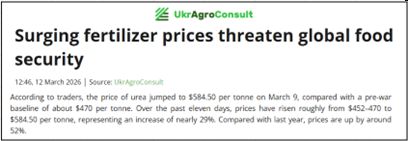
- India’s PM has assured nearly 10 million Indians living in the Middle East that his government would work towards their safety (https://www.ndtv.com/india-news/7-empowered-groups-formed-to-tackle-middle-east-war-impact-pm-modi-in-rajya-sabha-11259246). He has also assured farmers that the government would shoulder the burden of higher fertilizer prices. That will push up the government’s deficit because it will have to cover the farmers for the increased fertiliser prices. However, the PM’s moves are a reassurance. But other actions do not lend the same comfort.
- For instance, why did the government not protest when the US handcuffed and shackled illegal immigrants while returning them to India? Why did it not do what Colombia did – refuse to accept the immigrants till their shackles were removed? After all, immigrants are citizens, and human beings. The government is at fault for not creating enough employment opportunities. Was the Indian government scared of challenging the US?
- The government buckled once again under US pressure in February 2025 (https://bhaskarr.substack.com/p/the-indian-government-has-inflated) and agreed to purchase US weaponry and agri products. This was even after US arms had not performed well in the Ukraine-Russia skirmish. Later the government backtracked, and said it would not import US agri products, but genuflected again and allowed some agri products. Now the trade deal is said to be off and will have to be renegotiated. That is another cost India will have to bear.
- India captured 3 Iranian oil tankers stating that they were sanctioned. Really? Didn’t the BRICS summit resolve to treat all unilateral US sanctions as illegal? So, was India committing an illegality? It has now agreed to return these tankers because India wants its ships to have access to the Hormuz Strait.
- India riled all Middle East countries by going to greet Netanyahu, a declared war criminal. India was sending out a message that war crimes did not matter, nor did genocide or ethnic cleansing. Not surprisingly, nobody wants India as a negotiator. They have opted for Pakistan instead.
- India did not protest when an Iranian warship which had been invited by India was torpedoed by a US submarine even though the ship was not armed. The attack was in the Indian Ocean which India claims is its territory to protect. It did not condemn the US submarine’s refusal to rescue drowning sailors as required by international maritime laws. Sri Lanka heeded their cries for help and rescued 43. But 83 sailors died https://www.reuters.com/world/asia-pacific/sri-lanka-rescues-30-people-board-distressed-iranian-ship-foreign-minister-says-2026-03-04/). However, it must be stated that India did permit the second Iranian ship to dock in India and house its sailors (https://maritime-executive.com/article/india-quietly-provides-refuge-for-an-iranian-landing-ship).
- India refused to condole the assassination of the Ayatollah Khamenei for four days. Worse, it instructed all its embassies not to sign any condolence register (https://thewire.in/world/after-four-days-of-silence-india-sends-foreign-secretary-to-iranian-embassy-to-sign-condolence-book-for-ayatollah-khamenei). It finally did express condolences, when Iran refused to allow Indian ships to pass through the Hormuz Strait.
- India has not yet officially objected to the presence of a US national (along with six Ukrainian nationals) caught in North East India, while training Mizo militants in drone warfare (https://www.ndtv.com/india-news/american-matthew-vandyke-ukrainians-among-7-arrested-in-india-under-anti-terror-law-11229312). The US nationals had a record of being involved in other US supported wars as well. Compare this silence with the high decibel protests against the Pahalgam and Pulwama incidents.
- All these actions have sharpened the divide between other BRICS nations and India. It remains to be seen how India honours Iran’s request that India must condemn the US and Israel for the attack on Iran and the slaughter of Iranian children at the next BRICS summit to be held in India. India’s high moral standing in the world community has been dented, and the country will have to work doubly hard to regain the moral authority it once enjoyed.
India’s economy will get hurt
But there are direct financial implications for the country as a result of the war in the Middle East.
- First look at GDP. This is likely to get dented because of three reasons.
- First because, as economists have pointed out, India’s GDP is inflated by around 20% (https://seekingalpha.com/news/4564807-indias-economy-may-be-22-smaller-than-reported-paper-says).
- Second, because production capacities are likely to be hit because of poor exports. Watch also how India’s reserves are falling.
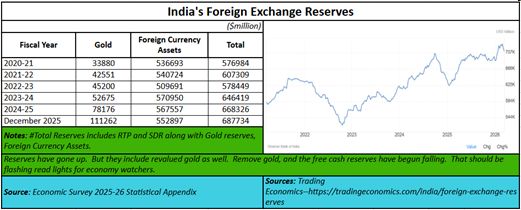 The US is being badly haemorrhaged financially (https://bhaskarr.substack.com/p/the-world-shudders-as-the-us-dollar?utm_source=publication-search) and there are the additional costs arising from the Middle East war which it has started. The UK and EU are also in dire financial straits. None of these countries will have the ability to import more from India.
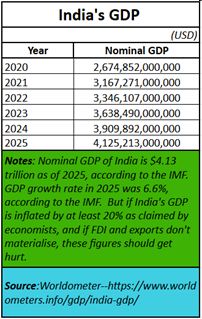
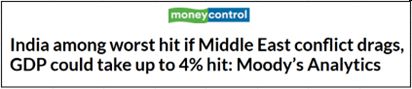 This crisis could have been eased for India had it begun developing markets in East and Southeast Asia. These countries have a faster growing population and a rapidly rising GDP. But India has not wooed them. Expect India’s GDP growth to be muted.
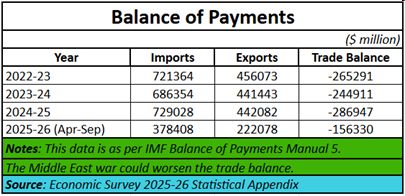
- Look at the balance of trade. This is bound to worsen. This is because of constrained exports, and the rising costs of import. Oil is expected to cost India around 30% more (it could go even higher).
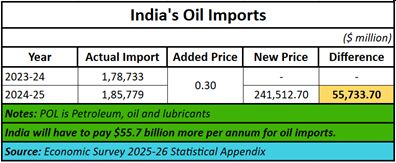
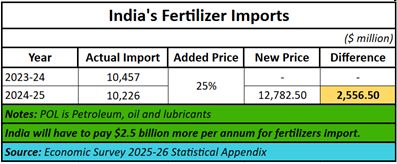
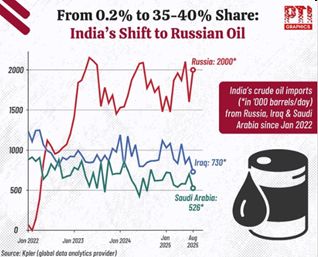
Fertiliser costs could jump by 25%. Together, that could add $2.5 billion by way of costs. India’s decision to stop importing oil from Russia on account of US pressure has resulted in oil discounts no longer being available. Not only will India pay a higher price for oil, but it will be without discounts. The folly of succumbing to US pressure will be acutely felt now.
3. Declining Foreign Portfolio Investments (FPI). Investors have begun taking money out of Indian markets.
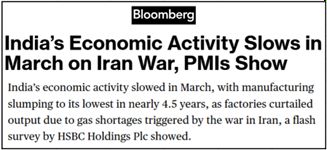
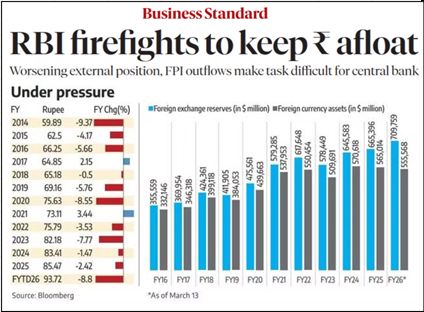 That has caused some of the support for stocks to vanish. Poorer corporate performance could hit India badly as well, muddying the Indian investment climate. India’s corporate sector performance has been the lowest in over four years (https://www.bloomberg.com/news/articles/2026-03-24/india-s-economic-activity-slows-in-march-on-iran-war-pmis-show324). That will dampen India’s GDP even further.
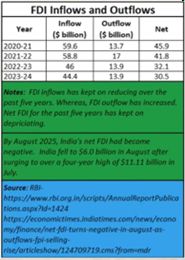
4. FDI or Foreign direct investments are also declining. This is because India’s investment climate is not very bright. It is also because other countries may offer better opportunities and ease of doing business. This is compounded by another problem. Rich Indians are investing overseas. This has resulted in a negative FDI.
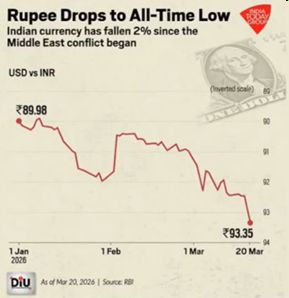
 5. There is a possibility that Indians fleeing the Middle East will bring in their money. But then, they might not. Nobody likes to bring in foreign exchange when the domestic currency is declining. The rupee keeps falling.
 India needs to improve its investment climate urgently.
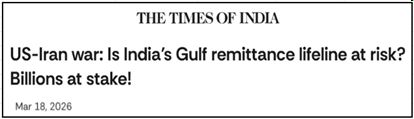
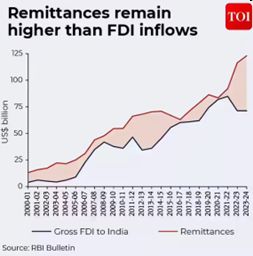
6. Then there could be a problem with remittances. Remember, India gets the highest volume of remittances from Indians working overseas. Moreover, with FDI also the result has been a negative FDI – where forex outgoes are larger than forex inflows.
 Significantly, almost 40% of the Indians work in the Middle East, where the numbers are as high as 10 million. The war in the Middle East sent many Indians scurrying back home. The result could be a drop in remittances.
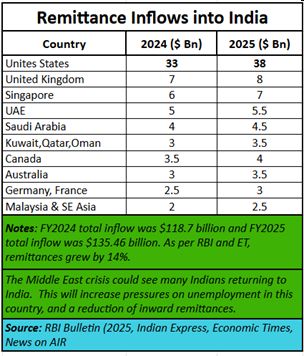 Higher import bills, and lower remittances will make India’s forex situation quite grim.
7. Declining FDI will mean fewer new industries being set up. That will mean more unemployment. Already India’s educated unemployment is soaring. Indians returning from the Middle East will cause unemployment numbers to swell.
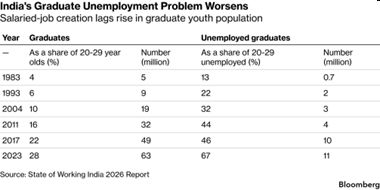 8. Unemployment will cause India’s social fabric to tear even more. The way the politicians have gone about stoking communal fires.
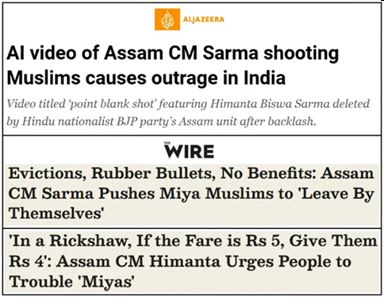 https://bhaskarr.substack.com/p/part-ii-has-the-un-become-irrelevant), the unemployment situation could actually worsen the state of the economy.
9. There is a bigger danger. The recent arrest of the an American and six Ukrainians in Mizoram (https://www.thehindu.com/news/national/nia-probes-wider-network-after-arrest-of-us-ukrainian-nationals/article70754974.ece) points to the danger of insurrection in border states. The way the US has been using this disaffection to weaken India points to the danger of border states becoming disaffected, especially along communal lines. India needs to stop this urgently. The alternative could be a splintering of India that nobody wants.
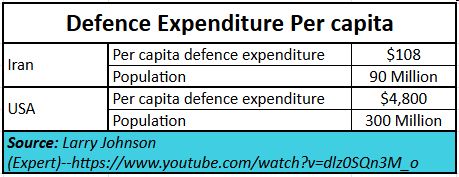
Add to this the prohibitive cost of importing defence equipment from USA and France, and India could be headed for big trouble. Look at the way Iran has managed to keep its defence costs low even while battling both USA and Iran. India has to learn how to plan for war better.
 Possible solutions
India still has a chance to recover. But for that, it must take remedial action on a war footing:
- It must begin mending its image as a country that abets genocide and ethnic cleansing. It must no longer advertise the bonhomie with Israel, especially because it is tainted with charges of genocide, ethnic killing, and apartheid. India’s willingness to allow communal violence can easily sully its image in such a way that the entire BRICS community begins to look at India as a country that could go the Israel way (https://youtu.be/gjOjKOAn74o?si=jn190cBsnL9ZEMcN).
2. It must study the way war is being conducted. All the (high cost of) weapons that the US and Israel have employed, have proved to be ineffective against (cheaper) Iranian weapons. This is the time to look at asymmetric warfare. By adopting it, India becomes stronger in its defence. It also saves huge amounts of money. The possible loss of markets (because of the poor performance of US weaponry) will drive the US to push India to purchase US weaponry. India will have to counter this pressure. In any case, the Mizoram incidents shows that the US is willing to play insurrection games with ‘friendly’ countries as well. Such developments should encourage India to smartly reduce its defence outlays. That will help India improve its balance of payments situation.
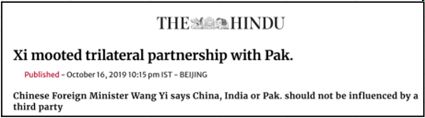 3. Work with China to create a zone of peace. China’s president Xi Jin Ping had suggested this when he was on a three-day visit to India and strolled down the beaches of Chennai in 2019 (https://www.thehindu.com/news/national/xi-mooted-trilateral-partnership-with-pak/article29713793.ece). India needs this zone of peace with China, and Pakistan. That will help India further reduce its defence outlays. Insist on full technology transfers from any defence supplier. It will strengthen India’s defence know-how. It must learn from Iran how to do this.
4.Cut down on agro imports, especially of milk and dairy products. The dairy sector is the backbone of India’s rural economy (https://youtu.be/anz5So-Xu6c?si=dp4AbpisOq6lp–9). Create policies that reduce the temptation to import edible oil. Don’t hurt agriculture and the rural sector, else the economy will suffer. Such moves will also help improve India’s balance of payments.
5. Relax the cattle slaughter laws which have contributed immensely to rural distress (see podcast https://youtu.be/ma2JBGQahzw?si=g6XBiPwR2Wgd4m0m). In fact, people should listen to Dhruv Rathee https://www.youtube.com/watch?v=rygbPO6hM9Y. He shows how Hinduism was never really against eating meat or even beef. Unfortunately, the government itself helped spreading this inaccurate narrative. Rathee explains how bigoted many people in India have become by not knowing enough about their own religious texts.
6. India needs FDI urgently. Most Western countries do not have the money to invest in India. Moreover, India’s investment climate needs improvement. China, however, has investible funds. It has already offered to work on ways that will bring down the trade deficit by replacing that with FDI. That will do two things. India can start new companies and reduce unemployment. Such moves will also help improve its balance of payments. As a consequence, India’s GDP will begin climbing smartly. But that will not happen if India creates laws which allow for automatic investment into India only for projects where China has less than 10% of equity investment (https://www.reuters.com/world/china/india-eases-investment-norms-china-economic-times-reports-2026-03-10/). That is an absurd and self-defeating rule. Instead, India should identify sectors where it may not want China’s investments. In other sectors, India should allow China’s investments automatically. India needs FDI urgently. It could become a matter of life and death.
7. Focus on the silver lining. Returning NRIs may mean a reduction in remittances. But the people who return will need houses. Ease construction rules (and the potential for bribe taking). A booming real estate sector will create more jobs, and allow enterprising Gulf-returned Indians to begin making money in India. That is the way wealth generation begins.
What this means is that India must realign itself to ground realities. It needs to become friendlier with other countries and encourage harmony among its own people. If it can bring about an image transformation, India will become relevant to the BRICS movement.
Else the pain will become acute. It will begin first as economic pain. It will then spill over to riots in the street. India itself may splinter, as was obvious from the aborted mission in Mizoram (https://indianexpress.com/article/cities/delhi/6-ukrainians-american-in-nia-net-supply-of-drones-to-insurgents-illegal-entry-in-mizoram-10587611/).
Can India overcome this hump? One desperately hopes it does.
==================
My latest podcast is on the implications of the Iran-Israel-USA war on India. You can find it at https://youtu.be/-6ZOUSz6QlU
===========
Also watch my views on this war on different channels. Their URLs can be found at https://bhaskarr.substack.com/publish/posts/detail/191734250?referrer=%2Fpublish%2Fposts%2Fpublished (free subscription)
======================
And do watch our weekly “News Behind the News” podcasts, streamed ‘live’ every Saturday morning, at 8:15 am IST. The latest can be found at https://www.youtube.com/live/7nLpV9GLNDc?si=pY0rdTcWsfEbMV2g
============================








COMMENTS