




















MARKET PERSPECTIVE
By J Mulraj
Apr 18-24, 2026
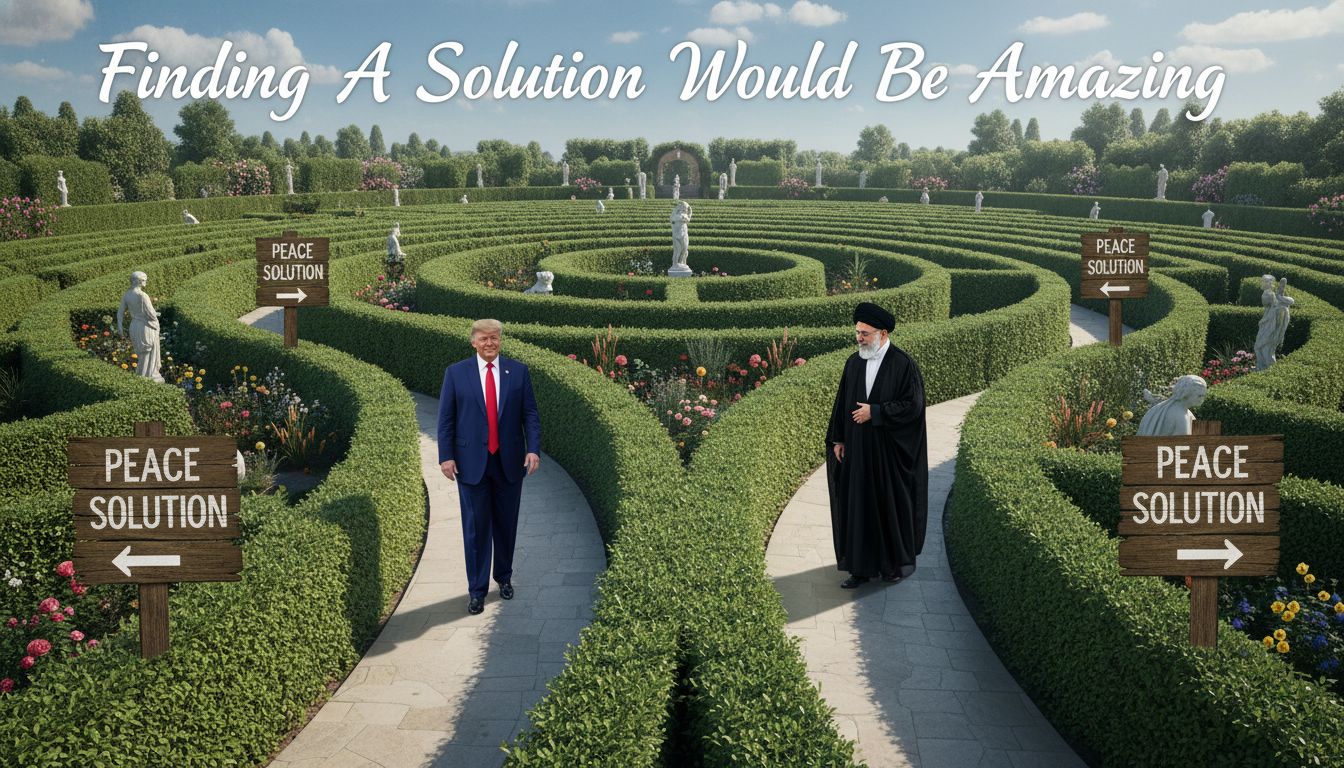
But it seems to be a bit far away
The first round of talks between Iran and USA, brokered by Pakistan, ended inconclusively after a 21 hour long session in Islamabad. U S Vice President J D Vance was unable to A D Vance with them.
A second round of talks were to be held in Islamabad a few days later. They didn’t happen because the Iranians couldn’t decide on the team to represent them in one voice. There are three factions. One faction are the Ayatollahs, headed by the Supreme Leader, Mojtaba Khamenei, who was appointed after his father, Ali Khamenei, the Supreme Leader, was killed on day 1 of the US attack. It is believed, though not confirmed, that he has been wounded in the same attack, and is in a coma.
The other faction is the IRGC, the Islamic Revolutionary Guards Corp, which was established in 1979 to protect the Islamic system. It is politically dominant, ideologically driven and controls large part of the economy. It is different from Iran’s own army, called Artesh. IRGC is better funded, better equipped, and more empowered than Artesh. IRGC is led by a hard liner, Brigadier General Ahmad Vahidi.
The third faction is the elected Government, represented by leaders like President, Masoud Pezeshkian, Foreign Minister Abbas Aragchi, and Speaker of the House, Mohammad Ghalibaf.
The three factions are believed to be playing diplomatic musical chairs to get a seat at the negotiating table but this ended with broken chairs rather than team selection.
So negotiations to find a diplomatic solution to the conflict are a maze of impossible conditions. The IRGC is willing to continue the fight. It seeks reparations for the war, to be collected as a transit fee to allow ships to carry oil from the Gulf countries. Around 20% of the world’s oil passes through the Strait of Hormuz which Iran wants to have a choke over. Global demand and supply of crude oil are well balanced, at around 105 million barrels/day, and a choke on 20% of supply will make prices sky rocket and lead to high inflation. Hence US, and the world, rightly declare the right of free passage to all ships.
The IRGC also claims a desire to retain stocks of enriched uranium and the right to enrich it further to weapons grade. It is to prevent this that Israel/US launched the war, in the first place.
The US, having achieved military dominance, is now blockading the entry and exit of vessels to and from Iranian ports. Not ports of other countries. Trump claims that between $ 400-500 million in oil revenues per day has been thus stopped. Such economic pressure will make it extremely difficult for Iran to meet it’s expenses, including payment of salaries to their military.
Besides economic degradation, Iran will also be impacted, should the blockade prolong, the degradation of its oil fields. Oil storage capacity is, for any producing country, limited. The blockade prevents the evacuation of crude oil that has been extracted, hence it has to be stored. Once it’s storage capacity is reached, it has to cease production. This degrades the oil field; a long term impact.
Trump has unilaterally extended the ceasefire whilst continuing the blockade. A third aircraft carrier, additional marines and aircraft are being gathered, should there be no negotiations. He has ordered shoot to kill attacks on Iranian fast boats, and threatened, should there be no talks, to attack Irans’s energy infrastructure and desalination plants. Iran has vowed similar attacks on Gulf countries.
A post circulating on whatsapp sums it up well “my desire to be kept well informed is at odds with my ambition to remain sane!”
Last week the BSE Sensex closed at for a weekly loss of points.
Individual investors in India are not protected against fraud neither by the investigative/enforcement agencies nor by the judiciary. The NSEL Ponzi scam broke out in 2013 and, for the next 12 years wound its way through courts. Victims, bereft or monetary resources, were exhausted of the delays, even as perpetrators of the fraud, using their financial resources, enjoyed the delay. The investigative/enforcement agencies shrugged their shoulders with sadistic insouciance. After 12 years, the victims arrived fully weary, at a settlement to receive Rs 1950 crores in full settlement, out of the Ra 5600 crore scam.
But their suffering wasn’t over!
The National Company Law Tribunal (NCLT) took 2 years to “approve” the deal, in Dec 2025. Why do they need to “approve” a deal between victims and perpetrator? Can Government explain?
But the surgery without anaesthesia on victims wasn’t over! Oh no! NCLT approval was not enough! A High Court needed to approve it too! It just did, in April 2026.
If victims get back a pittance this year, it will be after 13 years.
In sharp contrast, victims of Bernie Madhoff got back 94% of their losses.
Mrs Sitaraman should think about this. She had promised victims a speedy investigation and help in recovery. Will investors, both domestic and foreign, repose faith in investing in India unless individual investor interests are looked after?
I submit not.
India may continue to outperform but no thanks to a callous investigative system, a lethargic judiciary and an uncaring Government.
Comments may be sent to: jmulraj@asiaconverge.com










COMMENTS