























2026-03-16
The legislature and the executive have often connived to corrupt the judiciary
By RN Bhaskar and Sakeena Bari Sayyed
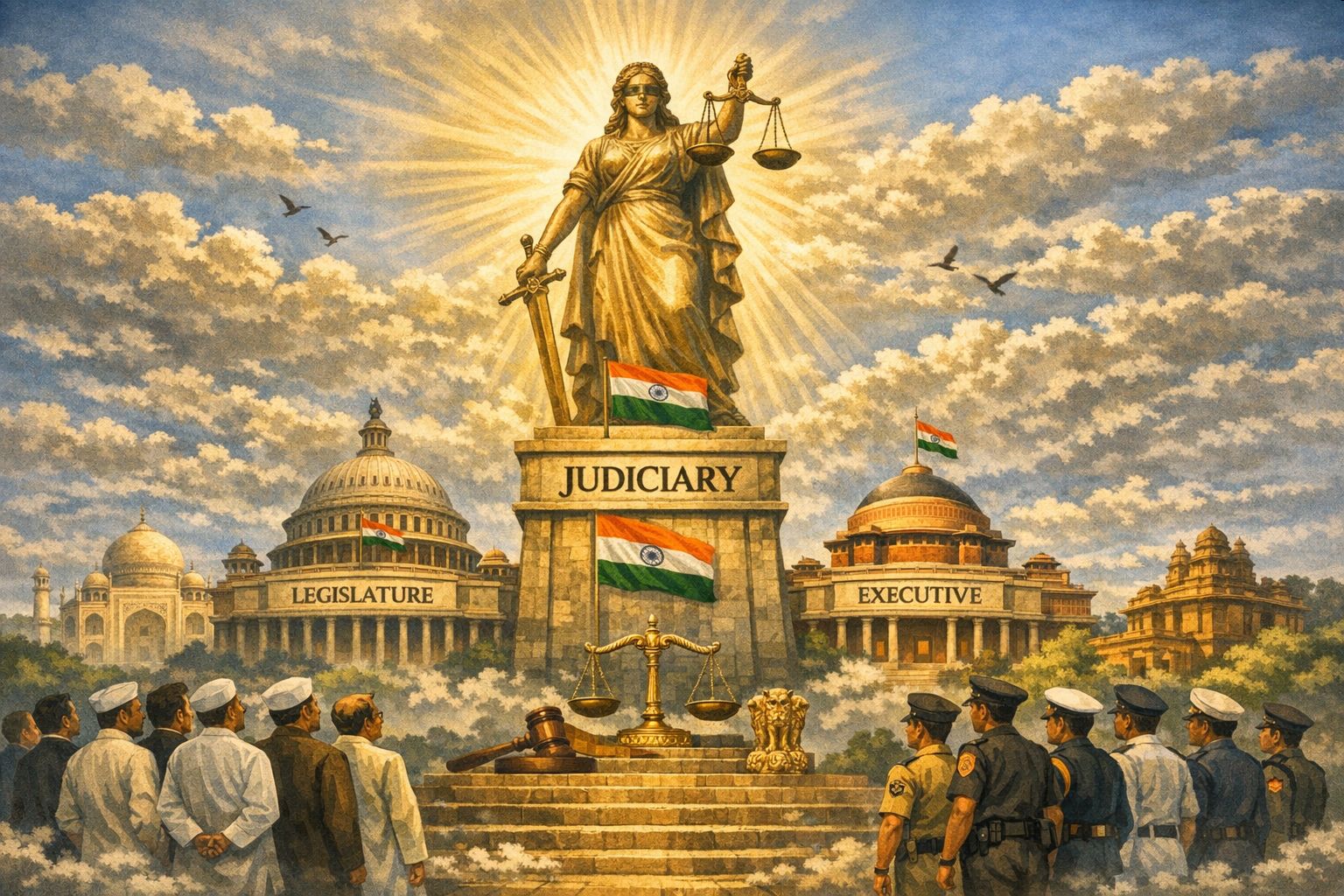
Image: Copilot
Powerful people feel secure when they can do two things. After amassing wealth, becoming visible, and gaining respect, they still hanker after two other powers. Both relate to the judiciary.
The first is to eliminate anyone, or at least silence that person. This is especially so when that person can become inconvenient or is dislikeable.
The second is the power to postpone cases that may be filed against the powerful. The second allows the powerful an immunity from prosecution. The case may have been filed. But the powerful can ensure that the case does not come up for hearing. This again involves the judiciary.
The power to eliminate
The first type of power is exercised through the hiring of henchmen, or through state apparatus. For instance, when a person hires a killer, it is to exercise the first type of power. Or it could be through a mechanism set up by the state. This could allow the powerful to get a person arrested by the police or even assassinated by state sponsored killers (this is what the Mossad is famous for). This is a type of extra judicial power that demagogues and tyrants love to have. To ensure that no case is filed against the killer, connections with the judiciary can be extremely useful.
The power to delay
The second type of power is even more dangerous, even insidious. It is the power to postpone the hearing of any charges against the powerful. They do this in a variety of ways. They tweak laws so that prosecution cannot proceed without prior sanction. Or that prosecution is delayed for one reason or another – witnesses not available, or witnesses turning hostile. Sometimes, witnesses die prematurely. Sometimes the accused dies in jail. Or sometimes, the number of judges is allowed to be inadequate. This is where a pliable judiciary is a big asset for the perpetrator of the crime.
There are good reasons to believe that this happened in the Godhra case where those charged with murder and rape were released for good behaviour, till a higher court – spurred by public outrage – stepped in and revered such orders.
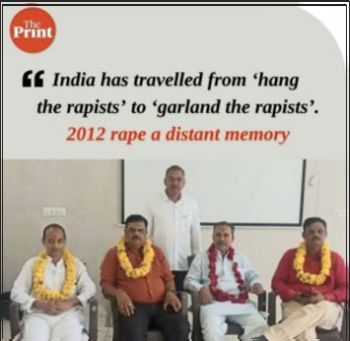 This is what happened even in the shocking episode in Madhya Pradesh where miscreants who had vandalised a store during Christmas were ranted bail and were publicly felicitated by people close to the ruling party.
 A similar situation arose in the infamous Lakhimpur case. There the politician-executive combine would have ensured a miscarriage of justice. However, public uproar and the Supreme Court prevented that from happening.
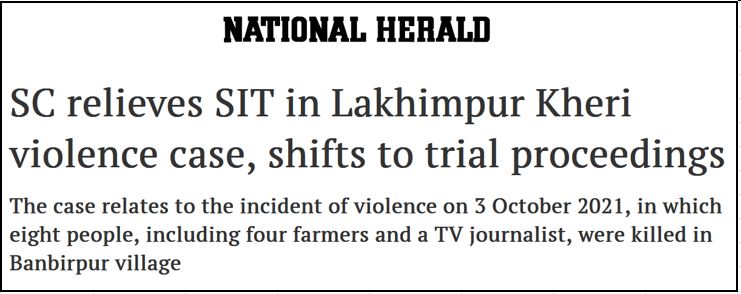 Each one of these incidents has resulted in repeated appeals before different courts.
The result of such incidents is that the courts are forced to deal with an ever-increasing backlog of cases that could not be heard earlier. Then, it is up to the court — and the people who manipulate judges – to decide which case should be heard first and which can be postponed. The last way is to persuade a judge to give a verdict that is bizarre in its conclusions, throwing all sorts to evidence to the winds. This requires the powerful to cultivate relationships with the judiciary. It may also require the powerful to transfer pliable judges to the court where the matter is being heard.
In any case, as the old saying goes, every delayed verdict is more power to the oppressor. Delays always weaken the oppressed.
Consequences
The best way to understand the consequences of the second type of power – which requires management of the judiciary – is to look at a common place example.
Just assume that there is a village where there is a poor farmer. Like most weak people, this farmer too is ‘god-fearing’; he has learnt to mind his own business. That keeps him and his family away from harm’s way. But the farmer has a young daughter who is eyed by the men in the neighbourhood. Many of them belong to more powerful families.
Then one day, the girl returns home terrified and in tears. The boys have been trying to molest her. So, what should the father do?
He does not have the power to confront many men. So, he has just two choices left. He can go to the police and register a case. Or he can go to the local slumlord and ask him for help.
His decision will point to the actual state of affairs in his territory. If he goes to the police, it would mean that he has confidence in the system. That means that the society he lives in has good systems for judicial redressal.
But if he goes to the slumlord, as many would do in many parts of India, it is because he has more faith in the slumlord than in the police or the judiciary. He knows that the police will tell the powerful men who the complainant is. They in turn will file chargesheets against the father, and even the daughter.
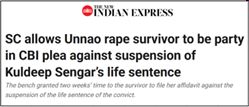 This is what happened in the Unnao case (https://www.newindianexpress.com/nation/2026/Mar/09/sc-allows-unnao-rape-survivor-to-be-party-in-cbi-plea-against-suspension-of-kuldeep-sengars-life-sentence) where the father was imprisoned and died there. Public uproar prevented the courts from allowing the accused Kuldeep Sengar from being released by UP’s courts. Once again, consider the number of times this case had to be heard by different judges in different courts. It was the tenacity of the victim that ensured that the accused did not get an easy pardon. What is heartwarming is the way in which the senior judiciary stepped in and ensured that the process of justice was not thwarted.
The ironies
If the farmer turns to the slumlord for help, it is not because he does not know that the slumlord is not a legal authority. But, for the farmer, the illegal has become relevant because the legal police and the judiciary have become increasingly irrelevant.
When that happens, there is an old question that suddenly become crucially relevant.
What is the difference between a mafia and a government? At one level there is just no difference. Both collect protection money. The only difference is that the government calls such collections taxes.
But at a deeper level, there is a big difference. A government is answerable and accountable to its people. The mafia isn’t. But when the government does not want to be accountable, and creates rules to prevent disclosures of documents (educational certificates, money collected, money disbursed and the list goes on), the government comes close to becoming similar to a mafia.
The slumlord which has now become relevant works hard to tell his community how he has used the money and dispenses justice more effectively than the government. Increasingly, slumlords become dispensers of justice and protectors of human rights. If there are competing slumlords in a territory, it is support from people that makes one more relevant than the other.
Look at some of the biggest mafia dons in India. They too assume relevance to the society in which they dwell by dispensing justice. They settle disputes. They do this even when they have run away from India. The two names that are well known are those of Haji Mastan and Dawood Ibrahim.
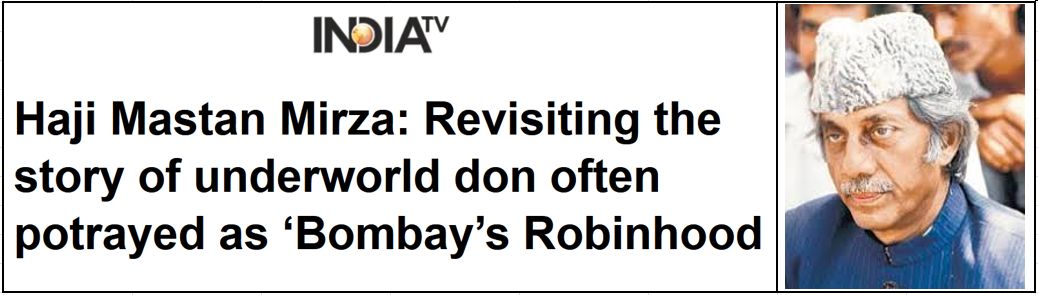
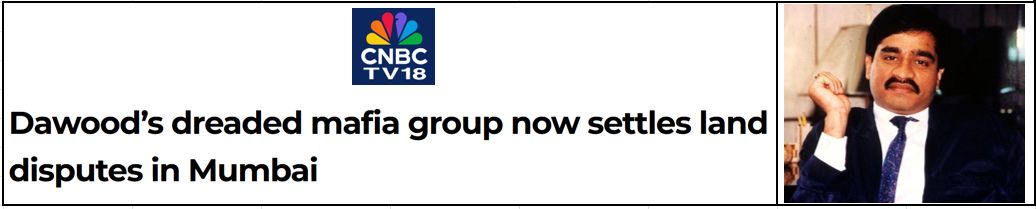 When cases are filed against the slumlord, he too has mastered the art of postponing prosecution. With the blessing of some politicians, he even manages to escape any attempt to prosecute him. That in turn makes him more popular, and he becomes an ally of the politician for nurturing a vote bank. The nexus between slums, politician and even the judiciary becomes stronger (https://youtu.be/IbFvtjBT5R4?si=PjjsTUHnl7auyBWS).
Mutually relevant
That is why, politicians and slumlords work hand in hand to create slums in precisely those territories where they do not win votes. The judiciary has helped the politicians to order resettlement of slums in situ – in the same place where slums have been created. This way, vote banks remain intact. They outnumber the original voters. And the politician thus gets his nominee elected from such areas as well. The original local population thus gets marginalized. Democracy has been subverted.
The judiciary and the election commission are not unaware of what is happening. But they have been compromised by the legislature-executive combine. Democracy is rendered irrelevant, except in cities like Chandigarh, where slums are not allowed to come up. That explains why politicians do not like cities like Chandigarh or NOIDA.
That also explains why so many politicians have a criminal record. Scratch a bit deeper and you realise that many politicians were earlier slumlords or trade union leaders, each one of them is a protector for his respective parish.
Solution: more judges needed.
Can this be remedied? Yes. The only way to stop this criminalisation of politics is by ensuring that you have more judges, more police personnel. The first need is to ensure that:
- Any common person can file his complaint within less than 15 minutes at any police station.
- His complaint is acted upon the same day and sent to the magistrate for adjudication.
- The complainant must be capable of appealing against the magistrate’s decision without incurring huge costs in terms of time and money, as is the case today.
- The higher court too must be in a position to decide his case in less than a month. There could be exceptions. But the percentage of such exceptions should be low (maybe lower than 1-3% of total cases heard). The benchmarks for delays should be lowered year after year.
But as these columns pointed out last week (https://bhaskarr.substack.com/p/ncert-and-the-judiciary). India needs at least 1,45,844 more judges merely to reach the same level that China has reached.
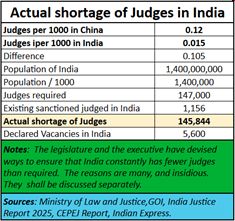 One reason why China has grown faster is because each citizen has a better access to justice than India offers.
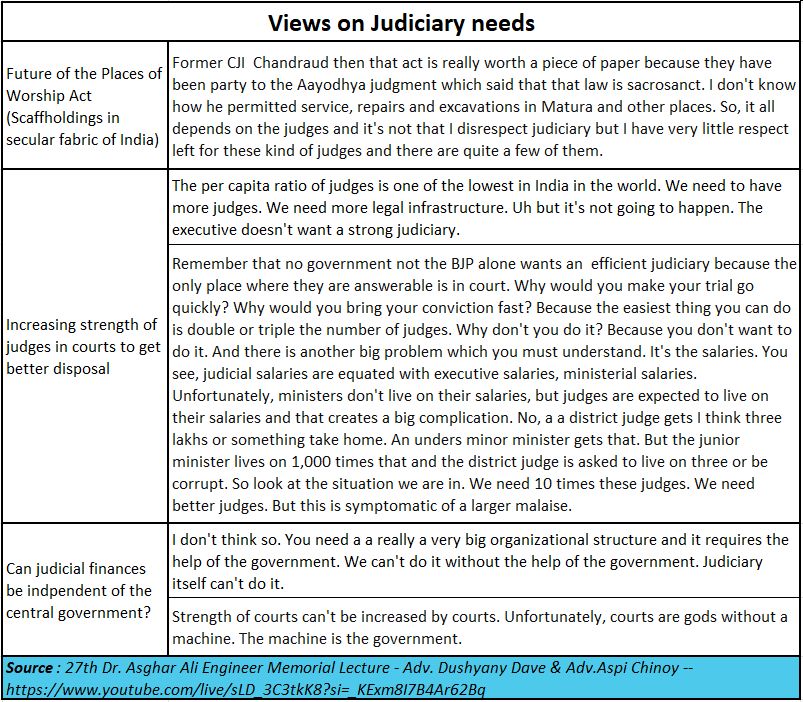 Increasing the number isn’t enough. The government needs to ensure that judges are paid a package that is not significantly less than the package that good lawyers currently enjoy in India. That will allow more good lawyers to opt to become judges (https://www.youtube.com/live/sLD_3C3tkK8?si=_KExm8I7B4Ar62Bq).
Other measures needed
But increasing the number of judges is the first step. Other measures are needed as well.
- You need more policemen, so that each case can be investigated, and an investigation report can be filed within a couple of days for review by senior policemen before it is sent to the magistrates.
- Salaries for policemen need to be increased as well.
- Professionalise recruitment of fresh policemen and policewomen. Today, they need to pay large sums at the time of being recruited, and even larger amounts to get a good posting. They are told that they can recover that through bribes. Part of such bribes are shared with the ‘system’. Former Mumbai Police Commissioner wrote about this practice in his columns.

- Create separate investigation centres which examine the track record of police and judges who appear to be gaming the system. The apex court should have access to such information so that the process of cleansing the system can begin.
- If possible, bring in neutral but effective administrators (from a country like Singapore) to ensure that the cleansing process is done properly.
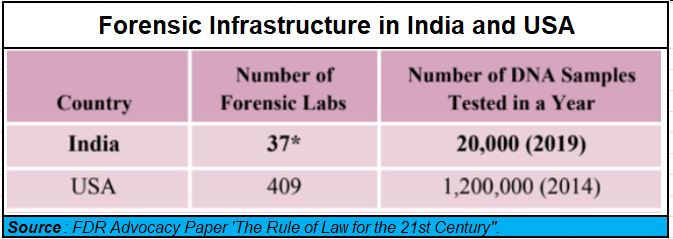
- Immediately set up more forensic laboratories. This shortage also impedes speedy analysis into the cause of death. Ironically, the government has been making use of this scarce resource for deciding whether some package of meat is cow’s meat or not. Forensic facilities are already short in supply for humans. Does the government think animals deserve them on a higher priority basis?
 Ground reality hurdles
The sheer volume of work required will boggle the minds of most policymakers and planners. They will first object that there isn’t enough money to go around. They will find all kinds of other reasons to prevent this happening.
The people in power will just not permit it.
The only way change will come is when businesses begin making enough money, and want better laws and processes to protect their earnings. Bribery will be the way change will come in. But it will be slow – and often flawed. People will complain about cosy relationships between crony capitalists and policymakers.
The other way this will happen is when India goes bankrupt. Crises often create the urge for solving problems.
The current state of affairs is so desperate for common people that things will have to change. Since India’s policymakers will be loath to usher in changes, it may have to happen through one of the two methods suggested above.
Through money – because money talks. Or through bankruptcy (India is headed that way already – https://youtu.be/zv_3v5W_t1o?si=Ps53jtI91EJvB78p).
That is why the NCERT’s decision to try include a chapter on corruption in the judiciary can be described as another clever way of smearing the judiciary and making it lose some of the glory it still enjoys. There is merit in the Supreme Court’s view that the inclusion of this chapter does require serious investigation. It could be seen as another ruse adopted by the politician – executive combine to denigrate the judiciary and build the ground swell to usher in laws to weaken judicial autonomy.
Conclusion:
The last bulwark for any society is the judiciary. As Robert Bolt says through the lips of Sir Thomas More in “A Man for all seasons” – “And when the last law was down, and the Devil turned ’round on you, where would you hide… the laws all being flat? This country is planted thick with laws, from coast to coast—man’s laws, not God’s—and if you cut them down… d’you really think you could stand upright in the winds that would blow then?”
Politicians and the executive would love to weaken the judiciary. But the answer lies in making the judiciary better, not letting the politician or the executive into that hallowed chamber. NCERT did not realise this. That is the tragedy that planners of education must confront.
===========
My latest podcast is on how India might lose Iran, and the confidence of the BRICS nations. You can find it at https://youtu.be/AuonPqucZAY
===========
Also watch our analysis on the ongoing war in the Middle East at https://www.youtube.com/live/caxxml050Yk?si=nGGB33KAJCKwQhGq and https://www.youtube.com/live/uaUXtsFrhpw?si=bwBblJO8vFE74jIv
===========
And do watch our weekly “News Behind the News” podcasts, streamed ‘live’ every Saturday morning, at 8:15 am IST. The latest can be found at https://www.youtube.com/live/fsaTvJrX61E?si=e0hztlb57UFqeWyh
============================








COMMENTS