























MARKET PERSPECTIVE
By J Mulraj
May 23-29, 2026
Cannot be Stait-ened Out
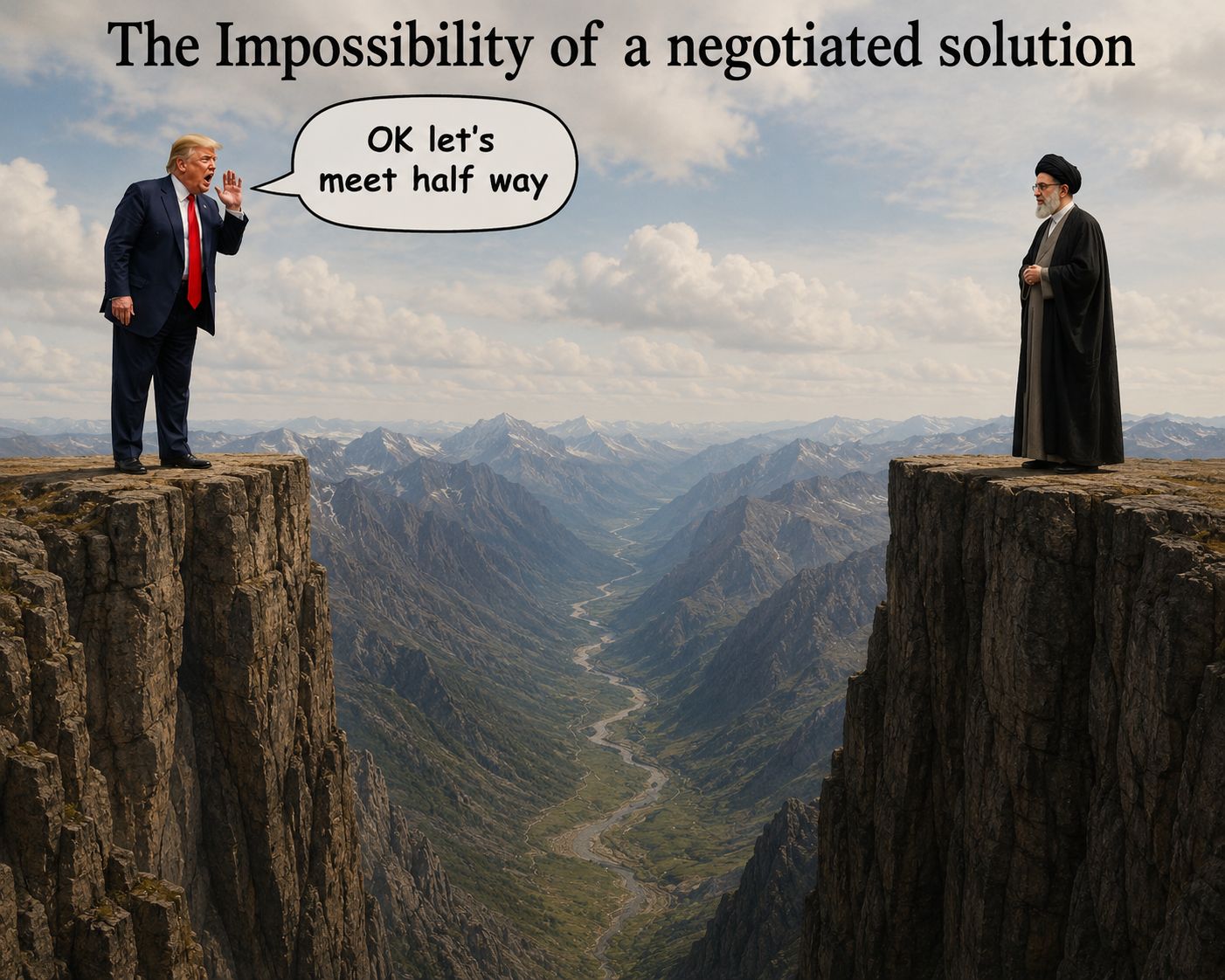
Image created using ChatGPT
Although expectations of a negotiated ceasefire to the ongoing conflict in Iran run high, the probability of one are low. This is because, as the image indicates, the chasm between the positions of both countries, is too wide. It would be suicidal for both to attempt to meet half way.
Under the current talks for a ceasefire being negotiated by, it is believed, Qatar, the proposal is for a 2 stage process to settle the dispute. Under Stage 1, Iran will open the Strait of Hormuz, preventing a global recession (which is likely if the Strait remains closed for another month, pushing crude oil prices even higher than the current level of $ 110/b). In return, it wants US sanctions to be lifted, the US blockade of the Strait to be lifted (it’s military fleet to be removed) and some of it’s frozen assets to be released. It will enter into discussion for it’s nuclear programme (including what to do with it’s stockpile of uranium enriched to 60%, as well as it’s future plans to develop a nuclear bomb, only in Stage 2. And yes, it will have the right to charge a toll for using the Strait. And, of course, the IRGS would remain vested with power.
This is the exact opposite of Trump’s aims. His primary aim is to prevent Iran from ever getting the ability to create and deliver a nuclear weapon. He seeks a change in regime so that he, or another President, would never face the prospect of a nuclear armed Iran, a destruction of the 440.9 kgs of 60% enriched uranium (if further enriched to 90% it would be able to produce 10 nuclear bombs), and freedom of free navigation, bereft of Iranian control/toll for Gulf states. A fifth of the world’s production of 102 million barrels per day of crude oil traverses through the Strait of Hormuz. If this supply is unavailable crude oil prices rise, as they have been doing,
Brent crude price has dropped from $ 110/b on March 18 to $ 92/ b now, largely on hopes that the Strait would be open. Anyone who knew/could guess that, would have made a fortune, based on iransider, oops, insider information.
The US wouldn’t even think of lifting sanctions upfront and having talks on Iran’s nuclear stockpile/plans in Stage 2. If US lifted sanctions and released frozen funds it finances Iran’s efforts to enrich uranium from the current level of 60% to the level, 90%, needed for weaponising it.
Hence such a two stage agreement is DOA. Maybe Trump may offer a time bound ceasefire to Iran to offer his terms of opening, permanently, the Strait, and relinquish it’s stockpile of enriched uranium. Or what?
That’s the mystery question. Trump may opt to use economic, not military, pressure, to get Iran to agree to its terms. His blockade of the Strait for ships going to and from Iranian ports is, apparently, costing Iran $ 500 m. A day in lost revenue. That’s not only a financial risk for Iran, it’s also an operational one. Excess production not sold needs to be stored. Iran is running out of storage capacity, after which it would be compelled to stop production.A stoppage degrades the field, reducing its capacity. Satellite images show a massive oil spill of Kharg island, measuring 45 sQ kms. ()
In financial terms, loss of $500 m. a day means it becomes difficult to feed its people, to meet expenses including salaries to IRGC. Its currency is debased. One US $ is officially exchanged for 42,000 rial but the unofficial rate is 173.5 million!
What would be a concern for Trump is 1. that he would be made responsible for a global recession if the blockade continues a month. To my mind that’s unfair because he is trying to stanch nuclear proliferation. Without nuclear capability Iran is waging war against Gulf countries with missiles and drones, and against the world by closing the Strait; with that capability imagine how worse it would be! and 2. Mid term elections in USA are in November and a section of his party is pressuring him to settle.
It seems likely that Trump will try economic pressure of the blockade first and, later, military pressure.
Last week the BSE Sensex closed at 74775, for a weekly loss of 408 points.
Foreign portfolio investors have sold, primarily because the falling rupee lowers their $ returns. The INR has lost about 12% over the year. But that is compounded by the stupidity of some policy decisions. Long term capital gains tax was increased from nil to 12.5%,short term gains from 15% to 20% and the Securities Transaction Tax, which foreign investors hate, and which isn’t levied elsewhere, was hiked from 0.01% to 0.05%. Despite such mindless tinkering, retail investors continue supporting the market.
Several factors will prove a drag on the Indian economy. Rising oil prices will lead to inflation and lower GDP growth, fertiliser shortage, arising from the blockade of the Strait will lower agricultural growth, as will the impact of El Niño. Rising US bond yields presage rising interest rates. This will further induce foreign portfolio to reduce Indian equity exposure as domestic bond yields provide an alternative. The forthcoming IPO of SpaceX will suck out funds flow into it, the target raise is $ 75 b. Corporate profits are getting hit; Hindalco’s PAT dropped 51% in its Q4 results.
In such a scenario it is safer to sell. Should the Iran conflict not be swiftly resolved, crude oil may touch $ 140/b.
———- ——————
Comments may be sent to: jmulraj@asiaconverge.com











COMMENTS