




























Ideology crushes growth in Gujarat and Maharashtra – Observe Tamil Nadu instead
By RN Bhaskar and Sakeena Bari Sayyed
Image: The Asiaconverge Team
India’s economic growth is being whittled down by an ideological absurdity. History has shown time and again that when ideology trumps culture, corrodes growth, and dehumanizes people, the entire economy begins to crumble.
One way to understand this is by looking at what is happening to Gujarat and Maharashtra. Both seem to be drifting the way BIMARU states function (Bimaru is an acronym for Bihar, Madhya Pradesh, Rajasthan and Uttar Pradesh). This realisation also underscores the need to study what makes Tamil Nadu strong and vibrant. That isa lesson that is relevant for the entire economy as well.
 Investments and resurgence
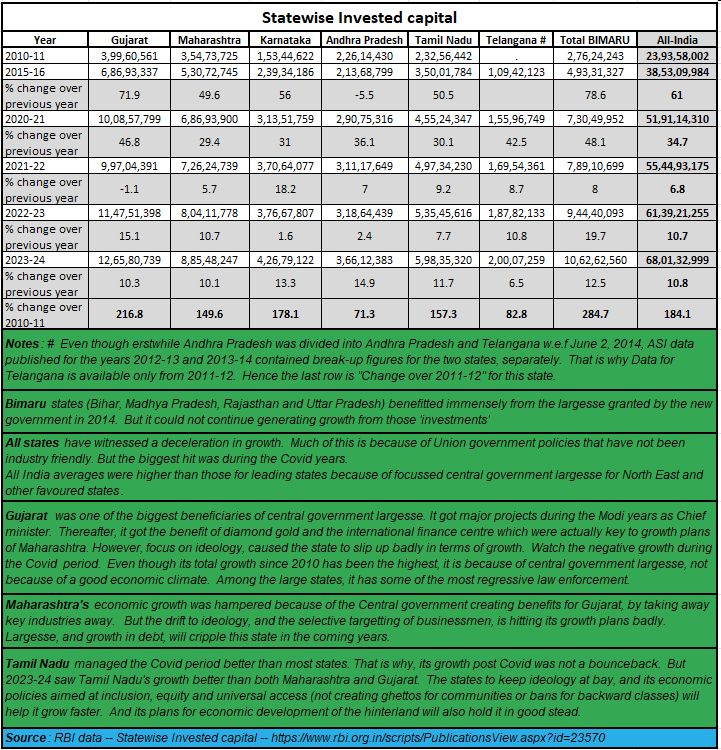
The above table uses data provided by the RBI. It looks at invested capital in the states of Gujarat, Maharashtra and Tamil Nadu. To provide easy comparison, we have also included data for Karnataka, Andhra Pradesh and Telangana from the South. And the consolidated figures for Bimaru states as well.
Kerala has not been included because it does not have much of an investment story to tell. True, Kerala has invested in human development, but its best workers travel overseas, get jobs there and remit money back home. Kerala story is one of remittances but is it not a story of investment and wealth creation within India.
However, in many ways, both Kerala and Tamil Nadu are money-making states since ancient times. These were the states that made India the golden bird (Sone ki Chidiya), and even bankrupted Rome (https://youtu.be/ibJJXeGyZxA?si=k2BwFWTSYPEphBdH). Tamil Nadu continues to generate wealth through, equity inclusiveness and universal access (see timeline 4.00 to 5.25- https://youtu.be/rY2G–aZg7g?si=r3LcRvdhcc9iMdLY). In both states, education has become the biggest leveller, and accelerator of growth for individuals. Education helps cut down barriers of hierarchy and catalyses people to achieve greater heights.
Five decades ago, Gujarat and Maharashtra held out a similar promise. Today both states run the risk of decelerated growth. The main culprit is ideology which is numbing many of the advantages they once enjoyed.
What the numbers tell?
Watch how almost all states including BIMARU states have witnessed the process of economic deceleration. Gujarat and the BIMARU states were major beneficiaries of central government largesse.
Gujarat got new opportunities for business and employment because the centre transferred businesses to this state which should otherwise have benefitted Maharashtra. A diamond bourse was created in Surat (https://asiaconverge.com/2022/07/mahesh-gadhavi-on-the-surat-diamond-bourse/). That bourse effectively slowed down the diamond business in Mumbai. The gold bourse which would have enjoyed a natural home in Mumbai’s Zaveri Bazar was transferred to Gujarat. More importantly, the international finance centre which was conceptualized and financed from Mumbai was abruptly transferred to Gujarat (https://asiaconverge.com/2025/03/is-maharashtra-going-the-uttar-pradesh-way/).
Gujarat also benefitted from the liberal investments by the central government in new age technologies like semi-conductors. In addition, Gujarat rediscovered its ancient calling of having the most important ports in India (in ancient times, most of the ports were in Gujarat).
Despite these advantages, Gujarat saw a negative growth during COVID years. And, during 2023-24, Tamil Nadu registered a higher growth than that of Gujarat and Maharashtra.
Maharashtra benefitted from being one of the most industrialized states in India and also the financial capital in this country. But this state too has begun to see its growth energy being sapped. And the culprit appears to be a drift towards ideology.
 What went wrong?
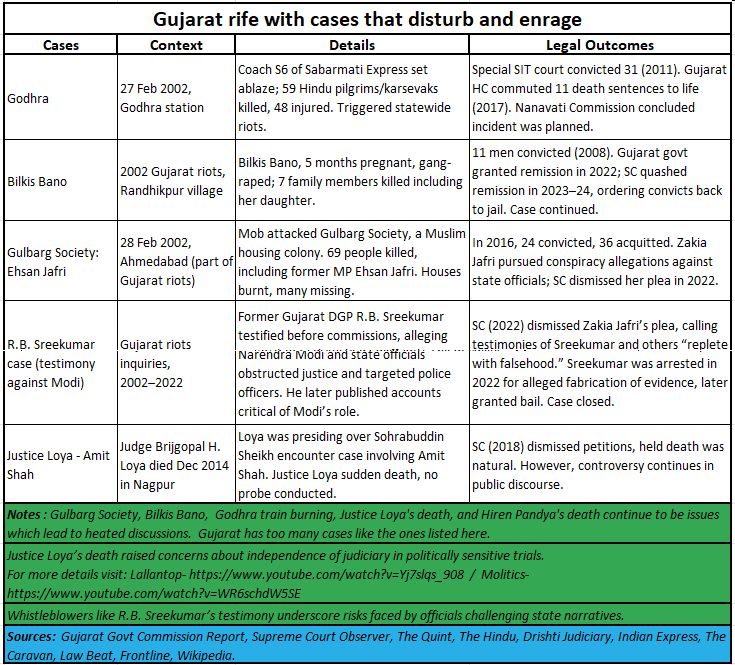
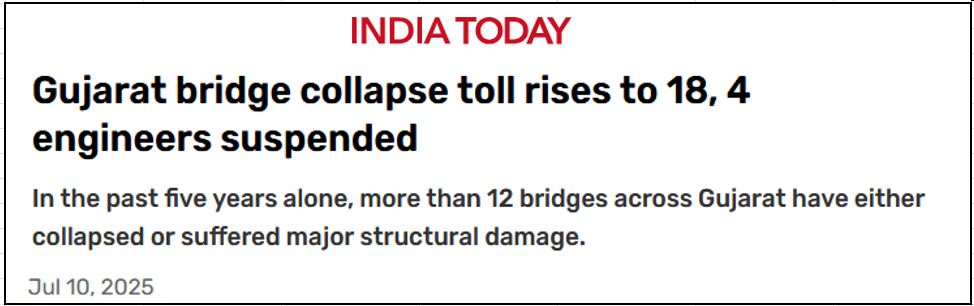
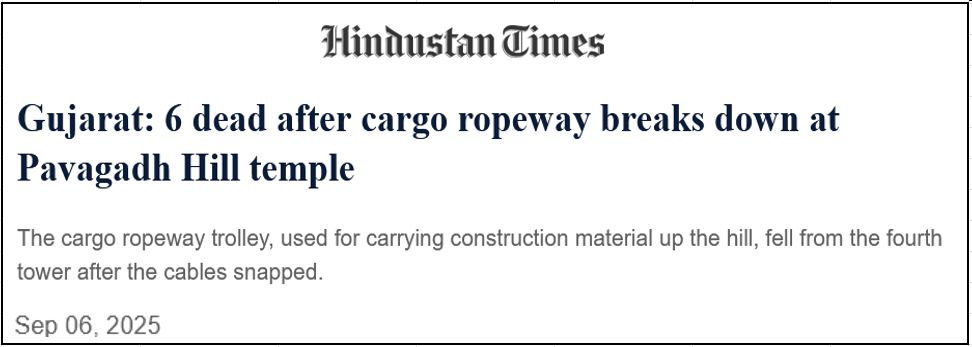
Gujarat has spent more time in defending the indefensible which in turn has debilitated it. Governance has taken a back seat as can be witnessed in the collapse of bridges, ropeways and the saga of unfinished projects. Ideology has created a raft of favouritism, which appears to accelerate growth in the initial stages. But later it leads to sloth and myopia.
 Dholera which promised to become the largest SEZ in Asia, dwarfing even China’s Shenzhen, does not even get a minor headline now-a-days (https://asiaconverge.com/2011/02/dmic-delhi-mumbai-corridor-will-create-new-best-class-cities/).
 In Gujarat, ideology has polarized communities and compelled minorities to seek shelter in ghettos. The state has become so crass that it has even started issuing absurd laws like the one which requires parent’s consent for young couples to get married (https://thewire.in/government/gujarat-makes-parental-consent-mandatory-for-marriage-constitution-says-otherwise). It is indeed ironic that 18-year-olds can be treated as adults, can be given voting rights, and drivers’ licenses, but cannot be granted the right to marry the ones they choose as life partners without parental consent. The state obviously uses much of legislative time to enforce rules to counter ‘love-jihad’ by mandating parental consent. This is pure crassness and myopia. Even unconstitutional.
 Maharashtra too
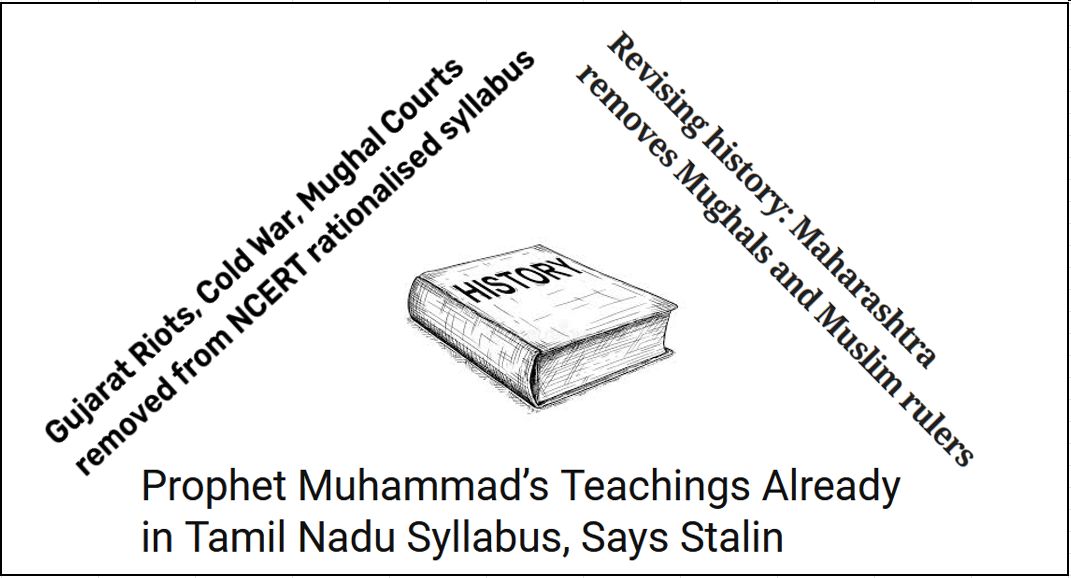
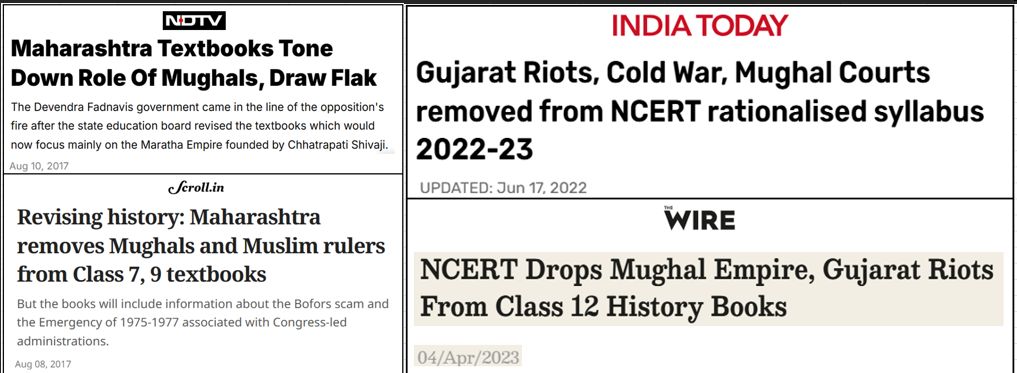
In Maharashtra too ideology has been steadily raising its head. It started with some segments of the population choosing to become frenzied gau rakshaks (though not as frenzied as in Haryana and other BIMARU states). As in Gujarat and much of north India communal slogans began being raised, textbooks were stripped of chapters on Mughal history, especially that of Aurangzeb, Delhi Sultanate and the riots of 2002.
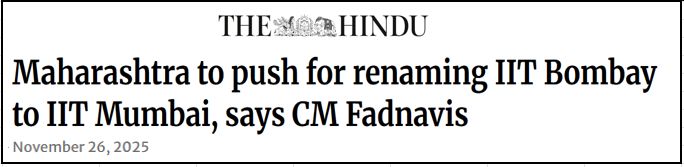 Maharashtra which was an education centre with stalwarts like Bal Gangadhar Tilak, Mahadev Govind Ranade, Gopal Krishna Gokhale and B. R. Ambedkar is now targeting educational institutes. It wants to change the name of IIT Bombay. Maharashtra’s leaders once espoused the cause of education. Today, Maharashtra is willing to become a one-eyed rabble rouser. Legislative time is lost in changing names of roads, buildings and universities instead of setting up better centres of learning.
 The roots lie in cattle slaughter laws
If Godhra fanned communal fires, the cattle slaughter laws dampened economic energies.
- These laws hurt farmers most. They prevented the sale of old cattle making the farmers lose around Rs.20,000 per cattle head.
- The farmer was also burdened with the additional cost of looking after old cattle.
- The loss of Rs.20,000 per cattle head ensured that he could not buy young cattle as replacement for the older ones. That in turn shrank his wealth and diminished his income and left him poorer than before.
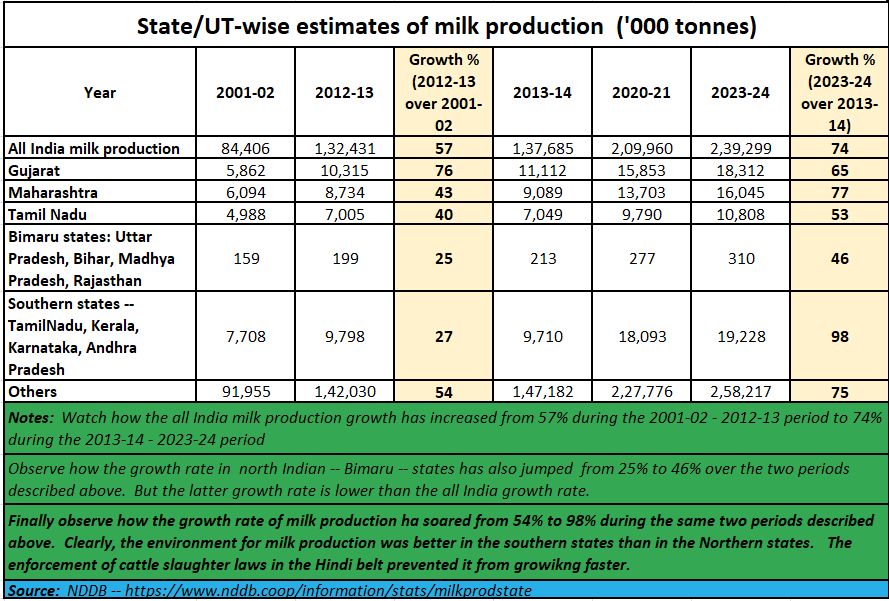
- The best proof of this can be found in government figures of milk production. Gujarat saw a 76% rise in milk production during the 2001-13 period. This growth slipped to 65% during the 2014-24 period. This was lower than the national milk production growth of 74%.
- BIMARU states saw milk production grow by just 46% (as against 74% for the country).
- Southern states, which refuse to implement the cattle slaughter laws, saw milk production growth jump from 27% to a whopping 98% in the latest decade. Tamil Nadu’s milk production – which was already at a high growth rate of 40%, climbed to 53%. Not surprisingly, southern states have registered fewer farmers’ suicide.
 Development begins with inclusiveness.
Unlike states driven by ideology, Tamil Nadu does not banish Islam from its textbooks.
Compare this with the deletion of Mughal history from history textbooks even though the Mughals reigned for a longer period (around 400 years) than the British (150 years).
 Or look at the way NCERT tried to play politics through textbooks by including chapters on corruption in the judiciary and not the bigger corruption among elected representatives (often from the ruling party). NCERT books did not even talk about the increasing tendency to release rapists on parole just before election time (https://www.thehindu.com/news/national/gurmeet-ram-rahim-40-day-parole-bail-petition-rohtak-jail-dera-ashram/article70473454.ece). Moreover, the textbooks did not talk about the number of child molestation and rape cases that India’s elected representatives are accused of (https://youtu.be/jf02UqgXVEY?si=B0de2rXZV240rjdq).
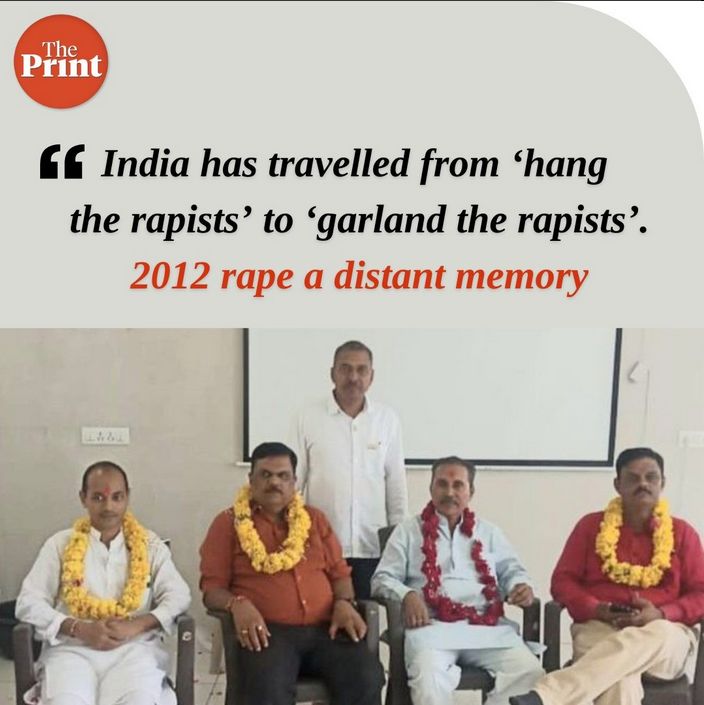
Similarly, NCERT textbooks did not talk about the unfortunate practice of rapists and arsonists being feted and garlanded as heroes by the ruling class.
 What makes Tamil Nadu tick
- It does not encourage casteism and ensures that its temples are open even for Dalits.
- Unlike the male-chauvinist North India, Tamil Nadu encourages women priests in its places of worship.
- But, most importantly, in order to encourage less income inequality, it has begun promoting industrial growth in targeted backward regions. It first identifies such regions. Then it develops infrastructure (and connectivity) in that region. It then creates a package of incentives. Only when that is done, it begins persuading potential promoters of industry to set up their facilities there. This has allowed industries to get industrial areas with infrastructure and connectivity, keep labour cost down, and yet avail of well-educated youth in dispersed areas (https://asiaconverge.com/2025/07/why-is-india-promoting-poverty/).
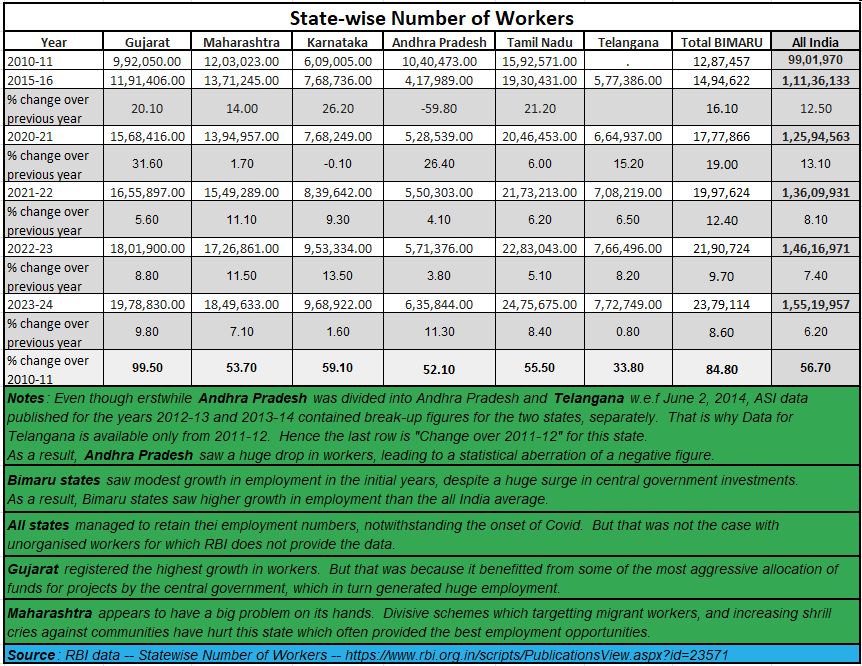
- It is not surprising, therefore, to see Tamil Nadu emerging as one of the most industrialized states in India with rapidly increasing per capita income. What is noteworthy is that despite getting low special favours, like Gujarat did, it accounted for impressive labour force growth rates.
- It could do this because it did not allow ideology to blind its vision of growth.
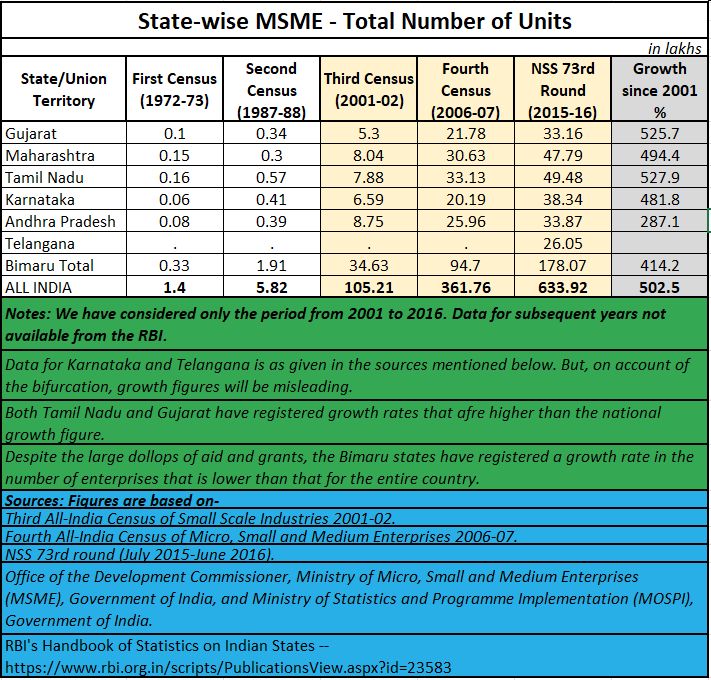
- Similarly, look at the growth in the number of SME units. Tamil Nadu’s increase in the number of MSMEs is above the national average. Gujarat also has a high growth rate in the number of MSMEs but much of this was on account of central government largesse.
Conclusion
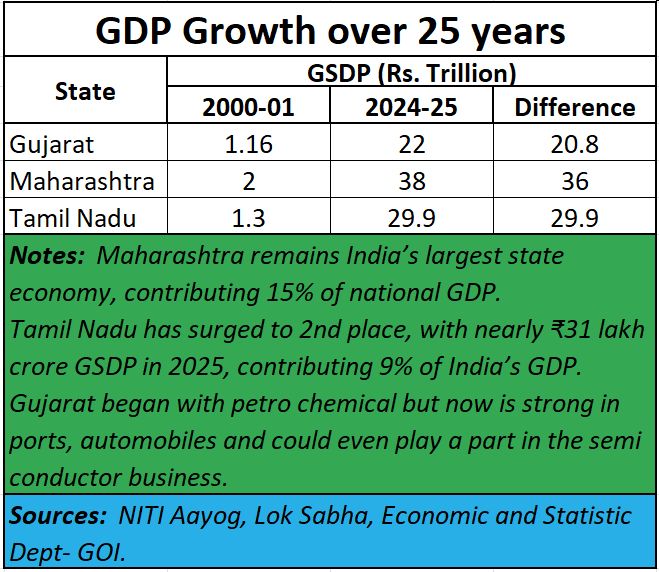
When states and countries begin to look at ideology instead of inclusion, promoting sound economic policies becomes difficult. This invariably affects GDP growth. Eventually, ideology is self-destructive. Inclusiveness harnesses the hidden reserves of people and cultures and makes countries and regions more prosperous. India knew this very well in the past when it bankrupted Rome. Today, it is becoming increasingly sightless. Even once-prosperous states like Gujarat and Maharashtra have started slipping because of the focus on ideology.
===========
My latest podcast is on coal and the disinformation surrounding it. You can find it at https://youtu.be/QsENQJLnc8s
============================
And do watch our weekly “News Behind the News” podcasts, streamed ‘live’ every Saturday morning, at 8:15 am IST. The latest can be found at https://www.youtube.com/live/6Fhk3UdTI9Y?si=7XL5sXvZ5CqH84Kz
============================








COMMENTS