






















MARKET PERSPECTIVE
By J Mulraj
Jun 20-26, 2026
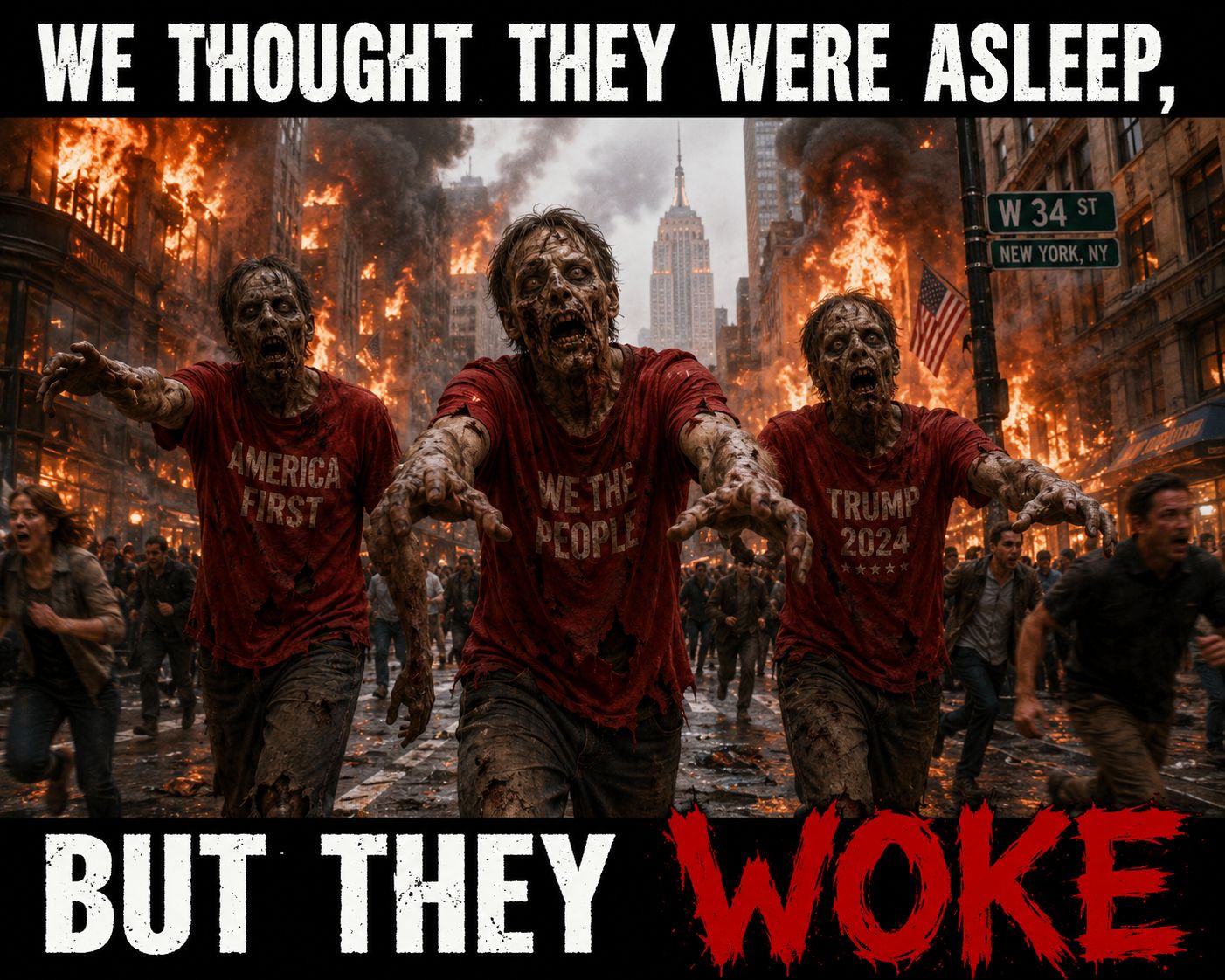
How cities can be destroyed
Image created by ChatGPT
As an open, capitalist, society, USA I has excelled in wealth creation, using technology and innovation, where success results in becoming fabulously rich. It also, simultaneously, creates an unequal society, with wealth concentrated in a few hands, generating envy. This, in turn, results in progressive policies being introduced by socialists, trying to narrow the wealth divide. The free market philosophy swings both ways. Sometimes this can result in policies that discourage enterprise. Successful businesses move to other, more welcoming, locations, and the resultant loss of revenue for the cities being vacated worsens the situation.
Capitalism has scored over socialism in creation of wealth, and one would have thought that the latter had been vanquished. But the zombies have resurfaced.
In New York City several candidates backed by Socialist Progressive Mayor, Mamdani, won in recent elections, and are wanting to abolish ICE (Immigration and Customs Enforcement, a Federal Agency), to takeover utilities, housing and unions, and to not deport illegals who have committed crimes.
After Mamdani raised property taxes, to fund free bus services and to fund a State owned grocery store, billionaires, like Citadel founder Ken Griffen, relocated to Florida, and put on hold his plans for a $ 6 b project in Manhattan. Thus Mamdani’s policies have stalled development plans, lost jobs and lowered New York’s prestige, as capital and entrepreneurship moved elsewhere.
In Seattle, Washington, after progressives passed a law to impose a 9.9% tax on incomes above $1 m, Starbucks founder moved his residence to Florida, and expanded his operations in Nashville, Tennessee, where 2000 jobs were added. The tax, which penalised success and hard work, resulted in an exodus of entrepreneurial talent, a loss of jobs that would have accrued otherwise, and the image of the State as a welcoming venue for business.
A third example is of Delaware, because of a poor judgement of the lower, Chancery, court, and not because of policies of those governing. In 2018 a minority shareholder, Richard Tornetta, (holding 9 shares) of Tesla filed a suit in the Chancery court, to block an emolument package that the Tesla board had signed with CEO Elon Musk, and which had been widely approved by shareholders. Under the deal, Elon was to be paid no salary or bonus for 10 years. At the end of ten years, if Elon, as CEO, managed to increase Tesla’s market cap from $ 1 trillion to 8 trillion, plus some other operational milestones, he would be given stock worth $ 1 trillion. That is Elon would get one-seventh of the increase in value whilst working for free for a decade, and other shareholders get six-seventh.
The Chancery Court nullified the emolument package, stating that shareholders were not fully informed, and asked for them to vote again, after getting full disclosure. They did, later, supporting the deal. But the ludicrous part of the judgement was that the Chancery court awarded Tornetta’s lawyer to be paid a whopping fee of $ 734 million !!! to be paid by Tesla on the grounds that the company saved money!
Tornetta got nothing!
In disgust, Elon moved the corporate registration of Tesla from Delaware to Texas, filed an appeal to the Delaware Supreme Court, which reduced the legal fees to $ 70.9m. That’s still a high price for a company to pay for a deal which was twice approved by a majority of shareholders and by the Board of Directors. It does not signal a respect for corporate democracy, as there was nothin fraudulent about it; on the contrary, the company, hence all shareholders benefitted from the increased valuation, should the target been achieved. Another way for a minority shareholder to analyse it is this : if Elon were to achieve a market capitalisation of $7 trillion, missing his target, he would get nothing. But the shareholder would get 7 times his investment in 10 years, a handsome return. On this basis alone, one wonders why a court would see fit to admit the case in the first place!
It’s very conceivable that some Indian states go the same way. Politicians are prone to promise freebies in order to win elections, knowing that the cost would be borne by the State and not from their own pocket. Perhaps, in order to curb such tendencies, a law could be introduced to compel such politicians to first estimate the cost of the freebies, and then to deposit say 20% of the estimated cost upfront. If elected, the State would provide the funds but only upto the estimate given. Once an aspiring politician has to put his money where his mouth is, the mouth would start making sensible suggestions.
Last week the BSE Sensex closed at 77100, for a weekly gain of 604 points.
Due to a peace deal, digitally signed by Iran and USA, which opens the Strait of Hormuz for free transit, and gives a 6 month window for both to chart the future of Iran’s nuclear programme. Given the fact that Iran’s leadership structure remains a tussle between the elected Government and the IRGC, the army owing allegiance to the mullahs, with both having different views on what they want out of their nuclear programme. The IRGC would be unwilling to give up the quest for a nuclear bomb, to secure a lasting peace. If that happens, the cease fire could be short lived.
For now, though, the price of a barrel of Brent crude has dropped to $ 72, a significant drop from the high of $ 118/b end April. This would provide a huge relief for India, which imports about 88% of it’s needs of crude oil. As long as the truce lasts.
The paucity of rain in India poses a huge challenge. It will affect agricultural output, and hence GDP growth, since agriculture contributes 17-18% of GDP. The deficit in rain is around 40%. This has reduced water storage in 166 major reservoirs to a mere 28% of capacity.
On top of that is the adverse impact of El Niño, which is expected to be the worst, this year. Unexpected changes in weather patterns, globally, can be expected.
These factors are harbingers of a tough year ahead for the Indian economy and stock markets. Heeding the adage ‘he who fights and runs away, shall live to fight another day’, it is advisable to lighten up.
——————————————————————————————
Comments may be sent to: jmulraj@asiaconverge.com












COMMENTS