


















14 June 2026
Will India look at some obvious solutions?
By RN Bhaskar and Sakeena Bari Sayyed
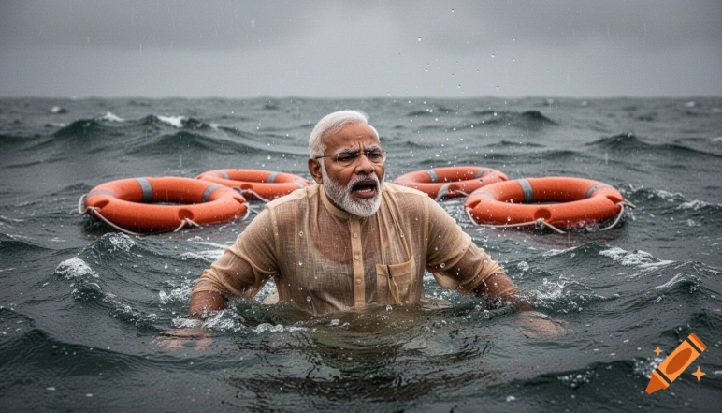
Image: Craiyon
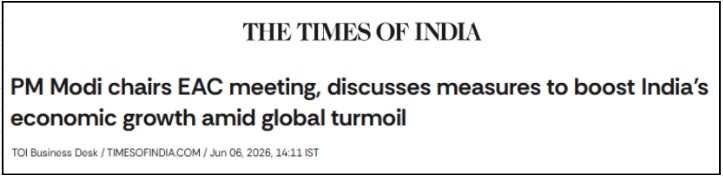 On 6 June, almost all major newspapers had headlines (https://timesofindia.indiatimes.com/business/india-business/pm-modi-chairs-eac-meeting-discusses-measures-to-boost-indias-economic-growth-amid-global-turmoil/articleshow/131547759.cms) about the Indian Prime Minister chairing a meeting of the Economic Advisory Council (EAC) to find solutions for the crisis this country is facing. Every video channel too carried such news (https://www.youtube.com/watch?v=XwPsPtxdT98). Was the government trying to convince people that the PM was serious about finding solutions?
But look closer, and you realise that the meeting was with the EAC. All members on the EAC are handpicked by the government. The outspoken persons are just part-time members. Economists who suggest ways that differ from what the PM and his council of ministers want are often removed, and fresh faces get appointed as part-time members. The current list of EAC members can be found here (https://eacpm.gov.in/team/).
This means that the EAC could be nothing more than an echo chamber. It would echo the views the government has, with no real solution in sight.
 Three developments
Consider three developments.
The first development: The PM’s announcement asking his countrymen to practice austerity (reduce cooking oil consumption; reduce foreign travel; stop buying gold; postpone weddings and more). You can find them here https://youtu.be/Oi8OU3sGgt8?si=GorO63547mD1RTBd. Immediately afterwards, the PM went off on a five-country trip, and his ministers went to other countries to sign FTAs.
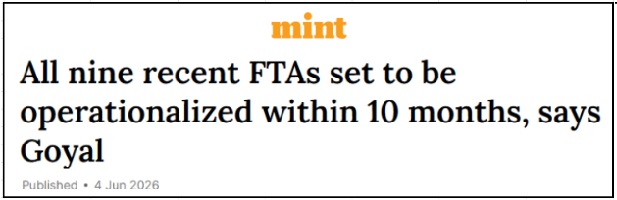 Neither move lent seriousness to the prime minister’s exhortations to the nation to practice austerity.
What India needs is more investment, not austerity. It needs more exports, not FTAs (free trade agreements) that lead to imports and which will cripple India further.
What about education?
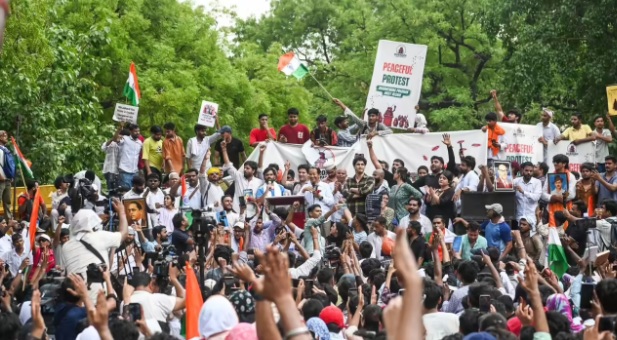
The second development: There was a veritable thunderbolt from the blue when a student Abhijeet Dipke (https://www.bbc.com/news/articles/cz72y11jjq1o) decided to lampoon the Bharatiya Janata Party and created the Cockroach Janata Party (CJP). The response was unbelievable. Within two weeks, the CJP had 20 million followers. The BJP itself has only 8.8 million (https://americanbazaaronline.com/2026/06/05/cjp-founder-abhijeet-dipke-heads-to-india-to-lead-neet-protest-482244/). On X.com, in just a few hours, the CJP had 200,000 followers when the government ordered its account to be closed. Fortunately, good sense prevailed, and he was not arrested on his return to India. But the CJP principal demand — that the education minister should resign – was not even considered.
In fact, the biggest stumbling block to reviving the economy is education. The government has meddled quite massively with education.
It has removed chapters that should not have been removed (https://asiaconverge.com/wp-content/uploads/2026/03/2026-03-09_NCERT_textbook-omissions.jpg).
Its school system is in a state of collapse (https://youtu.be/z3LyOnG_nEg?si=sAx0hZ9qj_UZo76F).
Its global rankings have slipped, and it refuses to get evaluated by PISA (https://youtu.be/s5a8_ML4cls?si=fMA0n8fbWtteiIBi).
The brazen discrimination against educationists like “Khan Sir” who offers quality education at very affordable rates and also medicare that even the poor can afford (https://www.youtube.com/watch?v=o-BwsvB40g0). These are things the government ought to be providing. “Khan sir” is a classic example of how the government views challenges even in education and medicare (https://www.youtube.com/watch?v=XVT8RhbU8jo)
Such biases in education eventually culminated into the NEET paper leakage, the hancking of NTA and CBSE websites, and the leaked CBSE papers as well.
More details can be got on various issues from the links given below:
Paper leakages (NEET leakages), its CBSE examination portal hacking, the Supreme Court hauling up the NTA (national Testing Agency or the NTA (https://thefederal.com/category/education/gen-z-hackers-now-allege-data-security-scare-nta-exam-portal-245194)
Key posts in educational institutions are being manned by people close to the BJP/RSS ideology (https://peoplesdemocracy.in/2025/1026_pd/how-rss-capturing-education-system and https://360info.org/bjp-lays-siege-to-indias-education-system/)
The NTA and the CBI have been in cahoots to ensure that any investigation into the shoddy state of affairs is stymied (https://dailypioneer.com/news/no-lesson-learnt-sc-pulls-up-nta-in-neet-paper-leak-case). When action was taken, it was only against officials way down the ladder. Even that punishment was a suspension, not a dismissal (https://www.moneylife.in/article/cbse-chairman-rahul-singh-secretary-himanshu-gupta-transferred-as-govt-orders-probe-into-osm-tender-row/80646.html).
The government is playing with the lives of millions of students. That is why the CJP got such a mammoth response.
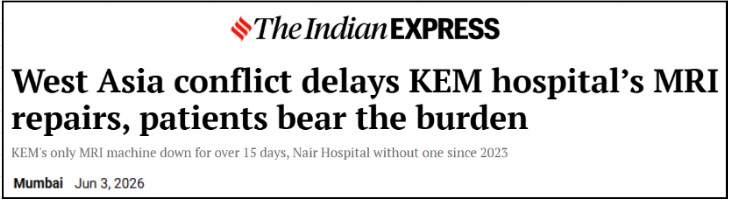 Consider how even the biggest government hospitals in Mumbai cannot even offer MRI scans because the equipment is broken – it has been reported to be non-functional several times of the year (https://indianexpress.com/article/mumbai/kem-hospital-mri-machine-broken-west-asia-war-supply-chain-parts-delay-10722862/). This is even while private MRI centres around the hospital continue to function on almost all days of the year. Are the hospital technicians promoting business for private players? Who will take care of the needs of poor patients?
Education and health services are soft infrastructure. Ironically, India spends huge amounts in building bridges that collapse (https://asiaconverge.com/2025/11/a-bridge-too-far/) . But it spends pathetically little on education. This is what will make India’s youth productive and capable in the coming years.
It is quite probable that the EAC would not have discussed these issues with the PM.
Agriculture
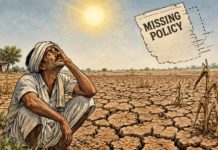
The third development: Did the EAC discuss the crying needs of agriculture?
Did it tell the PM that the biggest pain point for agriculture is the result of the cattle slaughter laws (https://bhaskarr.substack.com/p/dairy-ruminations-that-make-little?utm_source=publication-search). That one reason why the South fares better is because its cattle can grow healthily, as can the leather and beef industries. Listen to former GCMMF chief, R,S< Sodhi, on the crisis confronting dairy farms in India (https://eng.ruralvoice.in/national/if-farmers-do-not-receive-70-80-pc-of-milk-sale-price-the-dairy-industry-will-face-serious-problems-r.s.-sodhi.html) Did the EAC inform the PM that all of them are linked. That hurting farmers hurts exports, employment, farmer incomes and hence rural purchasing power? And that the diary sector is key to rural wealth generation?
Did the EAC tell him about the folly in banning forward trade in many commodities (https://asiaconverge.com/2022/10/the-folly-of-banning-futures-trading-in-commodities/), which in turn prevents farmers from discovering future prices and helps them decide on future cropping patters? That is another cause of poor rural demand.
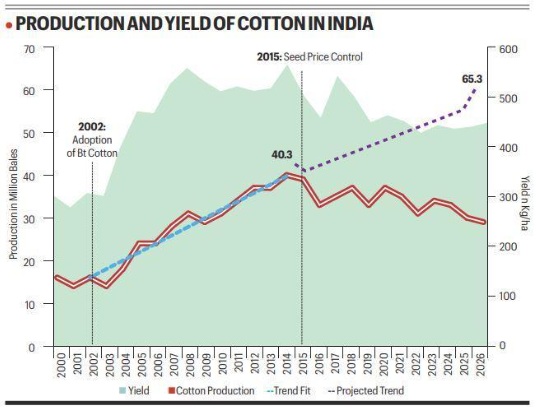 And did the EAC discuss the consequences of poor policy planning as noted agronomist Ashok Gulati points out (https://indianexpress.com/article/opinion/columns/in-cotton-fields-policy-is-undoing-what-science-built-thats-the-challenge-for-the-cotton-productivity-mission-10728759/)? This happens when policymakers believe that they know what is to be done, and don’t consult experts in that sector.
You will find similar flawed policies in respect of edible oil imports, pulses imports, ethanol blending and compelling FCI to purchase all its procurements from the e-mandis recommended by the government (https://fcivlts.in/). The FCI is responsible for a lot of farm distress and the distortion in agricultural prices (https://asiaconverge.com/2021/08/poverty-in-uttar-pradesh-and-bihar-is-not-accidental/).
Real estate
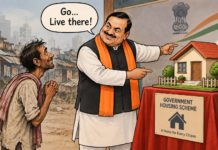
Go beyond agriculture and you will discover that the government has even slipped up on real estate development. Instead of
building enough affordable housing for almost all the people, it has released only very small number of affordable homes each year. This has boosted the shortage syndrome, making it a lottery game, or a clever approach towards promoting corruption.
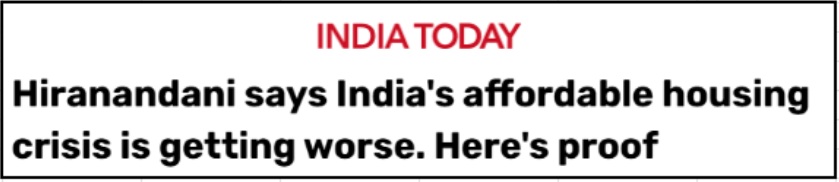
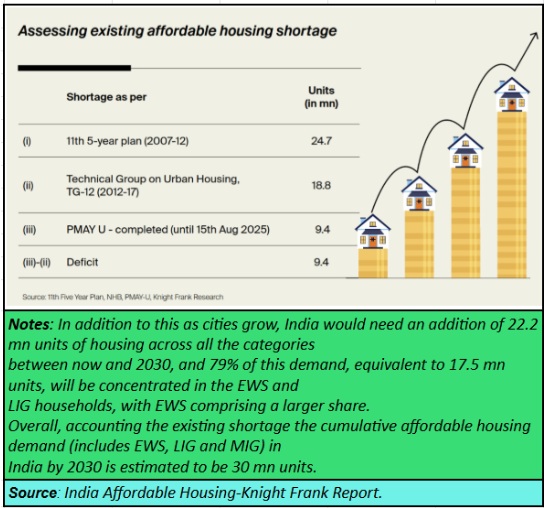 Just look at the numbers. The government provides les numbers of houses than actual demand. It has forgotten that affordable home construction creates security for common folk, creates employment for millions and more importantly creates demand for cement and steel. The government has turned a blind eye to this. Listen to what Niranjan Hiranandani, chairman, NAREDCO says (https://www.indiatoday.in/business/real-estate/story/indias-affordable-housing-crisis-is-getting-worse-heres-proof-2918007-2026-05-27).
 The second problem with the government’s approach to real estate has been slum redevelopment. Unfortunately, political manipulations actually encourage slum creation (https://youtu.be/IbFvtjBT5R4?si=nOGBHZOo3EWSmYi5). The courts, by permitting in situ (at the same place) redevelopment have actually allowed slums to reshape demographics and make a mockery of the electoral system. The way Indian politicians have promoted slums has led to a desecration of the basic principles of democracy. Thus, even construction of affordable housing becomes a major scam. One hopes that the slum policy review announced by the courts will ensure that in situ redevelopment at the cost of taxpayers and voters is banned forever (https://indianexpress.com/article/legal-news/bombay-hc-slum-act-audit-10678988/#:~:text=The%20Bombay%20High%20Court%20Friday,free%E2%80%9D%20Mumbai%20and%20other%20major ).
Don’t blame the Middle East alone
The government may be right in saying that the current situation is on account of the middle east crisis. But they do not point out the obvious. The middle east crisis only accelerated the pace at which the economy was to decline. The real causes are pool policy planning, corruption and implementation. Consider some of them:
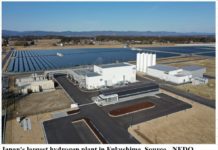
Rooftop solar: Today, the biggest worry for the government is fuel prices. There are fears that there will be load-shedding this year. But that could have been avoided if only the PM had stuck to his promise of providing rooftop solar for one crore houses (https://bhaskarr.substack.com/p/a-new-policy-direction-for-solar ). Had that been done, loadshedding would not have mattered for rural folk. Transmission losses would have declined. That would ease the pressure to buy more fuel to generate electricity. One more oversight.
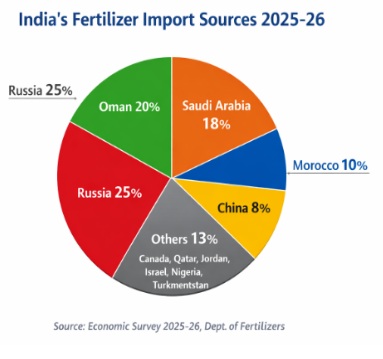 Fertiliser production: Today, the government is worried about high fertiliser import prices. But that is also because the government did not augment its own fertiliser production capacities the way China has. Both were fertiliser deficient two decades ago. China focussed on domestic production, and today exports fertilisers. India makes many speeches about atma nirbhar Bharat, or self reliant India. But it encourages import dependence.
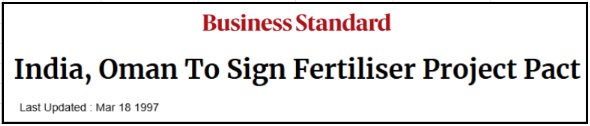
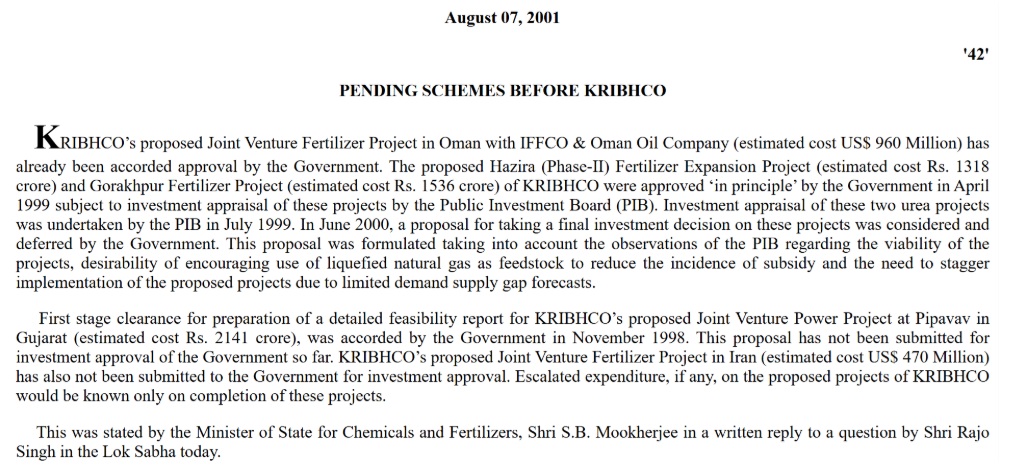 Even when it signed an FTA with Oman, it did not talk about, or even envisage, investing in fertiliser production in Oman itself under a joint production programme. It forgot that since 1991, India’s KRIBHCO was identified as a partner for the joint venture with Oman (https://archive.pib.gov.in/archive/releases98/lyr2001/raug2001/07082001/r0708200120.html). Then it was forgotten.
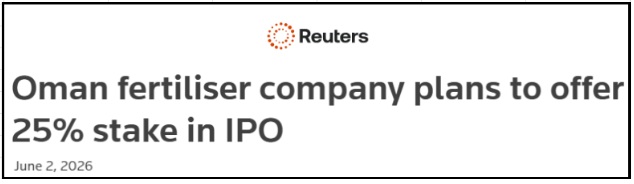 It is only now, when crisis stares India in the face, that it is working out ways to set up joint production facilities in Oman.
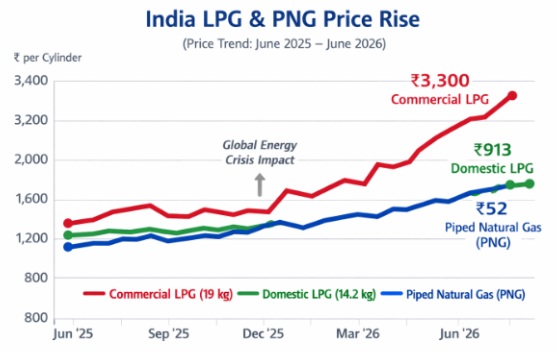 LPG/LNG crisis: India faces huge pressures on account of LNG/LPG imports. One of the key reasons for this crisis is the country’s ability to build adequate strategic oil and gas reserves. When the Middle East conficts began, India had only 9.5 days of strategic oil reserves against a desirable level of 90 days. The government refuses to even admit that its planning was at fault.
Policies on gold: The PM’s exhortation to Indians to reduce the purchase of gold, and to even postpone marriages (the source of much of gold demand) was unfortunate. When there is any talk of crisis, the first instinctive reaction of most Indians is that more gold should be accumulated. Historically, gold has been the best hedge against inflation, against seizures and taxation and offers emotional and financial security to most families.
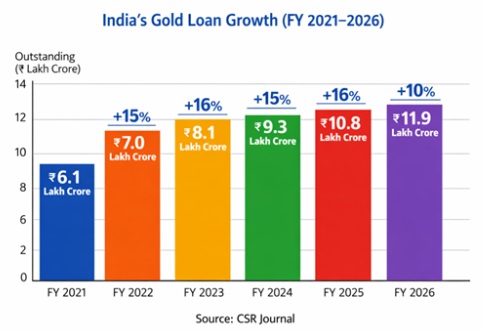 During times of distress people rely on gold much more than the Indian rupee. The economy, hence its people, are facing very difficult times. That is why people have begun mortgaging their gold for funds. Study the chart, which provides a better picture of the state of the economy than the RBI surveys do.
The ill-advised levy of 15% import duty will only exacerbate the problem for individuals, businesses, the country and the Indian rupee (https://www.youtube.com/live/Tg-q0x6v2YM?si=pkV-yhtKJ8qdVyJ2).
Two other issues
Two other policy issues need urgent addressing.
The first is to enter into FTAs only with countries that will strengthen India, not ruin it. The proposed trade treaty with the US threatens to bankrupt India – never mind what Piyush Goyal, Union commerce minister, and Sanjay Malhotra, RBI governor may state in public (https://asiaconverge.com/2026/05/india-ensnared-ready-for-breakup/). Thus, FTAs — like the one with New Zealand — need to be reworked. New Zealand was a country that has sought to wreck the Indian dairy industry at different points in history. First in the 1960s when it wanted to offer free milk products and machinery to India as part of its Colombo plan (https://www.mfat.govt.nz/en/about-us/mfat75/75-our-story/new-delhi). Verghese Kurien studied these moves, and then set up NDDB with the help of the then Indian prime minister Lal Bahadur Shastri and saved the Indian dairy sector – see https://asiaconverge.com/2025/11/the-shameful-attempted-marginalisation-of-dr-verghese-kurien/). It then tried to persuade the government to let it export a small quantity of dairy products in 2019 under the RCEP (https://asiaconverge.com/2019/08/indian-bureaucrats-almost-shortsold-the-milk-industry-at-fta-cpec-negotiations/). GCMMF and almost 10 crore farmers rose up in protest, and the government dropped the proposal. Now India has entered into an FTA with NZ. That could have extremely dangerous consequences for India.
Linked to the FTA issue is the urgent need to bring in investments. One way to get investments is to work with China. A second way is to enter into treaties with the 27 entities which have been identified as financial offenders and absconders. But more on this next week.
Without investments, India will not be able to set up new ventures. That in turn will mean fewer new jobs. That will worsen the unemployment scene. A very good explainer can be found at https://timesofindia.indiatimes.com/business/india-business/how-indias-net-fdi-went-from-28-billion-to-1bn-in-2-years/articleshow/131379878.cms .
If India has to remain solvent, it will need investments, not loans, not portfolio investments. It needs FDI – in creating new workplaces and more jobs. .
Finally, to remain united, India needs to promote social harmony. Tales of persecution of minorities are legion.
Talk about blood baths in the Northeast and in West Bengal are today part of daily conversation (https://www.youtube.com/live/2uaV2f4cVYs?si=iHG7MpZie3nmmTiu and https://youtu.be/GZlAK5dTqQQ?si=5dCfQeKKnZRoNR6O) . All acts against minorities must be dealt with severely; else India runs the risk of getting fragmented and partitioned once again.
That must not happen. To prevent this, India needs social harmony. Just look at what has happened to Israel. Hatred of a community has resulted in the entire nation being pulverised and destroyed. Or look at Myanmar. Persecuting just 10% of the population by the remaining 90% has reduced the country to a ghost of its former self. This must not happen to India.
These are matters that the EAC hould be taking up. That is a hope. But just in case the EAC does not discuss these issues, it is important to push these concepts from outside the EAC.
If India needs to be saved, begin with the list given above.
=============
Watch our latest podcast on NCERT, education and the Supreme Court. You can find it at https://youtu.be/J-6oAVhfYAU
=============
Also watch the 2nd, 3rd and 4th episodes of our four-part series on India ensnared. The first part was highlighted last week.
Part 2 talks about how India is hobbled by inflation and the issues related to this crisis. You can find it at https://www.youtube.com/watch?v=4ETDMJaycA4
Part 3 explains why and how the Indian rupee is experiencing a freefall. You can view it at https://www.youtube.com/watch?v=z1egsOA6obM
Part 4 is about the education crisis staring India in the face. It can be viewed at https://www.youtube.com/watch?v=eL-GAo-abiw
=============
Finally, do view our News Behind the News at https://www.youtube.com/live/HhB8RO-_DH8?si=9OXjyWXXZg-FLJkf
– Markets jittery: Trump, SpaceX, AI
– Another absconder-case gets a clean chit
– No ‘achhe din’ for India
===================






COMMENTS