





















MARKET PERSPECTIVE
By J Mulraj
Jul 11-17, 2026
Trump wants a fifth of Gulf oil revenue
Image created by Raphael.app
In Charles Dickens’ book, Oliver Twist, hunger drove Oliver to hold out his empty bowl of porridge and plead ‘please, sir, can I have some more?’
It would be a stretch of imagination to think that Donald Trump was driven by hunger, in asking the Sheikhs of Gulf nation, for a fifth of their oil sales (a 20% fee) for safe passage though the Strait of Hormuz. Trump is being driven by greed, rather than hunger.
Perhaps he may have thought that, in taking the fifth, he was, somehow, avoiding incriminating himself!
At current price of $81/ barrel of Brent crude, a 20% fee would be over $ 16/b. Iran was seeking $1/ b.
Move over, Oliver Twist!
Trump did, though, reverse his demand. Now, instead of a 20% fee, Gulf Sheikhs will invest more.
To be fair, USA, and Israel have borne the cost of the war on Iran, in an attempt to prevent it from acquiring nuclear weapons capability. Even without it, based on only missiles and drones, Iran has been able to attack its neighbours, and to choke the Strait of Hormuz, through which about 20% of global oil trade passes.
In his own way, Trump was asking other nations to share the burden of freeing the Strait from the clutches of a hostile regime.
What would have happened if Trump’s gambit had been implemented?
Gulf states would have tried to pass on the 20% to their customers. The bigger ones are China, India and Japan. They, in turn, would try and buy more oil from other sources, albeit, given the fact that oil demand and supply are matching, it’s unlikely they will find enough surplus capacity. The two sources of potential supply are America, by ramping up shale oil production, and Venezuela. Its current President, Delcy Rodrigues, is beholden for her job to Donald Trump. It was Trump who ordered the abduction of her predecessor, Nicolas Maduro, by the Delta Force.
Venezuela has the largest reserves of crude oil in the world, estimated at 303 billion. Over the past five years, it’s crude oil production was paltry, below 1 million barrels each year barring 2025-26 when it was estimated to be between 1-1.2 million.
There are two reasons for this low output. Firstly, a lot of talent to extract oil has left Venezuela due to poor pay and working conditions. And second, Venezuelan oil is thick and heavy, with high sulphur content. There are only a handful of refineries which are complex enough to process Venezuelan crude, in USA, in India (RIL Jamnagar refinery) and in China. So increased supply from Venezuela depends on the willingness of American oil majors to invest in extraction of Venezuelan oil (they have been financially hurt before, and are reluctant) and then on US refineries to be willing to process the oil.
So, big importers would buy more from Russia and from US shale producers, to the extent possible, and would negotiate the burden sharing of the 20% fee with oil producers.
This would result in an oil price shock, thence to higher inflation and to rising interest rates to tame it. The newly appointed US Fed Chair, Kevin Warsh, is expected to raise interest rates in December.
The Iran conflict is like the ‘Snakes and Ladders’ game played by kids. If one lands on a square just near the finish, a snake bite takes him close to the start. That’s what happened when, immediately after a deal was signed to stop the conflict and open the Strait of Hormuz, Iran fired missiles at two oil tankers. Naturally, the US launched counter attacks. Track to square 1.
So, hostilities have begun, again. Passage through the Strait is blocked by Iran, and passage of ships to and from Iranian ports is blockaded by USA. A diplomatic solution can now occur only if the blockade, combined with attacks on Iran’s transport infrastructure, serves to cripple it’s economy. That would force them to negotiate. There can be no early resolution.
Investors can expect higher for longer oil prices and a squeeze on supplies, and the inevitable inflation will push up interest rates. Shortage of fertilisers, a lot transmitting through the Strait of Hormuz, will push up food prices.
The short term outlook for stock markets will be dependent on the yo yo that is the Iran war. It looks like more snakes to pull the process down, than ladders to lift it.
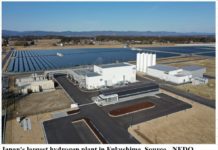
The longer term outlook is positive. AI and technology disruptions will bring down input costs of energy, labour, food, transportation and others, and robotics will improve productivity, to generate higher GDP growth.
Last week the BSE Sensex closed at 78151, for a weekly gain of 582 points.
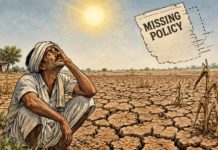
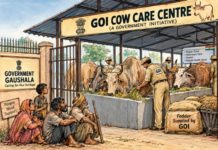
The India story reveals some structural weaknesses. It is sad that 79 years after Independence, India still needs to provide free food to 810 million people, over half the population. Farmers don’t get a reasonable price for their produce; terms of trade favour urban dwellers since they represent a more vocal vote bank. Molecular biologist and author, Dr Anand Ranganathan succinctly explains the folly of promoting the use of ethanol in blended fuel due to wastage of scarce water. India has severe water scarcity, yet politically backed sugarcane farmers grow cane, which uses a lot of it. Sugar (ie water) is exported to other countries. We are heading towards a disaster. This video, posted last week, boasts about biogas, from manure, used to replace LPG gas cylinders. A welcome development which my sister (full disclosure) has been suggesting, to Government officials, for 3 decades. Why is common sense the last resource policy makers turn too, after all other resources have failed?
The on-again Iran war will take an economic toll on global GDP growth, will cause inflation and lead to higher interest rates. Not a good picture for the equity market.
——————————————————————————————
Comments may be sent to: jmulraj@asiaconverge.com












COMMENTS