





















21 Sept 2025
Germany wrecked its own chances
By RN Bhaskar and Sakeena Bari Sayyed
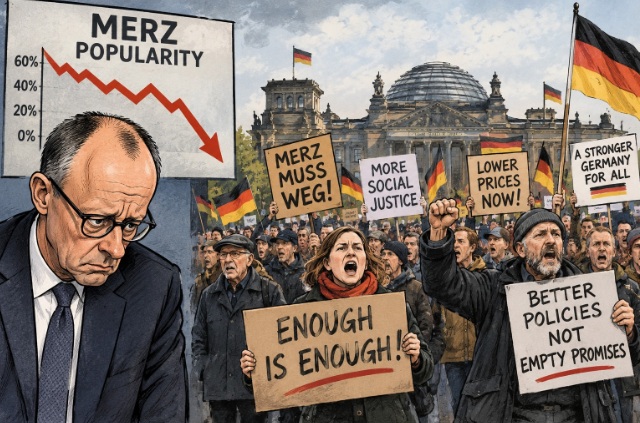
Image: Chatgpt
On 15 September came the news that Chancellor Friedrich Merz will not go on a planned trip to New York next week to participate in a UN meeting (https://www.reuters.com/world/europe/embattled-merz-seeks-party-backing-ahead-fresh-election-tests-germany-2026-09-15/). This according to a spokesperson in the government, was because pressure has been mounting on him following electoral setbacks for his conservative party.
It may be recalled that on, Sept 7, the election results for the crucial state of Saxony-Anhalt suggested that Merz would soon be shown the door in German politics. As Reuters puts it (https://www.reuters.com/world/europe/far-right-afd-courts-conservative-support-after-historic-german-state-election-2026-09-07/_, “the anti-immigrant, pro-Russia AfD (Alternative for Germany) won nearly 44% of the vote, an outcome that underlined the deep unpopularity of Merz’s ruling coalition and also triggered alarm among Germany’s neighbours, France and Poland, and elsewhere.”
However, AfD could not win a clear majority. It won 39 of the 83 seats. If it cannot poach some conservative lawmakers, it may not win. AfD spokespersons described the move, of the other parties not to support AfD to form the government in that state, as nothing but a “firewall”. The AfD says this is undemocratic.
Irrespective of what the outcome is, the writing is on the wall. According to Alice Weidel of the AfD, her party aims to win at least 40% in the next national election, due in 2029.
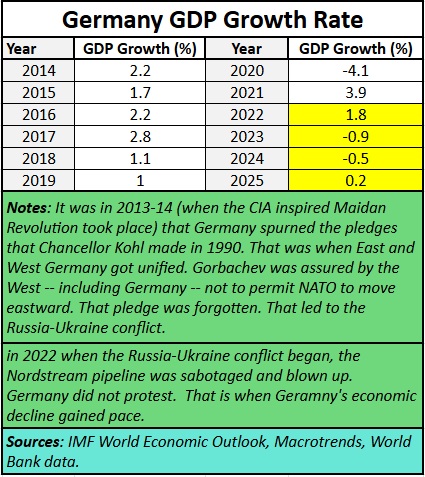 Germany stumbles under Merz
So, why could Merz not make his party win? A big reason could be the performance of the German economy (“It is the economy, stupid!”).
To understand his predicament and that of his country, one needs to look at his background. After working as a lawyer, he became a member of the European Parliament in 1989 (https://www.bundesregierung.de/breg-en/news/friedrich-merz-2341938). In 1994 he joined the Bundestag. In 1998 he became the deputy chair of the CDU/CSU parliamentary group in the Bundestag. By 2000 he became the chair of this combine. In 2005, he returned to the legal profession. In 2019, he returned to politics and became vice-president of the economic council of the CDU. Between 2016 and 2020, he became chairman of the supervisory board of the German arm of Blackrock, the world’s largest asset management company and worked closely with the US as well (https://www.dw.com/en/germanys-new-chancellor-who-is-friedrich-merz/a-72314352).
In 2021, he became a member of the Bundestag once again. He stayed in the political arena thereafter, and on 6 May 2025, became Federal Chancellor of Germany.
Immediately after he left Blackrock, Germany was hit savagely with a spike in energy costs. Merz decided to support Ukraine, ignoring the historic agreement between President Gorbachev of the erstwhile USSR and major Western countries (including Germany). They agreed that they would not permit expansion of NATO eastwards. This was, implicitly, one of the preconditions for allowing the reunification of East and West Germany in 1990.
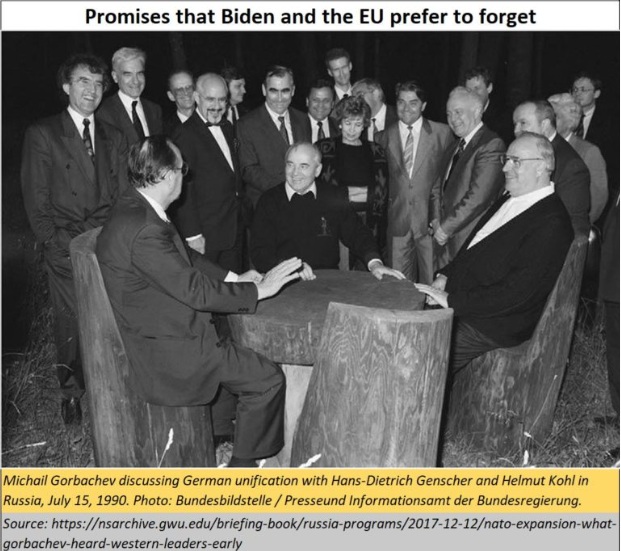 The betrayal
Almost all past Chancellors of Germany sought to honour that agreement. But Merz and his predecessor Olaf Scholz did not (https://asiaconverge.com/2022/03/the-ukraine-crisis-this-is-the-way-the-world-ends/). Kohl and even Chancellor Merkel tried to ensure that the agreement with Russia was respected. But Merkel lost out (https://asiaconverge.com/2022/03/the-ukraine-crisis-this-is-the-way-the-world-ends/). The US wasn’t even interested in honouring the pact. The West now claims that no agreement had been made, but a leaked memo titled “Nyet means Nyet” pins the lie (https://wikileaks.org/plusd/cables/08MOSCOW265_a.html). This was obvious from a secret memo from William Burns (then US ambassador to Russia, and later director of the CIA) to his government.
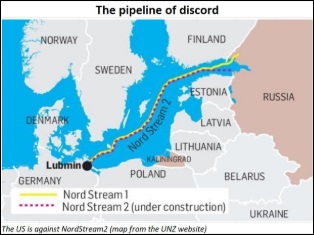 Both Schultz and Merz wanted to weaken Russia. Hence, they decided to hurt it by cutting off oil and gas imports from their eastern neighbour. Merz even kept silent when the West (obviously keeping Germany in the loop) sabotaged Nord stream, the gas supply lines and exploded them in 2022.
That move hurt Germany more than Russia (https://asiaconverge.com/2022/09/can-germany-bail-out-the-eu-and-the-world/). As a result, Germany suffered immensely. Watch Germany’s GDP fall since 2022. Without cheap oil and gas imports from Russia, Germany began bleeding.
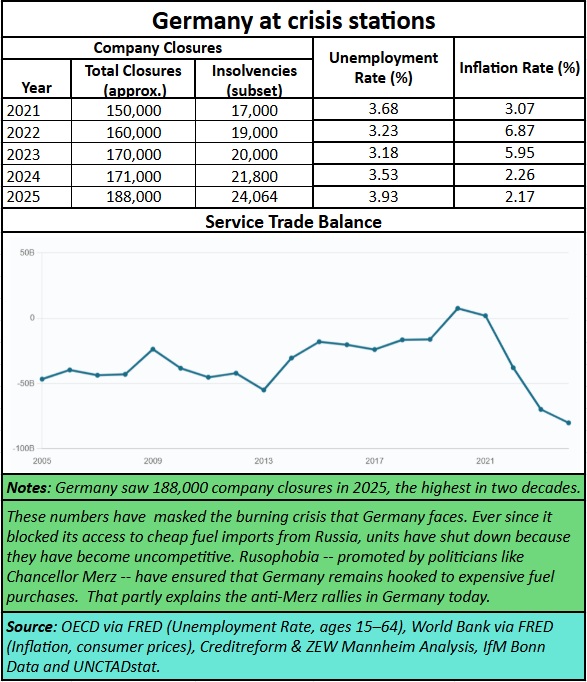 Bleeding Germany
Germany began haemorrhaging. Company closures began mounting. So did insolvencies. Result: soaring unemployment. And stunted GDP growth.
Sadly, it all began because Merz made Germany break off from cheap energy supplies. He promoted Russophobia and made people scared of Russia. He continued to demand supporting Ukraine, even though he knew that NATO’s plans (and Germany’s as well) were morally, and even economically, indefensible.
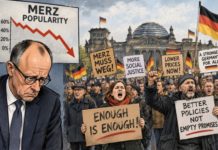
The result was obvious. Disenchantment with Merz. By the time the elections were over, Merz was popular with just 16% of German voters, the lowest ever (https://www.youtube.com/watch?v=UYXKOfMvPxM).
AfD, which promised to revive ties with Russia and thus make cheap energy available once again, was also promoting the revival of jobs and of the economy. The popularity of AfD grew, especially in relatively weaker states like Saxony-Anhalt. The big question is whether the relatively wealthier states in the western part of Germany will vote the way Saxony-Anhalt has.
There are indications that even West Germany may opt for AfD, because the economic policies pursued by Merz have not inspired confidence.
What drove Merz?
There are critics who believe that Merz was driven by an agenda chalked out by the US and Blackrock. Both were interested in weakening Russia. Remember, the US did not even want Russia to become a market economy in 1990 — and thereafter — as pointed out by Jeffrey Sachs (timeline 2:55 at https://www.youtube.com/watch?v=Ptaya7stymw).
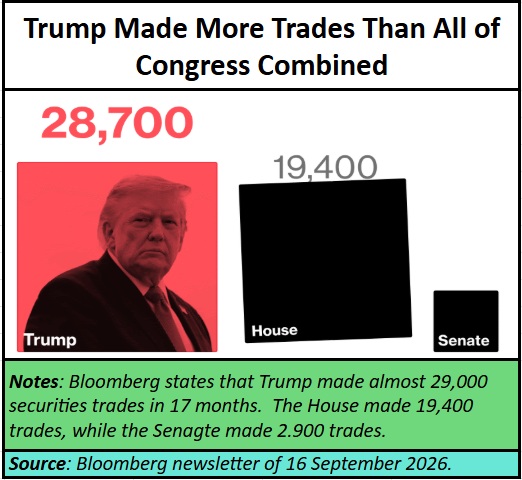 There are other reports that suggest that Merz’s past association with Blackrock made him keen that his former employer could benefit from its substantial investments in Ukraine (often with JP Morgan). Weakening Russia would allow such investments bear fruit. Moreover, Trump’s penchant for investments is legendary. Many investments in Ukraine are also believed to come from major US investors.
So, was Merz more interested in creating profits for Blackrock and Trump than his own country?
 The good side
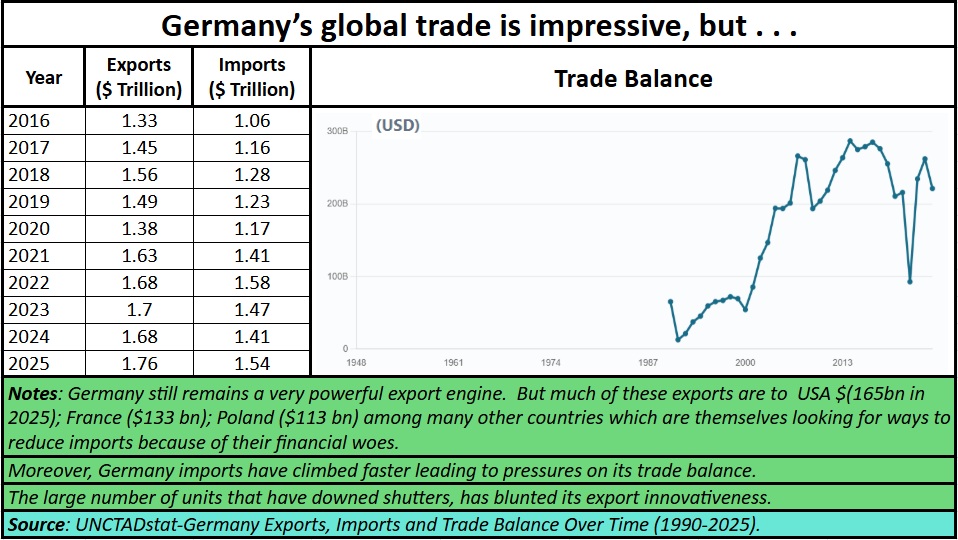
To be fair, Germany continues to remain the export engine for the whole of the EU. The fall in GDP has not entirely blunted its export capabilities. Its export earnings remain strong. But it is being hurt on the imports front. It had to purchase expensive energy, often from USA – once again benefitting the US much more than Germany.
There is another area that Merz failed to take cognizance of — Germany’s apparent inability to groom entrepreneurs into becoming global giants.
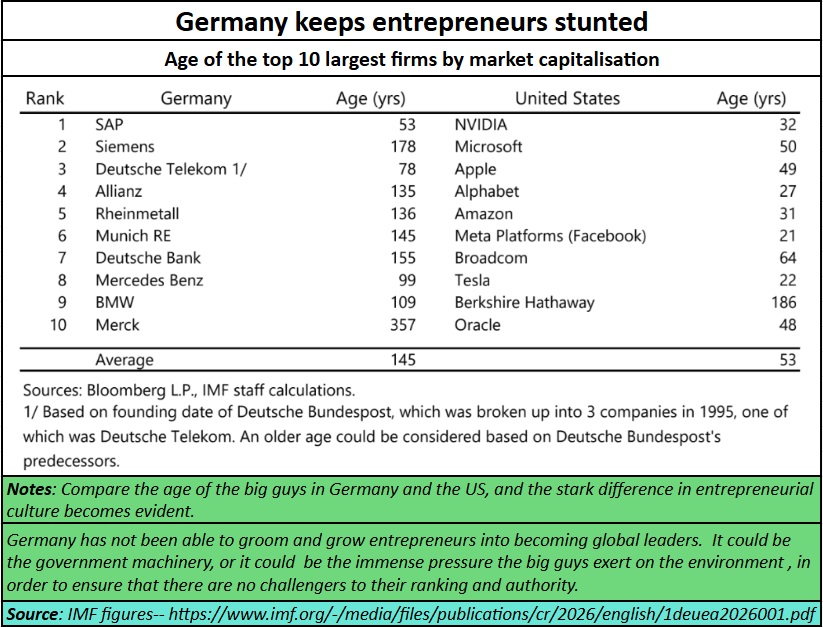 Compare the age of the top ten companies in Germany and the US. Germany continues to be straddled by legacy giants. The newbies have yet to find a place in the sun. This could be because Germany continued to mollycoddle the big, yet leave the smaller players to find their own way to the top. Or it could be that the big guys smothered the growth of the smaller companies – which were brimming with entrepreneurship.
Not surprisingly, when technological changes began being made, Germany lost out. Take for instance the solar front (It was a pioneer in concepts for promoting solar under the ministership of Hermann Scheer (https://asiaconverge.com/2016/04/india-not-learn-germanys-hermann-scheer-solar-power-model/). But China marched ahead, and became the global leader.
Ditto with vehicles. Germany did not adapt fast enough. Result, existing players have survived because the country has prevented Chinese EVs from entering the German market. And when even that did not help, Volkswagen opted to make defence equipment than continue making cars.
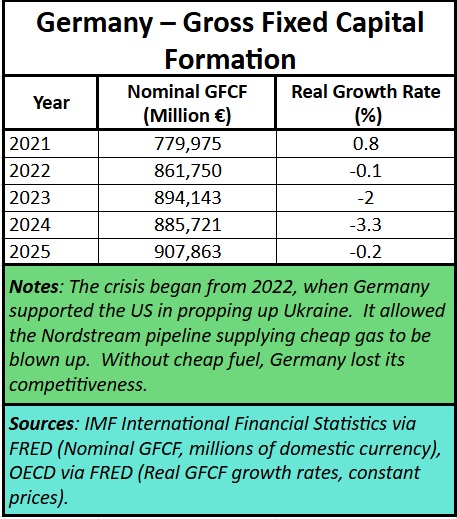 Had Germany invested enough in capital formation by its young entrepreneurs, it is possible that the German economy could cope with a new age of technology and AI.
The very backbone of German industry is now at stake (https://www.youtube.com/watch?v=S9vvAXOYx9Y). Even when doing so, instead of staying away from a country accused of war crimes and ethnic cleansing, Germany chose to tie up with Israel for making defence equipment (https://www.france24.com/en/live-news/20260907-volkswagen-plant-to-be-converted-for-israeli-defence-group). It further dented Germany’s commitment to values and human life. It was sullied in the second world war. It got sullied again in the Iraq Iran war (https://www.theguardian.com/world/2002/dec/18/iraq.germany). It has sullied its reputation once again by supplying chemical weapons to Israel for use against Lebanon (https://www.presstv.co.uk/Detail/2026/07/01/771404/Germany-Israel-Bayer-chemical-weapons-white-phosphorus-glyphosate-Iran-Iraq-war-Lebanon). The latest move occurred even while Germany committed itself to a ban on chemical weapons. Clearly, moral ambiguity has not helped this country much.
 Can it reinvent itself?
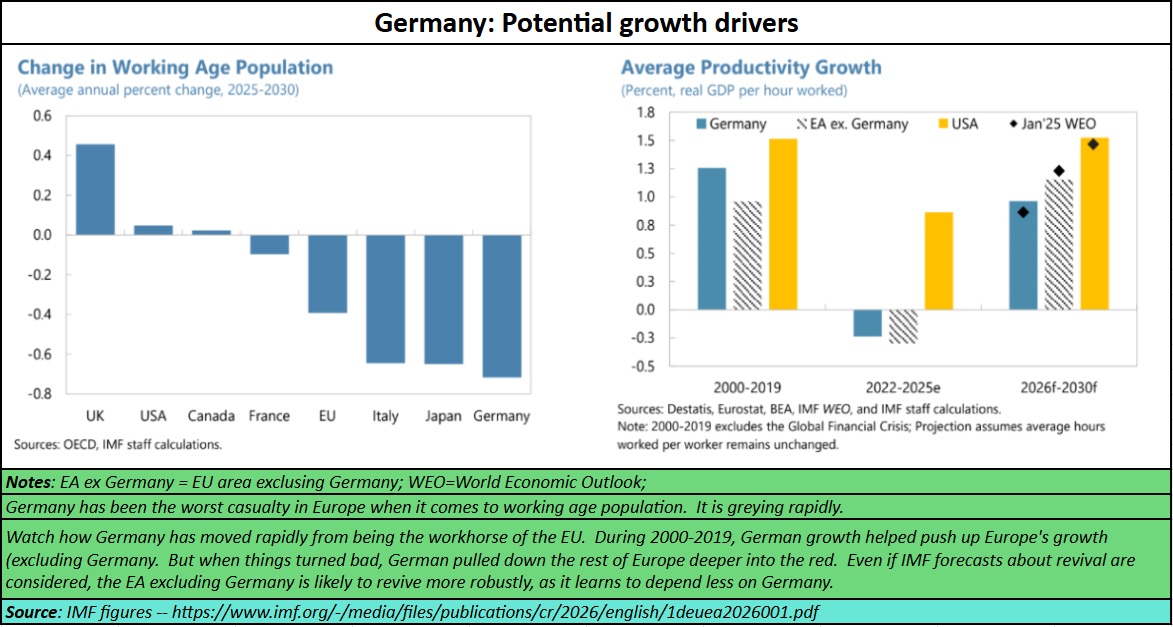
Germany must reinvent itself. It needs to create more jobs and revive its economy. That is why the AfD proposition – of reviving trade with Russia – has begun to appeal to the masses.
Germany has a shrinking population, which puts it at risk in the global market, especially Asia which has a booming young population (India will see this advantage slip). This will mean dusting off its old industrial policies which protect the big. It must now allow for big change to come in.
Will Germany be able to do this? Will Afd be able to reinvent Germany? Those are the burning questions which Merz has not been able to address (nor did his predecessor Schulz). Germany is a wonderful country. Its people are hardworking and innovative. But its government has been showing signs of sclerosis – both in economic policies and in moral values. That is not fair to the youth who are brimming with aspirations.
That is why Merz may have to go. That will give Germany the chance to let some fresh air in.
=================
Podcasts
India has been blind to the potential and the economic relevance of 50% of its population – agriculture. Causes are — bad policies, wilful destruction of farm incomes, and non-application of mind. Do watch our podcast on India’s blindspot for agriculture at https://youtu.be/h5JNAwaCvR8
=================
Should people support NSE’s decision to go public? That is the heated question currently, even while the public issue is open for subscription. Listen to our favourite expert, Abizer Diwanji, Founder, Neostrat Advisors at https://youtu.be/W27Et4_zNoQ
=================
News Behind the News
– Tatas face turmoil
– UPI becomes hot potato for govt
– India’s agri could face trouble
– Gold regains its glow
Watch this at https://www.youtube.com/live/AgAU8mmfgwk?si=S0YFfZRJNbb95gGg
=================








COMMENTS